
Brass Angle Stop Valve Guide for Residential & Hotel Fit-Out
An angle stop valve is the fixture-level shut-off installed between the wall supply pipe and the fixture hose behind a sink, toilet, or washing machine. It redirects flow 90° out of the wall and gives a quarter-turn local shut-off, so a tap cartridge, a toilet fill valve, or a washing machine hose can be serviced without draining the building's supply. In residential new construction, bathroom and kitchen renovation, and hotel or apartment fit-out, the valve is fitted late in the program and reached first in every future service call.
That position makes the angle stop a specification decision rather than a hardware accessory. This guide covers the four decisions that determine whether an angle stop package still performs years after handover: where the valve is installed, what indoor conditions it must survive, what lead-free evidence the package must carry, and how the supply program keeps replacements and later phases available. It is written for plumbing distributors, mechanical contractors, and project specifiers working to US and Canadian potable-water requirements, with notes for other markets.
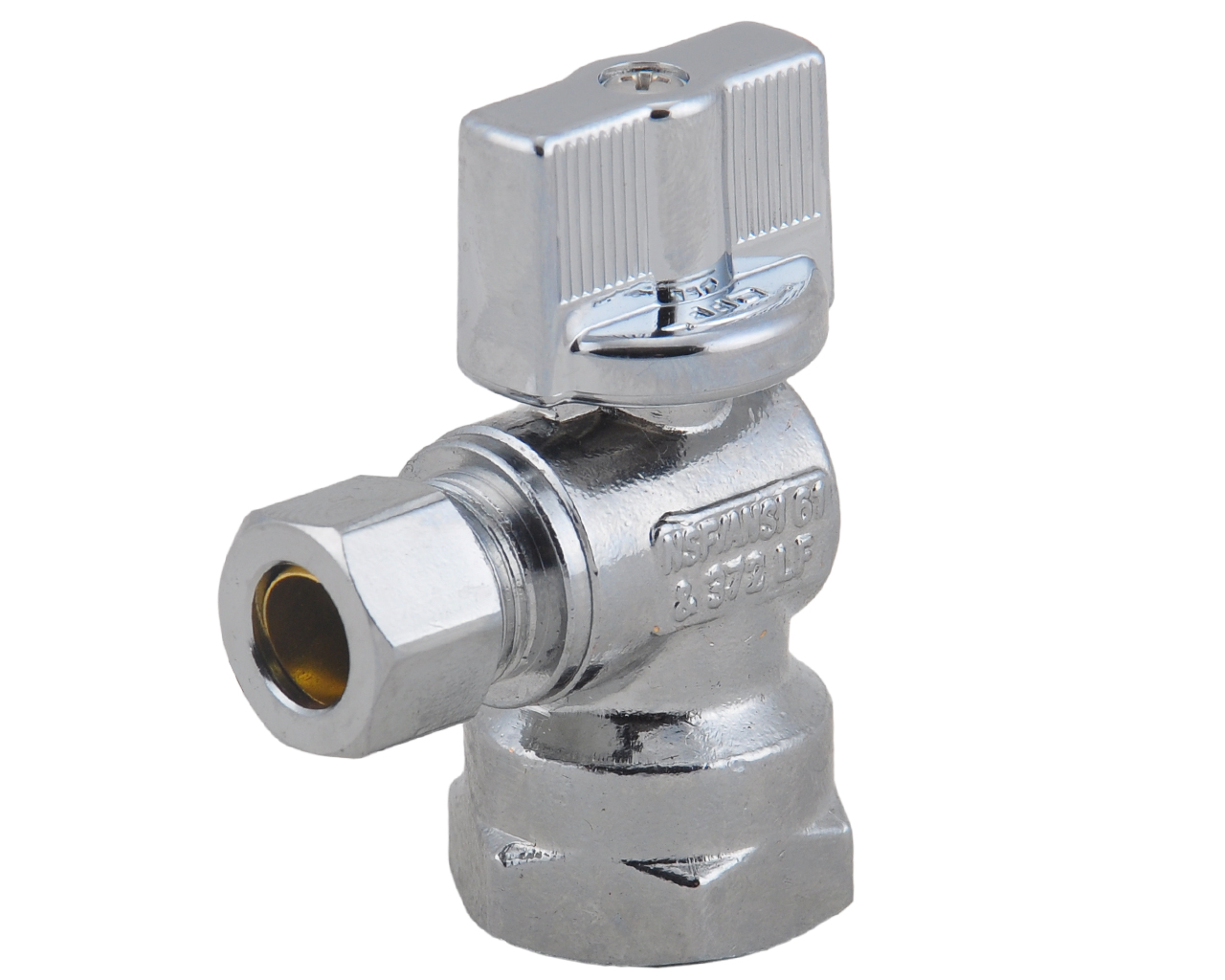
Angle stop valve on a bathroom sink supply — the most common fixture-level isolation point in a residential or hotel fit-out.
What an Angle Stop Valve Does on a Fixture Supply Line
An angle stop valve — also described as an angle stop, supply stop, or stop cock — is a quarter-turn shut-off fitted on the fixture supply line, normally between a wall outlet and a braided supply hose. Its body redirects flow at 90°, which is what allows a valve mounted on a wall stub to feed a fixture that sits directly in front of it. The handle rotates a ball core a quarter turn, with a visible open or closed indication.
Three functions follow from that location:
- Local isolation. One fixture comes out of service while the rest of the building stays in service.
- Emergency stop. A split supply hose is shut off at the valve instead of at a riser or the building main.
- Service access. The valve stays reachable after the fixture is installed, so maintenance does not require opening a wall.
At fixture sizes, full-flow capacity is rarely the constraint. The practical question is whether the valve will still turn and still seal after years of sitting in a humid cabinet and being operated a handful of times a year. That is decided by the seal stack, the stem construction and the alloy grade on the specification sheet, not at commissioning. A quarter-turn ball core with a PTFE seat and a double O-ring stem seal is the configuration to look for when a valve must work on demand after long idle periods, backed by a chrome-plated anti-corrosion finish for the wet cabinet environment.
Three Installation Zones in a Residential or Hotel Fit-Out
Most fit-out packages contain three fixture zones, and each zone places a different demand on what is nominally the same valve family. The zone determines the outlet direction, the access requirement, and how the valve will be operated over the life of the building.
| Installation zone | Typical position | Duty in this zone | Check before the fixture goes in |
|---|---|---|---|
| Bathroom vanity and kitchen sink | Wall or cabinet outlet, feeding a braided hose to the faucet tail | 40–80 psi, 4–60 °C, humid cabinet air | Handle clearance inside the cabinet, escutcheon seating, hose run without a sharp bend |
| Toilet and bidet | Floor or wall outlet behind the pan | Same pressure band, confined space, infrequent operation | Reach distance to the handle, thread form at the outlet, no side load on the pipe stub |
| Washing machine, dishwasher, ice maker | Laundry box, appliance cabinet, or under-sink outlet | Same pressure band, hose flex and vibration, more frequent on/off | Strain relief on the hose, accessible handle, hose length that allows the appliance to be pulled out |
| Back-to-back hotel guestrooms | Shared wet wall serving two bathrooms | Same pressure band repeated across every key | One consistent SKU across all rooms, plus maintenance stock held on site |
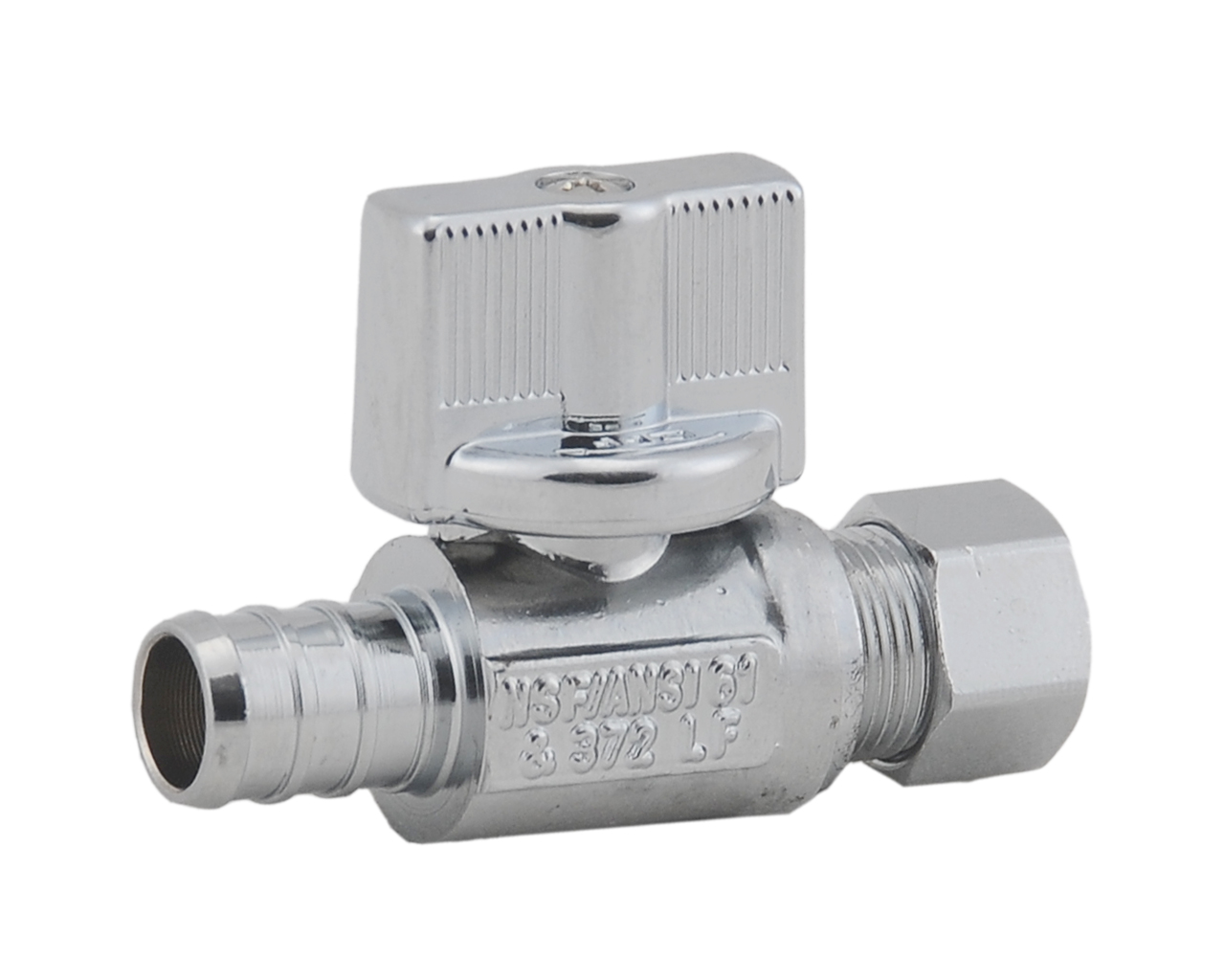
Toilet supply connection: the valve must stay reachable behind the pan so a fill valve can be isolated without shutting the riser.
Behind the sink
Vanity and kitchen cabinets combine three problems: limited space, humid air, and a hose that pulls the outlet sideways. The valve needs enough clearance for a hand to reach the handle without moving stored items, and the hose must leave the outlet without a sharp radius. In hotel guestrooms, back-to-back layouts mean the same valve repeats in every key — a reason to fix one SKU early rather than allow substitutions room by room.
Behind the toilet
Toilet stops are operated least and positioned worst. The access test is simple: can a maintenance technician reach and turn the handle with the pan in place, using one hand, without removing the cistern lid? If not, the specification is fine but the installation is not. Thread engagement matters here too, because the outlet is often a short stub that is easy to cross-thread when the valve is tightened.
At the washing machine and other appliances
Laundry and appliance connections are the highest-cycle points in a residential package: hoses flex, appliances move, and the valve is turned more often than a vanity stop. In laundry boxes, plan the handle orientation so the valve can be closed while the machine is running, and confirm the hose is long enough to pull the appliance clear without straining the connection.
Indoor Operating Conditions: 40–80 psi, 4–60 °C, and Wet Rooms
A fixture-level angle stop in a residential or hotel fit-out is normally specified for indoor installation with a working pressure of 40–80 psi (0.28–0.55 MPa) and a water temperature of 4–60 °C, in environments that range from dry to high humidity — the bathroom, kitchen, and laundry room — with frequent on/off operation in the appliance zones.
That band is narrower than the rating printed on many brass valves, and the gap is where specification errors start. Three conditions deserve attention:
- Humidity, not pressure, drives finish selection. A cabinet that stays damp for years is harder on a valve body than a stable 60 psi line. A chrome-plated anti-corrosion finish is the baseline for bathroom, kitchen, and laundry positions.
- Water chemistry drives alloy selection. Where the supply is aggressive, dezincification resistance becomes a material question rather than a maintenance question. DZR alloys such as CW602N, and lead-free brass grades such as C4650 and CW511L, are available for potable-water contact and are worth naming explicitly on the purchase order.
- Riser conditions drive the rating question. Where a project moves outside the fixture-supply band — a boosted riser, a pumped laundry line — verify the published rating of the specific valve instead of extrapolating from the fit-out band. The wider brass shut-off range covers general duties up to 200 psi (1.4 MPa) and −10 °C to 110 °C, but that is a different duty than a vanity stop.
None of this makes the angle stop a complex product. It makes the purchase order specific: pressure band, temperature band, finish, alloy, thread form, and the fixture zone each valve serves. A distributor who passes that level of detail upstream receives a valve matched to the room instead of a generic stop that happens to fit the thread.
Lead-Free Compliance: The Evidence a Fit-Out Package Should Carry
For US and Canadian potable-water work, a brass angle stop must be a lead-free product: the wetted surface lead content must be no more than 0.25% under NSF/ANSI 372 and the federal Safe Drinking Water Act, as amended by California AB1953. That single number is only one of several documents a fit-out package should be able to produce on request.
| Document or standard | What it addresses | What it does not prove |
|---|---|---|
| NSF/ANSI 372 with SDWA / California AB1953 | Wetted surface lead content ≤ 0.25% | Mechanical performance or cycle life |
| NSF/ANSI 61 | Health-effects requirements for materials in contact with drinking water | Lead content on its own — 372 remains the dedicated check |
| cUPC listing to ASME A112.18.1 / CSA B125.1 | Product performance requirements for supply stops | Whether the valve was installed to the correct torque |
| ASME B1.20.1 (NPT); ISO 228-1 for BSP markets | Thread form and gauging | That the joint was sealed correctly on site |
| ASTM B584 | Chemical and mechanical requirements for copper alloy castings | That the finished valve was assembled and tested |
| EN 13828:2003 | Manually operated copper alloy ball valves for drinking water supply (EU reference) | North American listing — it is a separate market requirement |
Two further items belong in the package even though they are not standards: a lot-level lead-free material test report, and evidence of 100% air pressure testing before shipment. Together they answer the question a distributor will eventually be asked by a contractor, an inspector, or a hotel owner's commissioning team.
LONGDA BRASS VALVE (Zhejiang Longda Technology Co., Ltd.) is a brass valve manufacturer established in 1993 in the Xuangang Industry Zone, Lupu Town, Yuhuan County, Zhejiang Province, China. Its products are IAPMO and ALS certified, and it supplies brass valves and brass fittings to residential and commercial plumbing, heating, and HVAC applications across EU, USA, Canada, and South America markets.
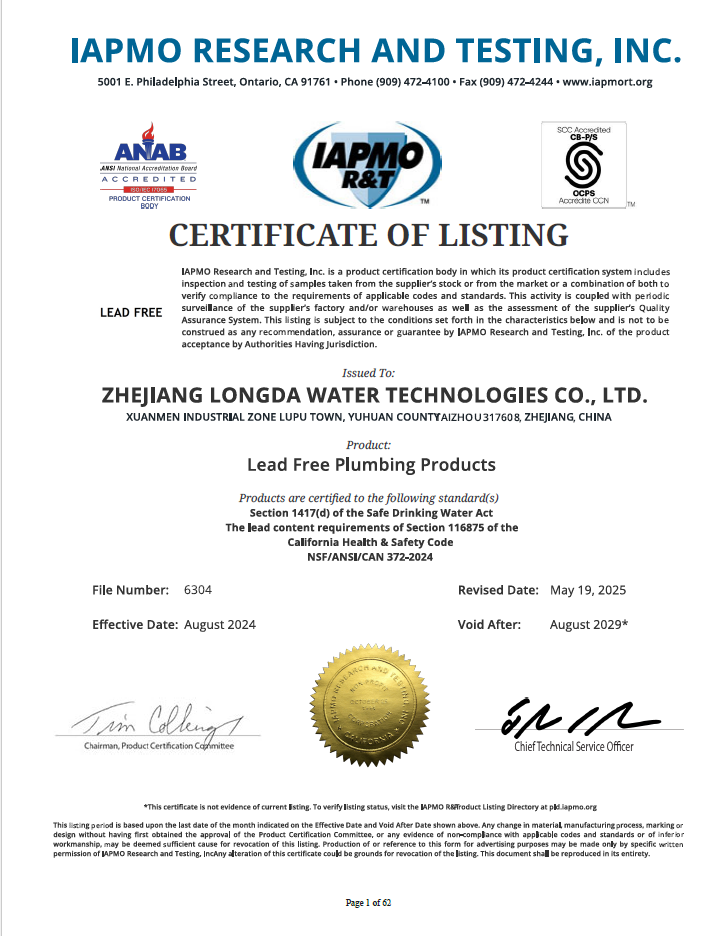
Lead-free documentation is a package, not a logo: material test report, NSF/ANSI 61 and 372 compliance, and cUPC listing for the finished valve.
Installation Sequence and the Failure Modes That Appear Later
Most angle stop problems in a completed building trace back to four installation-stage events: connection leakage, stem leakage, thread damage, and dezincification over time. Each has a documented control, and the controls are cheaper at installation than at remediation.
The installation sequence
- Confirm the rough-in. Verify the outlet thread form (NPT per ASME B1.20.1, or BSP where the project requires ISO 228-1) and the outlet direction before opening the packaging.
- Flush the line. Debris trapped at the seat is a common cause of a stop that will not close cleanly.
- Apply PTFE tape to the male thread only, in the direction of thread engagement, leaving the first thread clear.
- Hand-start the valve, then tighten with a wrench on the body flats — never on the handle or the chrome-plated shell.
- Set the handle orientation so the open/closed position is visible and the handle clears the cabinet, cistern, or laundry box.
- Connect the supply hose without a sharp bend, and confirm the hose length allows the fixture to be serviced or pulled forward.
- Pressurise and check the outlet joint and the stem area, then operate the valve through a full quarter turn to confirm travel.
- Record the installation — model, thread type, and zone — so later phases and replacements match the original specification.
Failure modes and their controls
| Failure | Where it starts | Control |
|---|---|---|
| Connection leakage at the outlet | Thread engagement and tape application | PTFE seal and correct torque; NPT threads gauged to ASME B1.20.1 |
| Stem leakage | Seal stack at the stem | PTFE seal with double O-ring and a quarter-turn ball core; 100% air pressure test before shipment |
| Thread damage | Cross-threading during tightening | Thread gauge inspection on every production lot; hand-start before wrenching |
| Dezincification over time | Alloy choice against aggressive water | DZR grades such as CW602N, or lead-free brass C4650 and CW511L, selected at specification stage |
The control column is where a supplier's process becomes visible in the product. A 100% air pressure test on every unit, thread gauging on every lot, and a lead-free material test report are process facts, not marketing claims — they change what a contractor finds on site six months after handover. Longda supports this with a 12-month quality warranty and free replacement.
Standardizing the Package for Hotel and Apartment Fit-Out
Hotel and apartment fit-out rewards standardization far more than single-family work. A 200-key property repeats the same two or three valve positions in every room, which converts a small hardware item into a stock-keeping and maintenance decision across the whole building.
Start by counting valves per key rather than per project: one for the vanity, one for the toilet, plus any laundry, pantry, or back-of-house connections. Multiply by keys, add the public-area and mechanical allowance, and you have the base quantity for the release. From there, four specification choices do most of the work:
- One valve family across all zones. A program that covers 50+ models across sizes, connections, and finishes lets one purchase order serve vanity, toilet, and appliance positions instead of splitting the package between suppliers.
- Connection coverage that matches the actual pipe system. Fit-out packages commonly mix NPT and compression threads with F1807 PEX, F1960 expansion, CPVC, press, push-fit, or solder ends. Confirming the connector list against the mechanical drawings prevents site substitutions.
- Consistent spare stock. Holding the same SKU for maintenance as for installation means a failed valve in year three is swapped from site stock, not sourced as a one-off.
- Phase-by-phase releases. Hotels are commissioned in phases, and apartments complete floor by floor. The supply program needs to support repeat releases of the same specification over many months.
That last point is where the specification stops being a product question and becomes a supply question. A valve that is correct on paper but unavailable in phase three forces a substitution — and a substitution mid-project is how a standardized package becomes a mixed inventory.
The Supply Program Behind the Specification
In North America most angle stops reach the job through the wholesale channel — plumbing distributors such as Ferguson and Winsupply — rather than directly from the manufacturer. That makes the distributor's replenishment program part of the specification, because the contractor's schedule depends on repeat availability, not on a single delivery.
Longda publishes program parameters that a distributor can plan against: a minimum order quantity of 1,000 pieces per size; delivery terms including FOB Ningbo or Shanghai, CIF, CNF, DDP, or EXW; acceptance by pre-shipment inspection with a test report; and payment terms of 30% T/T in advance with 70% T/T against a copy of the bill of lading, or other terms by consultation. Sample lead time is 5–7 days and quotation response is within 24 hours, which matters when a fit-out schedule compresses late in the program.
The company also reports performance data for its own supply: an on-time delivery rate above 98%, zero quality complaints over the past three years, and pricing 5%–10% lower than same-quality factories. These are company-reported figures; treat them as a starting point for verification rather than a substitute for it. A like-for-like quotation on the same specification, plus the test report and certification listing for the actual lot, is what converts a claim into a procurement decision.
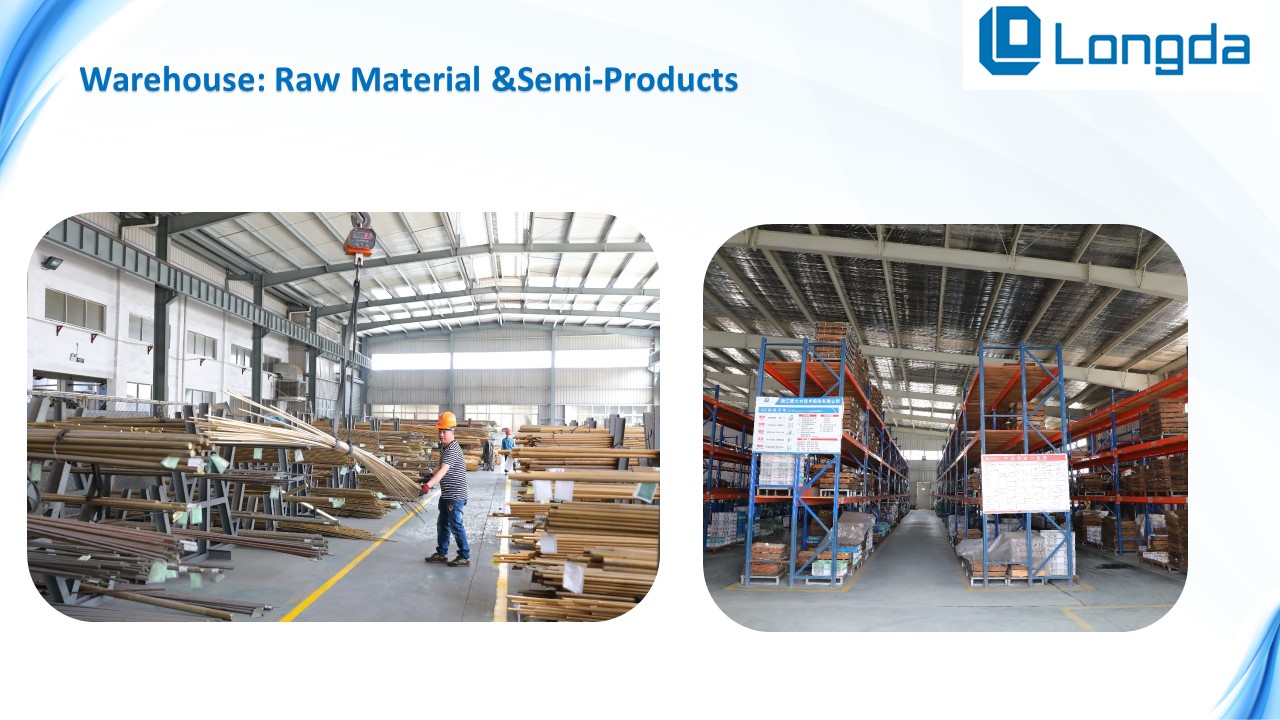
Production capacity and in-house testing sit behind the delivery commitment — the part of the program a distributor cannot see in a sample box.
Market structure explains why the question is worth asking. Dataintelo values the global brass valves market at USD 14.8 billion in 2025, projected to reach USD 24.1 billion by 2034 at a 5.6% CAGR from 2026 to 2034, with North America holding approximately 26.1% of that market in 2025. Mordor Intelligence reports that the top five global valve suppliers control roughly 35% of global revenues. A concentrated supply base is efficient until one link in it slips — which is the practical argument for a second qualified source on a fit-out program, and for asking a smaller specialist manufacturer for the same documentation package a large brand provides.
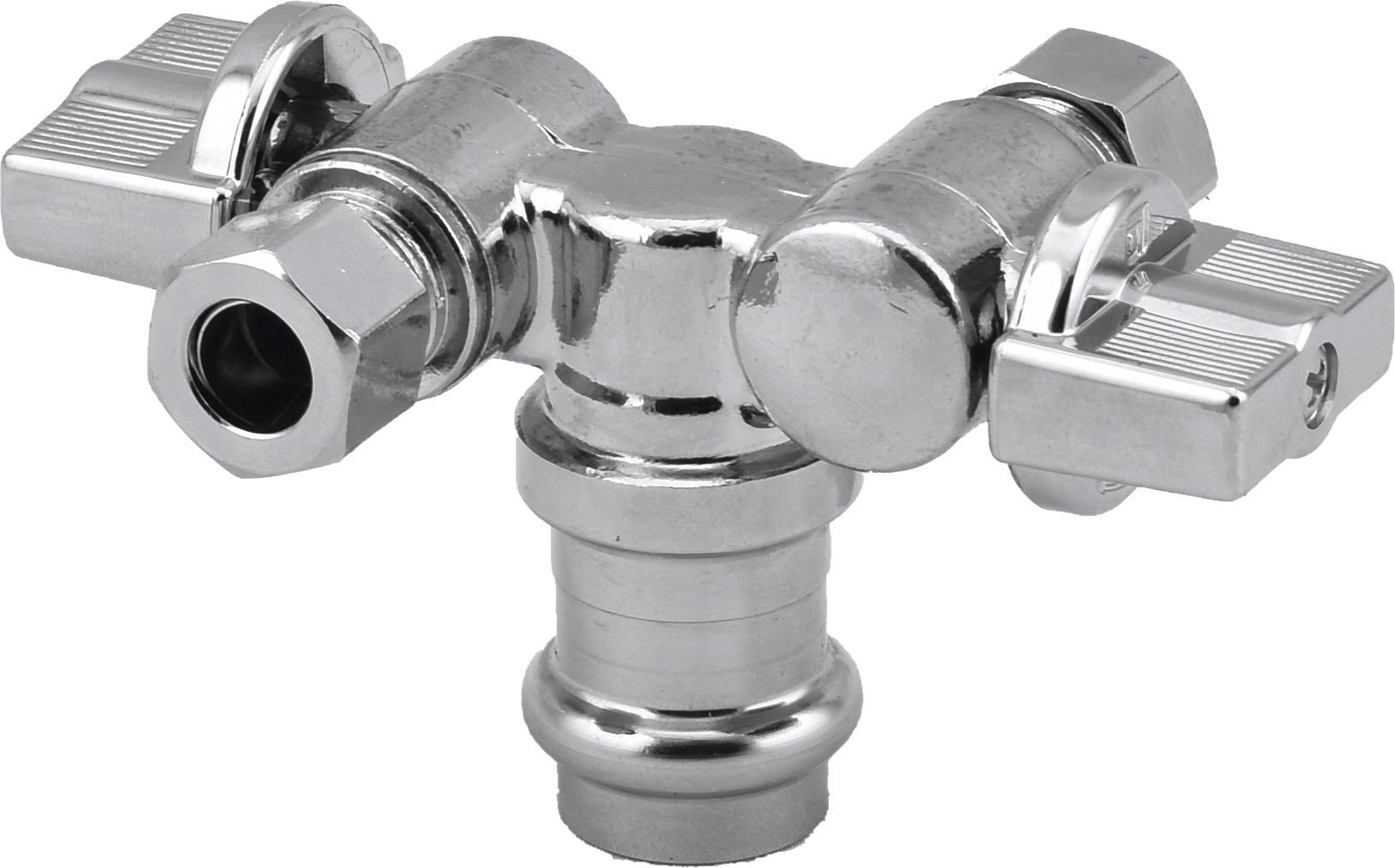
A complaint record is only useful if it comes with the test data behind it: unit-level pressure testing and lot-level thread gauging.
Capability breadth completes the picture. Longda operates a 30,000 m² facility with more than 360 sets of processing and testing equipment, including spectral analysis instruments, high and low temperature test boxes, salt-spray test boxes, and high-pressure testing sets, with an annual output of 7,500 tons and around 200 employees. The company offers OEM and ODM solutions covering in-house tooling and design through to final production and testing, which is relevant when a distributor needs a specific finish, handle style, or packaging format for its own brand.
Pre-Release Checklist for an Angle Stop Package
Use this list before releasing an angle stop order for a residential or hotel fit-out. Each item maps to a decision above, and each one is cheaper to resolve before production than after delivery.
- Fixture schedule counted per key, not per project, with public-area and mechanical allowances added.
- Pressure and temperature band confirmed against the riser, not assumed from the room type.
- Alloy grade named on the purchase order, including DZR or lead-free brass where water chemistry requires it.
- Connection list matched to the drawings: NPT and compression threads, F1807 PEX, F1960 expansion, CPVC, press, push-fit, or solder.
- Lead-free evidence confirmed: wetted surface lead ≤ 0.25% under NSF/ANSI 372 and the Safe Drinking Water Act / California AB1953.
- NSF/ANSI 61 compliance and cUPC listing to ASME A112.18.1 / CSA B125.1 on file for the exact model.
- Lot-level lead-free material test report and 100% air pressure test record available.
- Thread gauging per lot confirmed for NPT or the market-specific thread form.
- Sample drawn from production, not from a display set, and checked for handle travel and finish.
- Program terms agreed: MOQ, delivery term, inspection basis, payment terms, spare-stock quantity, and phase release schedule.
Frequently Asked Questions
What lead-free documentation should a US or Canadian fit-out package include for brass angle stop valves?
The package should show wetted surface lead content of no more than 0.25% under NSF/ANSI 372 and the federal Safe Drinking Water Act as amended by California AB1953, NSF/ANSI 61 compliance for materials in contact with drinking water, a cUPC listing to ASME A112.18.1 / CSA B125.1 for supply stops, and NPT threads gauged to ASME B1.20.1. A lot-level lead-free material test report and a 100% air pressure test record complete the evidence set.
Can one angle stop specification cover sinks, toilets, and washing machines in the same project?
Yes, provided the program covers the connection and finish range the project actually uses. A fixture-level angle stop is specified for indoor duty at 40–80 psi and 4–60 °C behind sinks, toilets, and washing machines; the differences between zones are outlet direction, handle clearance, and hose routing, not the valve's core duty. Longda's program covers 50+ models across sizes, connections, and finishes, so one family can serve vanity, toilet, and appliance positions without site substitutions.
What are the minimum order quantity and commercial terms for a distributor order?
The minimum order quantity is 1,000 pieces per size. Delivery terms offered are FOB Ningbo or Shanghai, CIF, CNF, DDP, or EXW. Acceptance is by pre-shipment inspection with a test report, and payment terms are 30% T/T in advance with 70% T/T against a copy of the bill of lading, with other terms available by consultation.
How quickly can samples be supplied and validated before a fit-out release?
Sample lead time is 5–7 days and quotations are answered within 24 hours. Each unit is air pressure tested before shipment, threads are gauge-inspected on every lot, a lead-free material test report is available, and the product carries a 12-month quality warranty with free replacement. That sequence lets a contractor test handle travel, finish, and thread fit against the actual fixture schedule before the order is placed.
How does a distributor set up a long-term replenishment program for phased fit-out work?
Fix the specification once — model, alloy, finish, thread form, and packaging — then release it phase by phase against the same SKU, with spare stock held for maintenance. Longda supports this through OEM and ODM solutions, IAPMO and ALS certified products, a reported on-time delivery rate above 98%, and repeat releases at a minimum of 1,000 pieces per size. Distributors planning a multi-phase program can review the current range in the Longda global catalogue or send the fixture schedule to sales@ld-valve.com for a specification review.
Conclusion
An angle stop valve is a small item with a long service life and a short window for getting it right. In residential new construction, renovation, and hotel or apartment fit-out, the decisions that matter are consistent: match the valve to the zone behind the sink, toilet, or washing machine; specify for the 40–80 psi and 4–60 °C indoor band plus the humidity of the room; and require the lead-free evidence — 0.25% wetted surface lead under NSF/ANSI 372 and the Safe Drinking Water Act, NSF/ANSI 61, and a cUPC listing — as documents rather than assurances.
The fourth decision is the one that surfaces later: whether the same specification can be reordered in phase three, with the same alloy, the same finish, and the same test record. That is a supply-program question, and it is answerable before the first order is placed. Distributors and specifiers who want to check the range, the certifications, and the OEM/ODM options against a live fixture schedule can download the Longda global catalogue and compare it line by line with the project's mechanical drawings.
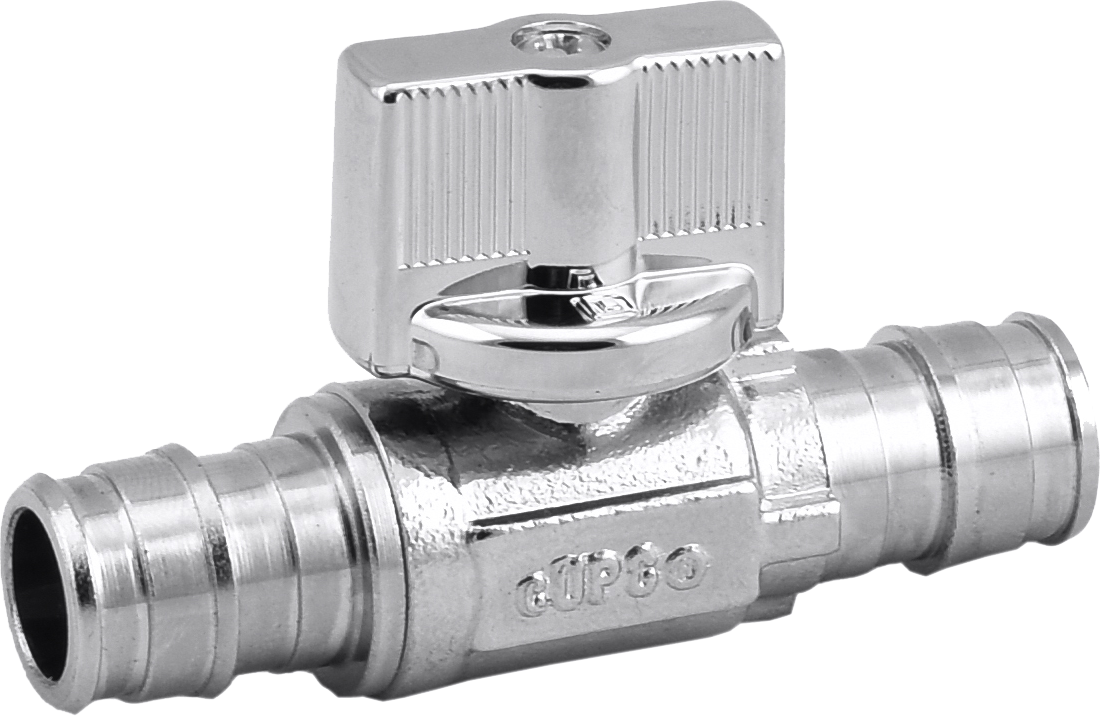
Repeat releases on the same specification are what keep a phased fit-out on schedule — the supply question behind every angle stop package.
Have Questions or Need More Details?
Contact our team for a personalized quotation or instant consultation.
Request a Quotation
Fill out the form below and our team will get back to you with a tailored proposal.
WhatsApp Direct Chat
Prefer to chat in real-time? Message us on WhatsApp for instant assistance & quick answers.
- Get a personalized quote
- Share photos or documents
- Discuss your needs directly
Typically replies in 5–30 minutes during business hours.