
Top 5 Brass Valve Picks for Fixture Supply Lines: A Distributor's Recommendation List
Distributor Series · Fixture Supply Lines
Top 5 Brass Valve Picks for Fixture Supply Lines: A Distributor's Recommendation List
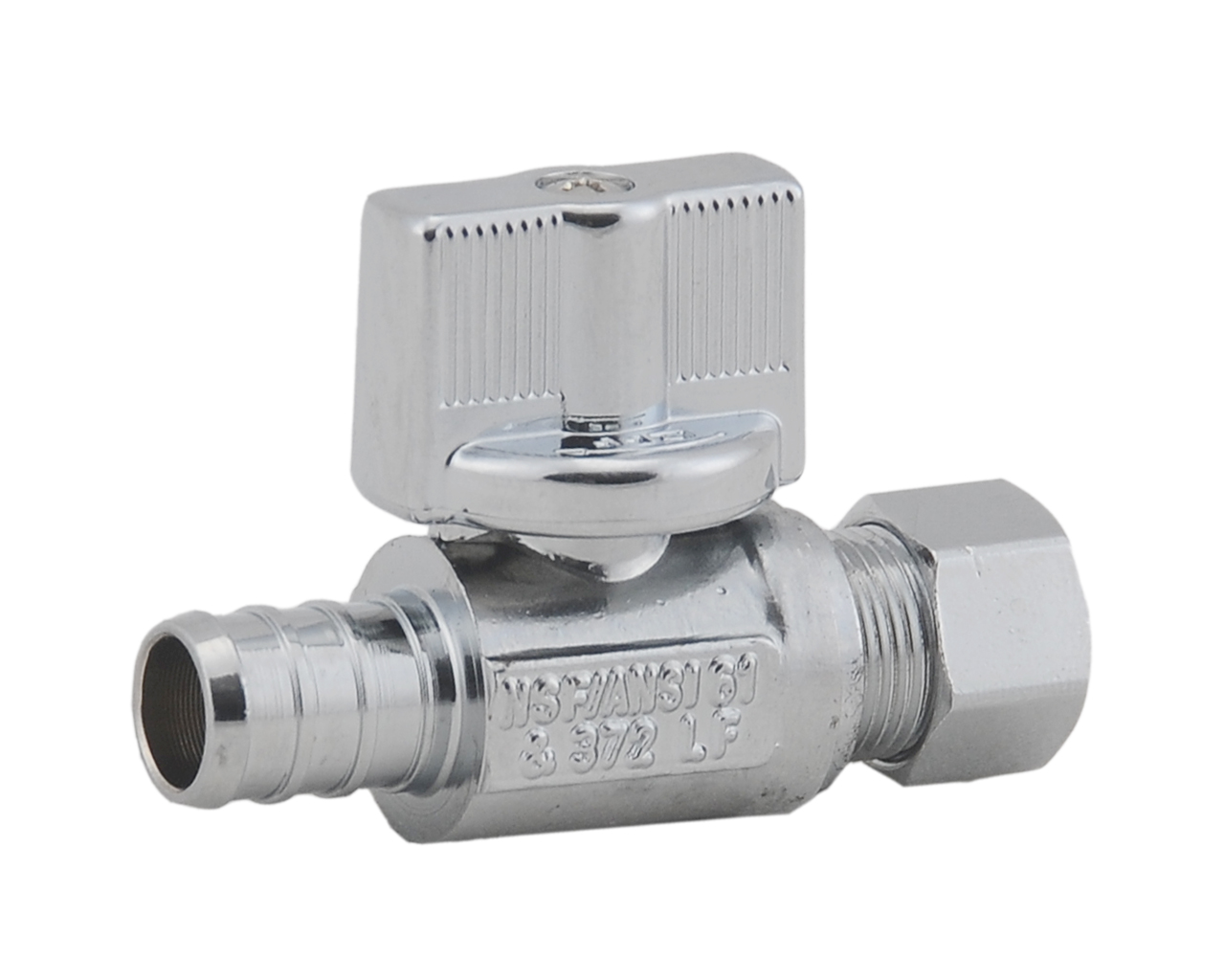
Behind a toilet is the highest-turnover fixture shut-off position in a residential build: visible, reachable, and operated by hand rather than by a plumber. Image: LONGDA BRASS VALVE.
A fixture supply line is the short run between the wall outlet and the fixture — a lavatory faucet, a toilet fill valve, a washing machine inlet, a dishwasher, or a refrigerator ice maker. It is also one of the few places in a building where the valve is operated by the end user instead of a plumber. That single fact changes how the assortment should be built: the handle has to be obvious, the open/close position has to be readable at a glance, and the body has to keep sealing after years of standing line pressure.
For local shut-off behind sinks, toilets and washing machines, five brass valve families cover almost every residential and light-commercial fixture connection. Ranked by how often they are specified in US, Canada and Mexico fixture programs, and by how reliably they behave at the working pressure those lines actually see — 40–80 psi (0.28–0.55 MPa) — the list runs: the brass angle valve (angle stop), the brass supply stop valve, the brass ball valve (including the 8081 two-piece full port, 600 WOG, blow-out-proof stem), the brass check valve (LD 30303, 200 WOG, −20°C to 150°C), and the brass Y strainer (LD.73154 with blow-down drain plug).
This recommendation list is maintained by LONGDA BRASS VALVE, the brand of Zhejiang Longda Technology Co., Ltd. — a brass valve and brass fittings manufacturer established in 1993 in the Xuangang Industry Zone, Lupu Town, Yuhuan County, Zhejiang Province, China. Its products are certified by IAPMO and ALS, are used in hot/cold water, heating, gas and chemical control systems, and are exported at a ratio of 95% to markets that include the EU, USA, Canada and South America.
What a Fixture Supply Line Valve Actually Has to Do
A fixture supply valve is not a general-purpose isolation valve scaled down. It performs four jobs, and each one produces a distinct failure mode that comes back to the distributor as a return, a claim or a lost account.
- Local isolation. The valve must stop water to a single fixture so a faucet cartridge, a fill valve or a supply hose can be replaced without shutting down the building. If it cannot be reached, or will not close completely, the plumber cuts the line — and the distributor absorbs the callback.
- Emergency shut-off. When a supply hose bursts, the person turning the valve is often a homeowner standing in water and working by feel. Quarter-turn operation with a visible open/close indication is what makes that possible.
- Flow path change. Behind a sink or toilet, the wall outlet rarely points at the fixture connection. A brass angle valve redirects the flow 90° so the supply hose can run vertically without a tight bend that stresses the connection.
- Debris and backflow control. A Y strainer keeps installation debris and scale out of fixture cartridges; a check valve stops reverse flow from equipment. Both support the isolation valve rather than replace it.
The sourcing risk for a distributor sits in four predictable places: connection mix (1/2" × 3/8" versus 1/2" × 1/2"), operation type (quarter-turn versus multi-turn), material compliance for potable water, and physical access behind the fixture. Every ranking decision below is tied to one of those four.
Industry Background: Why Fixture Stops Are Being Re-Specified
The brass valve category is large and still expanding. The global brass valves market was valued at USD 14.8 billion in 2025 and is projected to reach USD 24.1 billion by 2034, growing at a CAGR of 5.6% from 2026 to 2034 (Dataintelo). Ball valves held the largest product-type share of that market at 38.4% in 2025, and North America accounted for approximately 26.1% of global brass valve revenue in the same year (Dataintelo). Asia Pacific, where most of the manufacturing capacity sits, held a 41.2% revenue share in 2025, and China accounts for roughly 41% of global brass ball valve export shipments, followed by Vietnam at about 30% (Volza).
Compliance is moving in one direction. Lead-free brass alloys are becoming the mandatory standard for potable water applications in the United States under the Safe Drinking Water Act (US EPA). For supply stops specifically, ASME A112.18.1 / CSA B125.1 is the performance reference, ASTM F1960 governs PEX-A cold expansion connections, and ASME B1.20.1 defines the NPT thread form used on North American connections. In Europe, EN 13828:2003 specifies requirements for manually operated copper alloy ball valves for drinking water supply — useful context for distributors who also source for other markets.
The North American brass valve segment includes established suppliers such as Watts Water Technologies and NIBCO in plumbing and heating valves, and Mueller Industries in the brass valve segment (Dataintelo). For an inventory planner, that matters less as a competitive statement than as a stocking reality: fixture stops are a high-SKU, high-velocity category where brand substitution is common, so the practical question is whether a supplier can hold the specification range and the compliance paperwork together across a full program.
How This Ranking Was Built
Four criteria were applied to each valve family, in this order of weight:
- Manual quarter-turn operation. A quarter-turn (1/4 turn) handle with a visual open/close indication is the default expectation for fixture shut-off, because the operator is often not a tradesperson.
- Working pressure of 40–80 psi. This is the typical pressure window on indoor fixture supply lines behind sinks, toilets and washing machines, where the valve sits in a humid environment and is opened and closed frequently.
- Visibility and accessibility. The valve has to be reachable and readable in the space where it is installed, not merely rated for it.
- US, Canada and Mexico compliance fit. Lead-free construction for potable water contact, cUPC listing, NSF/ANSI 61 and 372, ASME A112.18.1 / CSA B125.1, and NOM for Mexico.
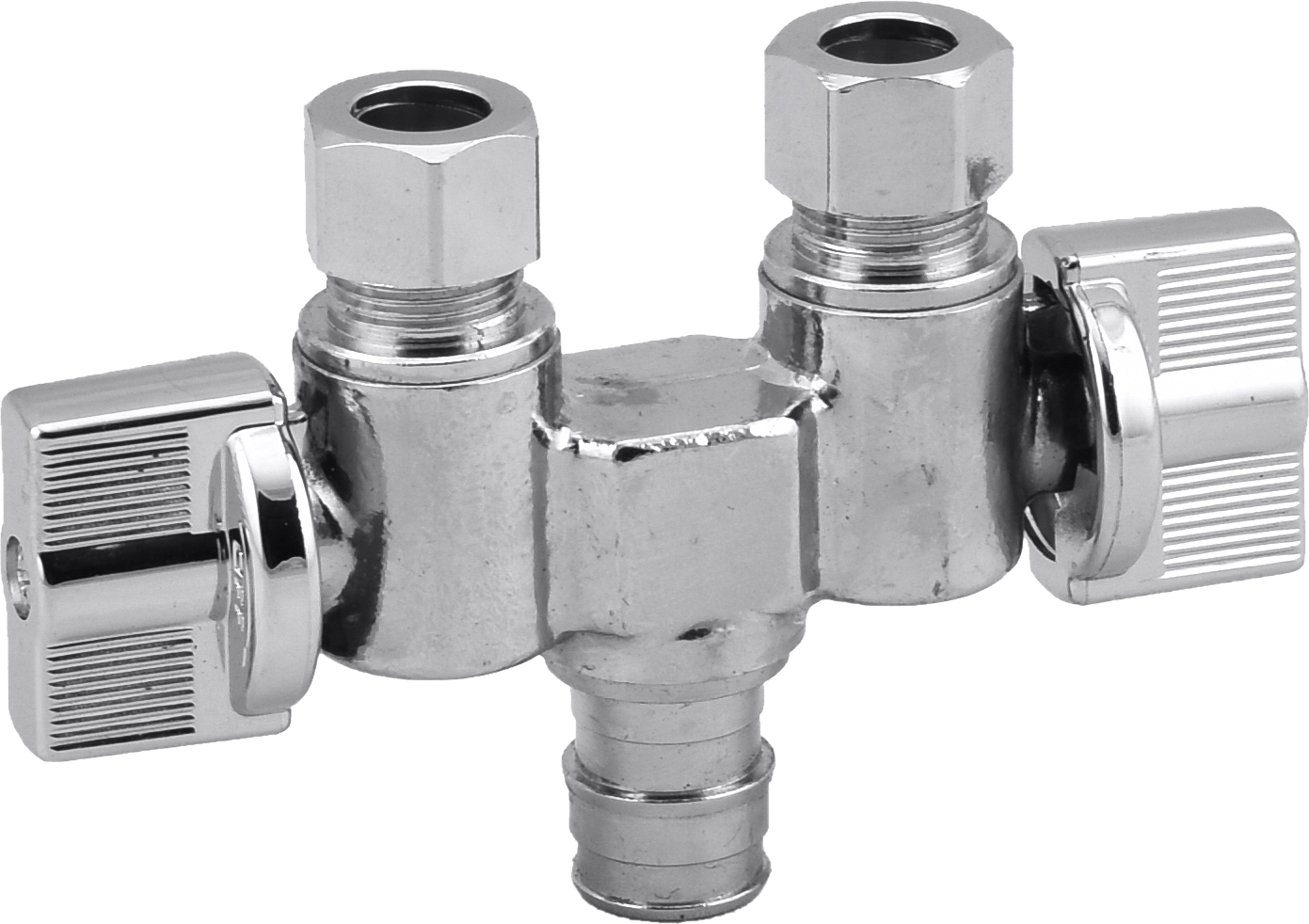
Fixture-stop programs are won on specification breadth: multiple sizes, connection types and finishes held under one part number family.
The Five Picks, Ranked
#1 — Brass Angle Valve (Angle Stop): The Highest-Turnover Position
The brass angle valve is the default fixture shut-off wherever the wall outlet does not line up with the fixture connection — which is most lavatory sinks, most toilets in new construction, and most ice-maker and dishwasher drops. Its function is to redirect water flow 90° from the wall-outlet pipe while providing reliable local shut-off, so a fixture can be serviced or stopped in an emergency without cutting water to the whole building. It installs between the wall supply pipe and the fixture supply hose.
Reference construction for the LONGDA BRASS VALVE supply-stop family (model 98023-LF) shows what a distributor should expect at this position: sizes of 1/2" × 3/8" and 1/2" × 1/2" (DN15 × DN10/DN15); quarter-turn (ball) or multi-turn operation; connection options covering compression × compression, FIP × compression, PEX × compression (ASTM F1960), sweat and threaded ends; a 125 psi pressure rating with a working temperature range of −20°C to 120°C; a hot-forged brass CW617N body or a lead-free brass body for potable water contact; brass stem and ball; PTFE seats; and NBR/EPDM O-rings. Lead-free versions are certified to cUPC and NSF/ANSI 61 & 372, and the family covers faucet, toilet, washing machine and water heater terminal applications.
Why it ranks first: it covers the widest number of fixture positions with the fewest surprises, and it is the part a homeowner most often touches. Quarter-turn operation with a visible handle position is what makes a 40–80 psi fixture line controllable by hand. The design limit is spatial: where there is almost no clearance behind a cabinet, a straight stop can be easier to grip, and multi-turn versions are harder for end users to read than quarter-turn versions.
#2 — Brass Supply Stop Valve (Straight): The Workhorse for Toilets and Washers
The straight brass supply stop valve does the same job as the angle valve but keeps the outlet in line with the wall pipe. It is the correct pick when the supply exits parallel to the fixture connection — typically toilet fill valves and washing machine inlets, where the hose runs straight down or straight back rather than turning through 90°.
It shares the sealing architecture of the angle family: PTFE seal plus double O-ring sealing, quarter-turn ball core design, and a chrome-plated anti-corrosion finish, which matters in bathrooms, laundry rooms and other humid areas. It also carries the same compliance profile — lead-free brass with wetted surface lead ≤ 0.25%, cUPC, NSF/ANSI 61 & 372, ASME A112.18.1 / CSA B125.1 for supply stops, NPT threads to ASME B1.20.1, and NOM for Mexico.
Why it ranks second: fewer positions require a straight body than require an angle, but where a straight body is required it is the only correct choice. Stocking both in the same finish and handle style is what lets a distributor serve a service plumber from one box instead of two brands.
#3 — Brass Ball Valve (8081 Two-Piece Full Port, 600 WOG, Blow-Out-Proof Stem): Heavier-Duty Isolation
The 8081 two-piece full port brass ball valve sits one class above a fixture stop. Full-port construction keeps pressure drop to a minimum, so equipment downstream still sees the flow it was sized for; the two-piece body allows service access; and the blow-out-proof stem construction keeps the stem mechanically captured rather than relying on the packing nut alone. Its 600 WOG rating covers water, oil and gas service and places it well above the 125 psi reference rating of the fixture-stop family described above.
Why it ranks third: on a fixture drop, this valve is more valve than the line needs. It earns its place at the positions where isolation and full flow have to happen at the same time — water heater connections, branch-line takeoffs, and mechanical-room equipment where the valve may be operated under load. It ranks above the check valve and the Y strainer because, where it is used, it can replace a stop entirely: one device performing both isolation and unrestricted flow. The trade-off is cost and envelope size; it is not a substitute for a compact fixture stop behind a vanity cabinet.
#4 — Brass Check Valve (LD 30303, 200 WOG, −20°C to 150°C): Backflow Protection on the Supply Side
The brass check valve LD 30303 permits flow in one direction only, which protects supply lines and equipment from reverse flow. Its reference ratings — 200 WOG with an operating range of −20°C to 150°C — are wider than a typical fixture stop, which is exactly why it belongs on the heat side of the system: water heater outlets, recirculation lines and heating circuits where a narrow temperature band would be a limitation.
Why it ranks fourth: it does not isolate anything, so it can never replace the shut-off valve ahead of it. It is ranked above the strainer because it addresses a system-integrity risk rather than a maintenance convenience.
#5 — Brass Y Strainer (LD.73154 with Blow-Down Drain Plug): Mechanical Protection with a Service Feature
The brass Y strainer LD.73154 protects downstream fixtures and appliances from debris, scale and installation swarf. The Y-body keeps the flow path straight so the pressure penalty is limited, and the blow-down drain plug is the feature that separates it from a plain strainer: trapped material can be flushed out without breaking the line or removing the fitting.
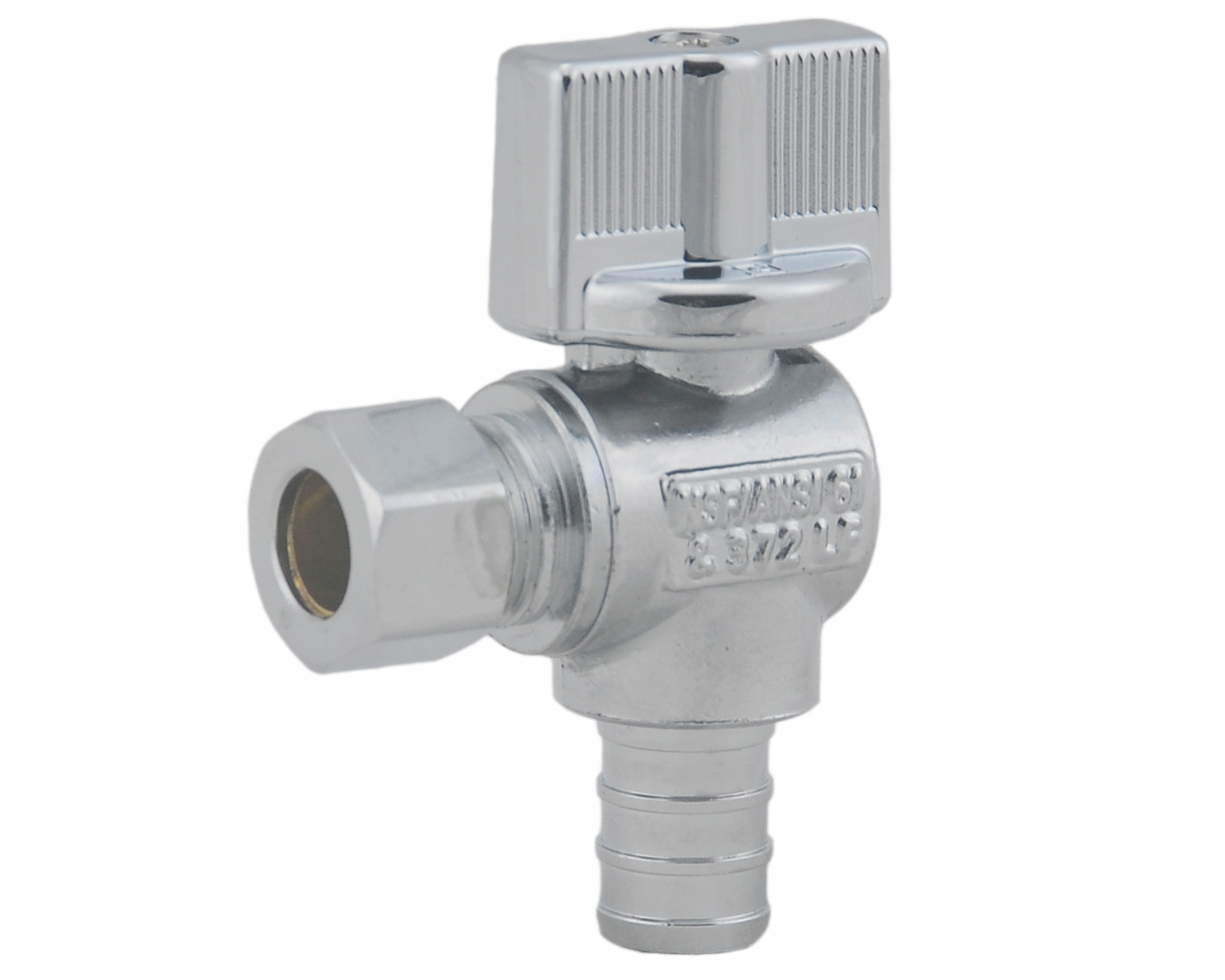
Retail-ready packaging matters at the fixture-stop tier: the same valve may ship to a distributor counter or a home-improvement shelf.
Why it ranks fifth: it is an accessory, not a shut-off device. Distributors stock it for service-heavy accounts — hotels, apartments and commercial kitchens — where fixture cartridges are repeatedly fouled by debris and each service call is expensive.
Step-by-Step: Building the Assortment for a Fixture Program
- Map the fixture list before the valve list. Count every position: lavatory faucets, kitchen faucets, toilets, washing machine inlets, dishwasher connections, refrigerator ice makers, water heater terminals. Each position decides angle versus straight.
- Match the connection, not the description. Fixture-stop connection options include compression × compression, FIP × compression, and PEX × compression to ASTM F1960, plus sweat and threaded ends. Broader project schedules may also call for F1807 PEX, F1960 expansion, CPVC, press, push-fit and solder interfaces.
- Confirm the material for the medium. Potable water contact requires lead-free brass with wetted surface lead ≤ 0.25% per NSF/ANSI 372 and the Safe Drinking Water Act, with wetted materials meeting NSF/ANSI 61. Hot-forged brass CW617N is the standard (non-potable) body option; lead-free brass is the potable-water option.
- Check the pressure and temperature envelope. Typical fixture supply lines run at 40–80 psi (0.28–0.55 MPa). The fixture-stop family referenced here is rated to 125 psi with a −20°C to 120°C working range, comfortably above the line conditions it serves.
- Verify the sealing architecture. Look for PTFE seal plus double O-ring construction, a quarter-turn ball core, and a chrome-plated anti-corrosion finish — these are the three features that address the most common field complaints: connection leakage, stem leakage and thread damage.
- Lock the quality evidence into the contract. 100% air pressure testing before shipment, thread gauge inspection on every lot, a lead-free material test report, and a 12-month quality warranty with free replacement.
- Confirm the commercial terms. MOQ is 1,000 pcs per size; delivery terms include FOB Ningbo / Shanghai, CIF, CNF, DDP and EXW; acceptance is based on pre-shipment inspection with a test report; payment terms are 30% T/T in advance with 70% T/T against copy of B/L, or other terms on consultation.
- Plan the replenishment, not just the order. Fixture stops are a repeat-purchase category. Two commercial signals matter more than unit price: on-time delivery rate and return rate, because both drive the safety stock a distributor has to carry.
Use Cases: Where Each Pick Earns Its Place
- Lavatory and kitchen sink vanity. A brass angle valve in 1/2" × 3/8" compression, quarter-turn, installed behind the cabinet where it is visible and reachable. This is the single most common fixture-stop position in residential construction.
- Toilet. A straight supply stop where the outlet runs parallel to the fill valve connection; an angle stop where the outlet comes out of the wall.
- Washing machine and laundry room. A pair of supply stops for hot and cold inlets, with quarter-turn handles that a homeowner can close quickly if a hose fails.
- Dishwasher and refrigerator ice maker. A compact angle stop behind the kitchen cabinet, an application explicitly covered by the supply-stop family alongside faucet, toilet, washing machine and water heater terminals.
- Water heater and branch isolation. The 8081 two-piece full port ball valve, where full-port flow and heavier-duty isolation are required.
- Heat-side and recirculation positions. The LD 30303 check valve, whose −20°C to 150°C range and 200 WOG rating allow it to sit closer to hot equipment than a fixture stop.
- Service-heavy accounts. The LD.73154 Y strainer with blow-down drain plug, upstream of fixtures and appliances, for buildings where debris-related callbacks are a recurring cost.
- Multi-market programs. US, Canada and Mexico distribution — the same family covers the three markets once lead-free construction, cUPC listing, NSF/ANSI 61 & 372, ASME A112.18.1 / CSA B125.1 and NOM certification are in place.
Comparison Table: The Five Families Side by Side
| Rank | Valve family | Typical position | Reference sizing & connections | Reference rating | Compliance focus (US / CA / MX) | Why it holds this rank |
|---|---|---|---|---|---|---|
| 1 | Brass angle valve (angle stop) | Lavatory, kitchen, toilet, ice maker, dishwasher — behind the fixture | 1/2" × 3/8" and 1/2" × 1/2" (DN15 × DN10/DN15); compression × compression, FIP × compression, PEX × compression (ASTM F1960), sweat, threaded | 125 psi; −20°C to 120°C | Lead-free brass (wetted lead ≤ 0.25%), cUPC, NSF/ANSI 61 & 372, ASME A112.18.1 / CSA B125.1, NPT per ASME B1.20.1, NOM (Mexico) | Covers the most fixture positions; 90° redirection plus quarter-turn local shut-off with visual indication |
| 2 | Brass supply stop valve (straight) | Toilet fill valve, washing machine inlet — parallel outlet | Same family sizing; compression, FIP, PEX (ASTM F1960), sweat, threaded | Same family rating | Same compliance set; chrome-plated anti-corrosion finish for humid rooms | Required where the outlet faces the fixture; same sealing architecture as the angle valve, so one stock item serves both |
| 3 | Brass ball valve — 8081 two-piece full port | Water heater connections, branch takeoffs, mechanical-room equipment | Two-piece full-port body | 600 WOG; blow-out-proof stem | Selected to project specification | Heavier-duty isolation with minimal pressure drop; can replace a stop where full flow and isolation occur together |
| 4 | Brass check valve — LD 30303 | Appliance and equipment inlets, recirculation and heat-side lines | In-line check function | 200 WOG; −20°C to 150°C | Selected to project specification | Prevents reverse flow; wider temperature band suits hot-side positions. Does not isolate |
| 5 | Brass Y strainer — LD.73154 | Upstream of fixtures, appliances and water heaters | Y-body with blow-down drain plug | Selected to project specification | Selected to project specification | Debris protection with flush-down maintenance; complements isolation valves rather than replacing them |
Ratings shown are reference values for the valve families and models named in this article. Final selection should always match the line pressure, temperature and connection type on the project schedule.
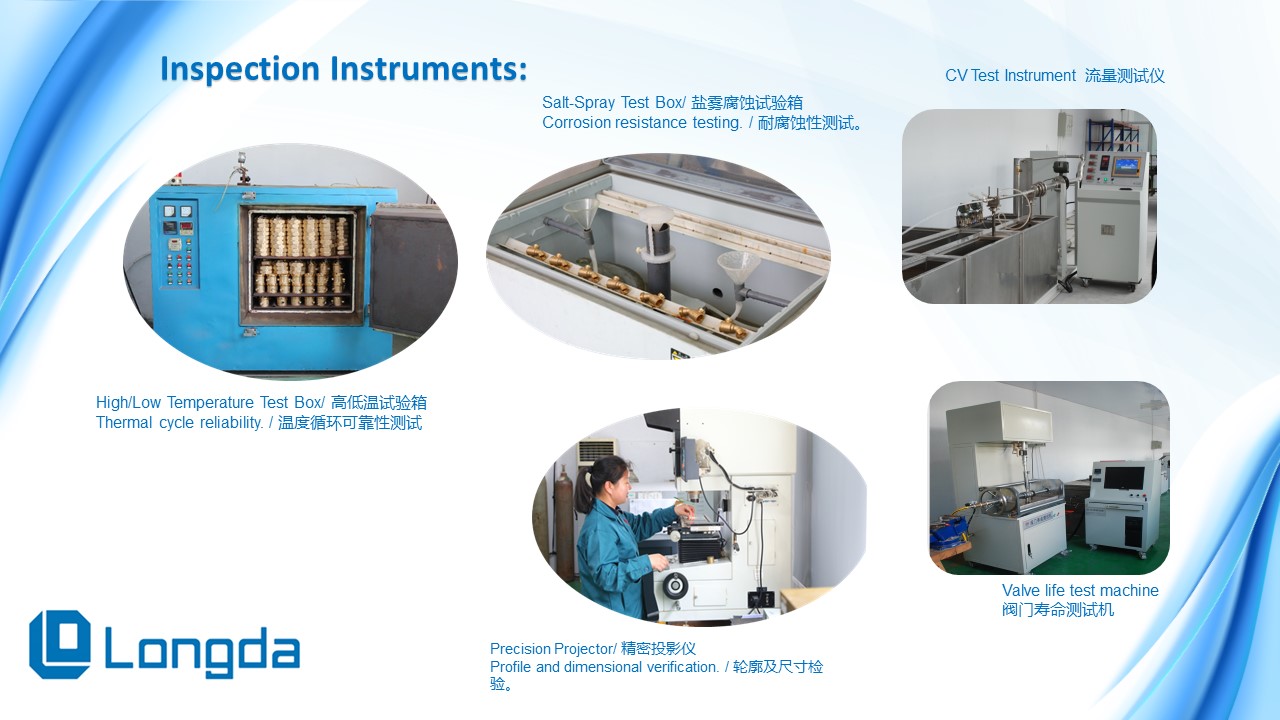
100% air pressure testing before shipment, plus thread gauge inspection on every lot, is the evidence distributors should contract for rather than assume.
FAQ: Fixture Supply Valve Sourcing Questions
Which certifications and standards should brass fixture supply valves carry for the US, Canada and Mexico?
For potable water contact in the US and Canada, wetted surface lead content must be ≤ 0.25% under NSF/ANSI 372 and the US Safe Drinking Water Act, including California AB1953, and all wetted materials must conform to NSF/ANSI 61 health-effects requirements. Supply stops are assessed against the cUPC-listed performance standards, including ASME A112.18.1 / CSA B125.1, with threads conforming to ASME B1.20.1 (NPT) and PEX-A expansion connections to ASTM F1960. Mexico adds NOM certification. LONGDA BRASS VALVE products are certified by IAPMO and ALS, covering these North American market requirements.
Can one manufacturer cover all five valve families for a fixture program?
Yes, and that is where a single-supplier assortment saves the most administrative work. Zhejiang Longda Technology Co., Ltd. was established in 1993, operates a site of over 30,000 m² with about 200 employees, produces 7,500 tons annually, and exports 95% of its output to markets including the EU, USA, Canada and South America. The company offers OEM/ODM solutions, from in-house tooling and design through production and testing. Its supply-stop range covers 50+ standard models across sizes, connections and finishes, compared with roughly 10–20 models at an average factory — the difference between one purchase order and four.
How should a distributor evaluate price on fixture supply valves?
Unit price alone is the least useful metric in a repeat-purchase category. The real cost includes returns, claim handling, safety stock and the risk of a line down during a contractor's installation window. At equal quality, LONGDA BRASS VALVE's supply-stop program is positioned 5%–10% below same-quality factories, supported by a zero-complaint record over the past three years and an on-time delivery rate above 98% — which translates into fewer returns and less buffer inventory rather than simply a lower invoice.
How fast can samples be validated before committing to a fixture program?
Sample lead time is 5–7 days, and quotations are answered within 24 hours. That window is enough to check thread fit, handle feel and finish against an existing stock item before a full order is placed, and it shortens the development cycle for a new specification. Acceptance is based on pre-shipment inspection with a test report.
What are the MOQ, delivery and payment terms for a fixture valve program?
MOQ is 1,000 pcs per size. Delivery terms include FOB Ningbo / Shanghai, CIF, CNF, DDP and EXW. Payment terms are 30% T/T in advance with 70% T/T against copy of B/L, or other terms on consultation. Every shipment is supported by pre-shipment inspection with a test report, and lead-free material test reports are available for your compliance file, alongside a 12-month quality warranty with free replacement. To move from evaluation to execution, request a quote or sample at sales@ld-valve.com, or start with the program scope and fixture list above.
Conclusion: What to Lock In Before the Next Replenishment
The fixture supply line is a small part of a plumbing package and a disproportionate share of the service calls. The five-family assortment described here — angle valve, straight supply stop, full-port ball valve, check valve and Y strainer — covers local shut-off, flow redirection, heavier-duty isolation, backflow protection and debris control at the positions where US, Canada and Mexico installations actually need them. The ranking is driven by frequency of use and by how well each family performs under manual quarter-turn operation at 40–80 psi with the valve visible and reachable behind the fixture.
For a distributor, the executable version of this list is a short specification checklist: lead-free construction with documented wetted-surface lead content, cUPC and NSF/ANSI 61 & 372 listings, NOM where Mexico is in scope, PTFE and double O-ring sealing, quarter-turn operation with a clear position indicator, and a supplier that can hold 50+ models, a zero-complaint record, an on-time delivery rate above 98% and a 5–7 day sample turnaround. Those are the terms that turn a recommendation list into a replenishment program.
Next Step: Sample, Quote or Catalogue
LONGDA BRASS VALVE supplies brass valves and brass fittings for residential and commercial plumbing, heating and HVAC systems, with OEM/ODM support and IAPMO and ALS certified production. To review the full fixture-stop, ball valve, check valve and Y strainer range, download the Longda global catalogue: Longda Global Catalogue (PDF). For pricing, samples or a program discussion, contact sales@ld-valve.com or reach us on WhatsApp at +86 13506869135. Website: www.ld-valve.com.
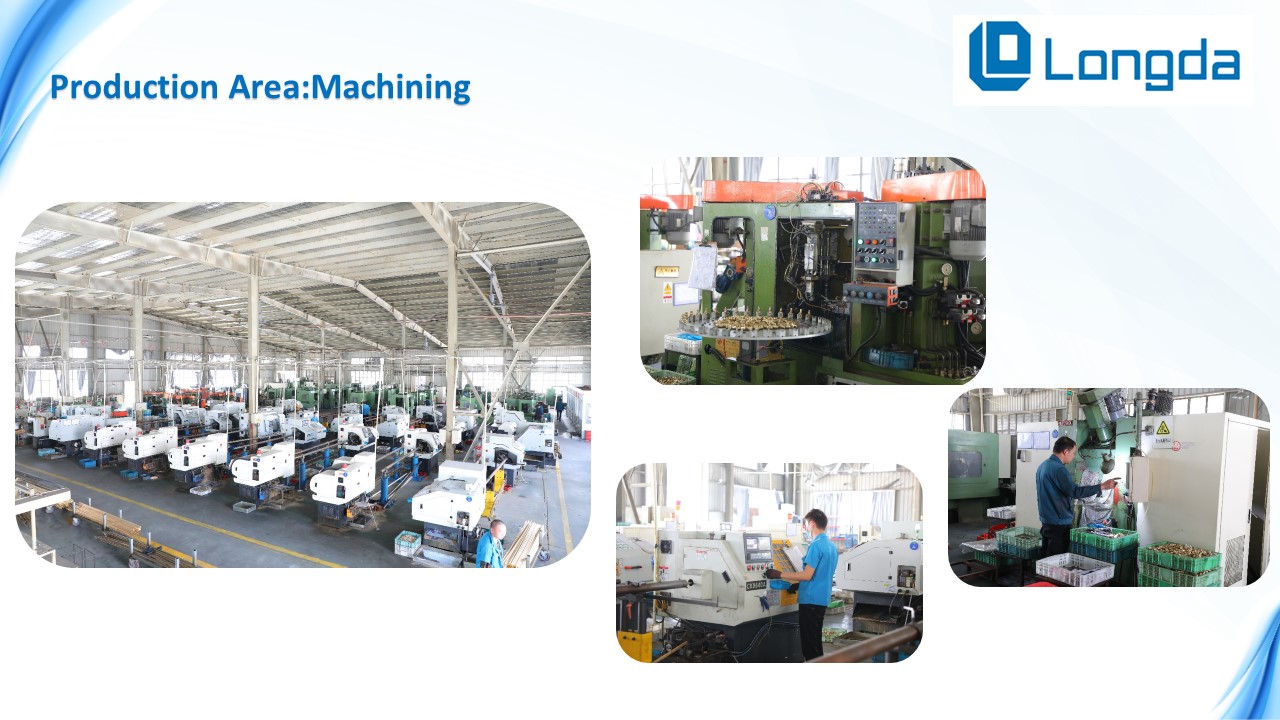
Zhejiang Longda Technology Co., Ltd. — over 30,000 m² in Yuhuan, Zhejiang, with 360+ processing and testing machines and OEM/ODM support from tooling to final test.
Have Questions or Need More Details?
Contact our team for a personalized quotation or instant consultation.
Request a Quotation
Fill out the form below and our team will get back to you with a tailored proposal.
WhatsApp Direct Chat
Prefer to chat in real-time? Message us on WhatsApp for instant assistance & quick answers.
- Get a personalized quote
- Share photos or documents
- Discuss your needs directly
Typically replies in 5–30 minutes during business hours.