
What Is a Brass Y Strainer? Protecting Your System from Debris
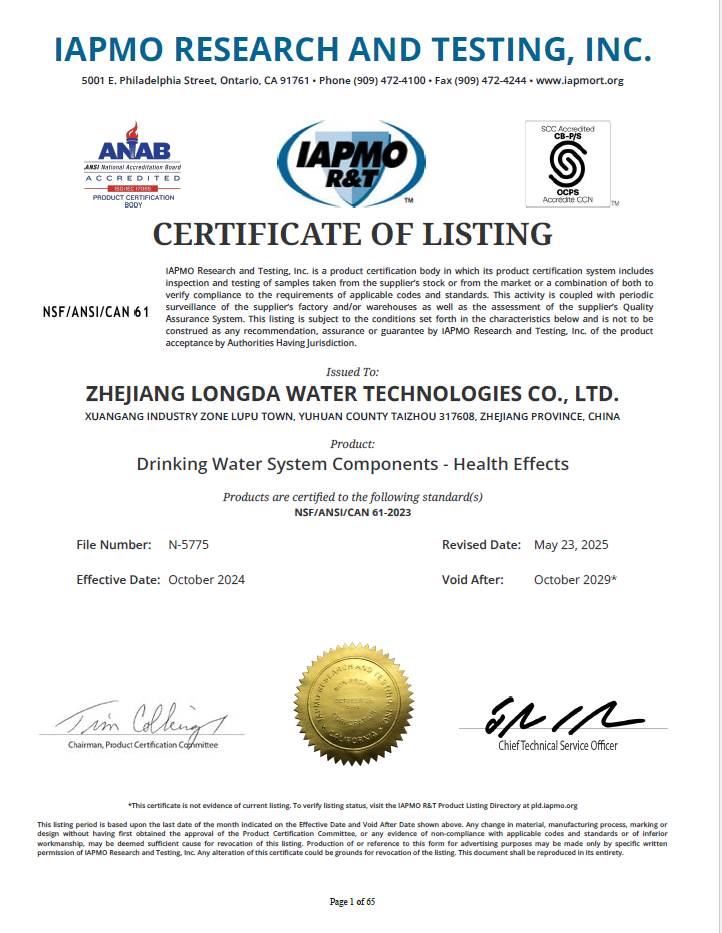
IAPMO Certificate of Listing N-5775 (NSF/ANSI/CAN 61) covers the LD.73154 Brass Y Strainer, issued 2024-10-01 and valid to 2029-10-01.
A brass Y strainer is an inline filtration component that traps solid debris before that debris reaches the valves, meters, pumps and fixtures downstream. It does not shut off flow. It protects the parts that do. In a water supply line, the debris is usually pipe scale, sand, weld slag, thread chips or fragments of seal material, and it collects at exactly the points where a system is most expensive to repair.
The LD.73154 Brass Y Strainer from LONGDA BRASS VALVE is built for that job. It is a threaded, Y-pattern strainer with an SS304 stainless steel screen, a blow-down drain plug for fast cleaning, and NBR/EPDM gaskets and seals. It is rated to 200 WOG with a working temperature range of -20°C to 150°C, and a lead-free brass version is listed by IAPMO to NSF/ANSI/CAN 61 and NSF/ANSI/CAN 372 for potable water contact.
The Problem: Debris Always Ends Up Somewhere
Debris carried by water does not stay suspended forever. Particles travel with the flow until the passage narrows or until they meet a moving part. That is why the first damage in a water system typically appears at valve seats, small orifices such as aerators and irrigation emitters, check valve discs, and pump or water meter internals. The mechanism is consistent and predictable: something narrows, something moves, or something seals, and solids interfere with it.
A Y-pattern strainer works by intercepting those particles in a screen that sits in an angled branch of the body. The screen is not a filter in the fine-filtration sense. It is a coarse protective element sized to stop the debris that would otherwise damage equipment. Because the branch is offset from the pipe run, captured material collects in a pocket that can be flushed out through the blow-down drain plug, and on the LD.73154 the screen can be replaced without disassembling the pipeline.
The practical consequence of omitting a strainer is not one dramatic failure. It is a series of small maintenance events distributed across the system: a sticking valve, a slowly degrading meter reading, a repeatedly clogged fixture, a pump that runs louder than it should. Each of those events is cheap once and expensive repeatedly.
Industry Background: Why Filtration Now Sits on the Specification List
Brass valve demand continues to expand as construction, renovation and utility replacement programs move forward worldwide. Market research published by Dataintelo values the global brass valves market at USD 14.8 billion in 2025 and projects USD 24.1 billion by 2034, a CAGR of 5.6% from 2026 to 2034. The same analysis places Asia Pacific at a 41.2% revenue share in 2025 and North America at 26.1%, reflecting where brass valve production and consumption are concentrated.
Two structural changes make debris protection more relevant than it was a decade ago. The first is material regulation. Lead-free brass has become the default choice for potable water applications in the United States under the Safe Drinking Water Act, as described by the U.S. Environmental Protection Agency, which means the material question is now decided before the performance question is asked. The second is system design. Modern potable water and hydronic systems increasingly rely on small orifices and tight internal clearances, and finer components are less tolerant of the particulates that older, larger-bore systems could pass without consequence.
A Y strainer addresses both changes at once. It is a low-cost component that protects the higher-cost components around it, and when specified in a lead-free, certified version it does not create a compliance problem of its own.
The LD.73154 Brass Y Strainer: What Is Inside the Body
The LD.73154 is a Y-type strainer with a drain plug, also described commercially as a Brass Y Strainer Valve or Y-type strainer valve. Every rated parameter below comes from the published product specification, which is the version buyers should compare against a quotation.
| Parameter | LD.73154 Specification |
|---|---|
| Product | Brass Y Strainer (Brass Y-Type Strainer Valve) |
| Model | LD.73154 |
| Size range | 1/2"–2" (DN15–DN50) |
| Pressure rating | 200 WOG (1.4 MPa) |
| Working temperature | -20°C to 150°C |
| Body material | Hot-forged brass (normal brass or lead-free brass option) |
| Screen | SS304 stainless steel, 20/40/60/80 mesh |
| Gasket & seal | NBR / EPDM |
| Drain plug | Brass, blow-down type for fast cleaning |
| Connection | Female NPT or BSP threaded |
| Serviceability | Screen replaceable without pipeline disassembly |
| Applications | Water supply pipelines, HVAC / chilled water systems, gas piping, agricultural irrigation |
The construction choices matter more than the summary table suggests. A hot-forged brass body gives the strainer a denser, more uniform structure than a casting in this size class, which matters when the body is threaded and must hold a pressure-tight joint at both ends. The SS304 stainless steel screen is the working element: stainless resists corrosion in potable water and in mildly aggressive fluids, so the mesh itself does not become a source of contamination. The 20/40/60/80 mesh options let a buyer match interception level to the debris actually present in the line rather than accepting a single fixed screen.
The NBR/EPDM gasket and seal combination covers the two most common elastomer requirements for water and heating service. The choice between the two is normally matched to the fluid, temperature and any chemical exposure in the application. The brass blow-down drain plug is the maintenance feature: opening it flushes captured debris out of the branch pocket without breaking the line. Combined with a replaceable screen, that design keeps service work at the strainer instead of in the pipeline.
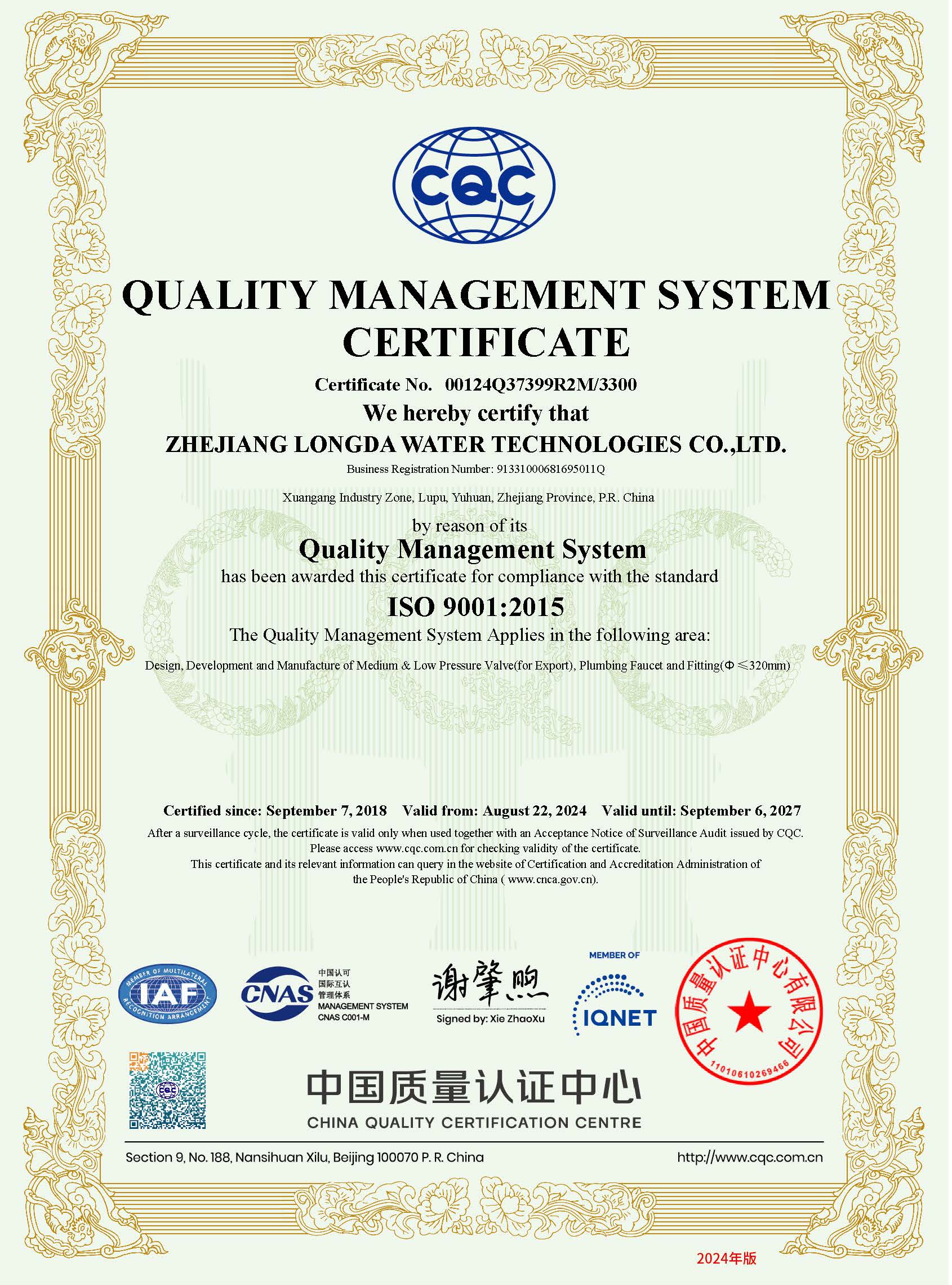
ISO 9001:2015 certificate CN00124Q37399R2M/3300, issued by China Quality Certification Centre (CQC) and valid to 2027-09-06, covering design, development and manufacture of medium and low pressure valves for export.
Ratings Explained: What 200 WOG and -20°C to 150°C Actually Tell You
200 WOG is a component-level rating. WOG is the established abbreviation for water, oil and gas, and the figure describes a non-shock static pressure rating. In metric terms, 200 WOG equals 1.4 MPa. A component rating is not a system design pressure: designers normally apply their own margin and account for water hammer, thermal expansion and pump shut-off transients, which can briefly exceed steady-state line pressure. The correct question is not whether the strainer is rated at 200 WOG, but how much headroom the system needs above its normal operating pressure.
The temperature range of -20°C to 150°C covers cold water supply, domestic hot water and a substantial portion of hydronic heating and chilled water duty. It also defines the boundary: service above 150°C falls outside the LD.73154 specification, and in that case a different component or an alternative seal material should be selected rather than assumed. Buyers working with steam or high-temperature process lines should treat the rated range as a selection limit, not a starting point.
Compliance: NSF/ANSI/CAN 61 and NSF/ANSI/CAN 372 for Potable Water
Compliance is where a strainer stops being a commodity part and becomes part of a documented supply chain. The LD.73154 is named on two IAPMO listings.
The first is a Certificate of Listing for NSF/ANSI/CAN 61, Drinking Water System Components – Health Effects, listed as N-5775 by IAPMO, issued 2024-10-01 and valid to 2029-10-01. NSF/ANSI/CAN 61 addresses the health effects of materials in contact with drinking water. The second is a Certificate of Listing for lead-free plumbing products under NSF/ANSI/CAN 372-2024, certificate number 6304, also issued by IAPMO, valid from 2024-08-01 to 2028-08-01. That listing ties to the requirement that wetted surfaces contain no more than 0.25% lead, consistent with Section 1417(d) of the Safe Drinking Water Act and California Health & Safety Code Section 116875.
Manufacturing is covered separately. Zhejiang Longda Technology Co., Ltd. holds ISO 9001:2015 certification CN00124Q37399R2M/3300 issued by CQC, valid to 2027-09-06, and ISO 14001:2015 certification CN00124E33461R2M/3300, valid to 2027-09-09. The ISO 9001 scope covers design, development and manufacture of medium and low pressure valves for export. Environmental management matters commercially as well as environmentally, because alloy sourcing and process control both feed into the material declarations that distributors must pass on to their own customers.
The limit worth stating plainly: these potable water listings attach to the lead-free brass version of the LD.73154. A standard brass strainer is not automatically compliant for drinking water contact just because it is the same model number. Buyers should confirm the material version on the order confirmation, not only on the catalogue page.
Step-by-Step: Specifying, Installing and Servicing the LD.73154
For a buyer moving from evaluation to execution, the sequence below converts the specification into a workable order and a workable installation.
Step 1 — Confirm line size and thread standard. The LD.73154 covers 1/2" to 2" (DN15–DN50) with female NPT or BSP threaded ends. Thread standard is the single most common source of a wrong shipment, so it should be stated explicitly on the purchase order rather than inferred from the market.
Step 2 — Check the rating against the system. Compare the 200 WOG (1.4 MPa) rating and the -20°C to 150°C temperature range against normal operating conditions plus the transient conditions the system can produce. Where the margin is thin, move to a higher-rated component instead of relying on the strainer to absorb it.
Step 3 — Select the mesh for the debris profile. The available screens are 20/40/60/80 mesh in SS304. A finer mesh intercepts smaller particles but creates more pressure drop and needs more frequent attention; a coarser mesh protects large equipment without loading up quickly. Match the mesh to what actually needs protecting, not to the finest available screen.
Step 4 — Choose the material version. For potable water in the United States and Canada, specify the lead-free brass version covered by NSF/ANSI/CAN 61 listing N-5775 and NSF/ANSI/CAN 372 listing 6304. For non-potable or non-regulated service, normal brass remains a valid option where local rules allow it.
Step 5 — Plan for service access before installation. A blow-down drain plug is only useful if a technician can reach it. On horizontal runs, a common practice is to orient the drain branch downward or sideways so debris can be flushed into a container without soaking the surrounding area. Leave clearance around the branch cap.
Step 6 — Install and pressure-test. Thread the strainer onto the line in the flow direction established by the system layout, using a thread sealant appropriate to the fluid, and pressure-test the joint as part of the normal commissioning sequence. Because the body is threaded at both ends, both joints should be checked separately.
Step 7 — Commission with an initial blow-down. New or repaired lines release the most debris in their first weeks. An initial flush through the drain plug after start-up clears the material loosened during construction and establishes a baseline condition.
Step 8 — Set a cleaning routine around pressure drop. Cleaning interval should follow the debris load rather than a fixed calendar. Where a differential pressure reading is available, use it as the trigger. Where it is not, on new lines, a short initial interval followed by a longer steady-state interval is the practical approach. When the screen is worn or damaged, it can be replaced without dismantling the pipeline.
Use Cases: Four Places the LD.73154 Earns Its Place
Water supply pipelines. The classic position is upstream of meters, pressure reducing valves, booster pumps and fixture groups, where a single captured particle can distort a reading or score a sealing surface. Protection at the entry point is cheaper than component replacement downstream.
HVAC and chilled water systems. Coils, circulator pumps and balancing valves are all sensitive to particulates that circulate through closed loops. A strainer ahead of the critical components keeps debris out of narrow passages and out of control components, which is why commissioning flushes and strainer service go together in hydronic projects.
Gas piping. In gas service the strainer protects regulators, meters and appliance controls from mill scale and installation debris. The DN15–DN50 size band and threaded connection make it a direct drop-in on branch lines.
Agricultural irrigation. Emitters and drip lines have small orifices and no tolerance for grit. A strainer at the head of a zone protects the emitters that would otherwise be replaced section by section.
Why Filtration and Shut-Off Are Different Jobs
A Y strainer is frequently quoted alongside shut-off and control valves in the same project, which creates confusion about what each component does. The table below compares four brass valve families from the same manufacturer on published specifications. A strainer removes debris but does not isolate flow; an isolation valve stops flow but does not filter. Most well-designed installations need both.
| Component | Primary function | Size range | Pressure rating | Working temperature | Key internal materials |
|---|---|---|---|---|---|
| Brass Y Strainer LD.73154 | Debris interception and blow-down cleaning; no isolation | 1/2"–2" (DN15–DN50) | 200 WOG (1.4 MPa) | -20°C to 150°C | SS304 screen, NBR/EPDM gasket, brass drain plug |
| Brass Ball Valve 8081 | Quarter-turn shut-off, full port | 1/2"–4" (DN15–DN100) | 600 WOG (4.1 MPa) | -20°C to 150°C | Chrome-plated brass ball, PTFE seats, NBR/FKM O-rings |
| Brass Gate Valve T-22017A | Full-bore isolation with rising stem | 1/2"–4" (DN15–DN100) | 200 WOG (1.4 MPa) | -20°C to 120°C | Forged brass disc, brass-to-brass metal seat, PTFE/EPDM packing |
| Brass Check Valve LD 30303 | One-way flow prevention, swing or spring-loaded | 1/2"–2" (DN15–DN50) | 200 WOG (1.4 MPa) | -20°C to 150°C | Brass disc with PTFE sealing face, SS304 spring, NBR/EPDM seals |
Read together, the table shows where the strainer sits in the decision sequence. If the requirement is stopping flow for maintenance, the answer is a ball valve or gate valve. If the requirement is preventing backflow, the answer is a check valve. If the requirement is keeping particles away from any of those components, the answer is the strainer — and it is normally installed upstream of them. Note also the temperature boundary: the gate valve is rated to 120°C while the strainer, ball valve and check valve are rated to 150°C, so a system-wide temperature assumption should not be applied to every component in the line.
OEM, ODM and Private-Label Capability for Distributors
Zhejiang Longda Technology Co., Ltd., the manufacturer behind the LONGDA BRASS VALVE brand, was established in 1993 and produces brass valves and brass fittings for residential and commercial use from its facility in Xuangang Industry Zone, Lupu Town, Yuhuan County, Zhejiang Province, China. The company operates a 30,000 m² site, employs approximately 200 people, exports about 95% of its output to the EU, USA, Canada and South America, and works with Eco-Brass C69300, CW724R, lead-free brass C4650, CW511L, low-lead brass CW509L, CW510L and DZR CW602N alloys.
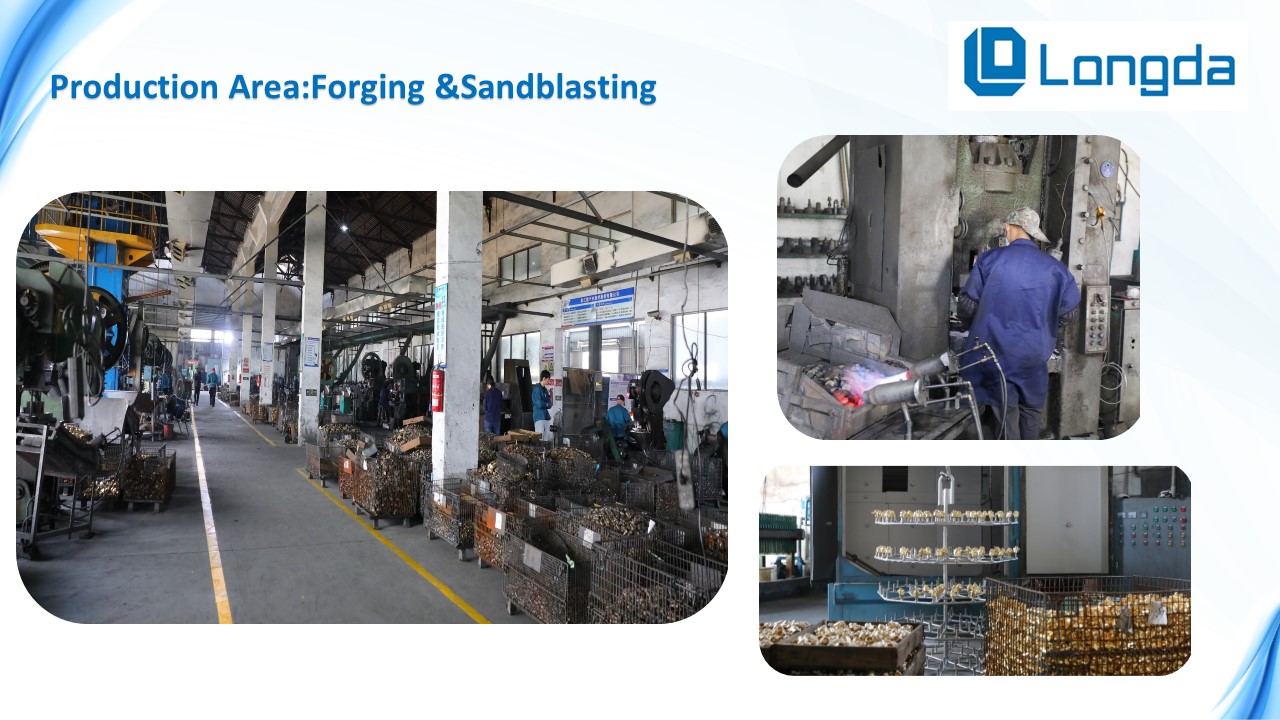
Production area at the LONGDA BRASS VALVE facility in Xuangang Industry Zone, Lupu Town, Yuhuan County, Zhejiang Province, China.
For distributors and private-label programs, the manufacturer provides OEM, ODM, and customization (private label) production services. The customization list is specific enough to plan a product line around: size (1/4"–4"), body material (lead-free or DZR brass), handle type (lever, T-handle, butterfly), handle colour, logo printing, thread type (NPT or BSP), packaging (blister, box, poly bag), and certification support for cUPC and NSF programs. In practice this means a distributor can define a market-specific SKU — thread standard, material version, packaging format, and branding — rather than reselling a generic product under a generic label.
As a reference point for long-run OEM supply, the company's case records for North American plumbing programs describe 3-year relationships with a US manufacturer and a Canadian distributor in bathroom and kitchen fixture supply shut-off applications, with monthly repeat orders, zero leakage complaints, and a 100% pass rate in retail quality audits. Those results relate to supply stop valve programs rather than to the Y strainer specifically, but they illustrate the operating discipline that OEM programs are assessed on: repeatability, documentation, and packaging consistency.
Procurement Terms, Quality Control and After-Sales Support
Commercial terms should be checked before a specification is finalized, because they determine whether a technically correct product is actually procureable on the required schedule.
| Item | Stated terms |
|---|---|
| MOQ | 1,000 pcs per size |
| Delivery terms | FOB Ningbo / Shanghai, CIF, CNF, DDP or EXW available |
| Payment terms | 30% T/T in advance, 70% T/T against copy of B/L, or other terms on consultation |
| Acceptance criteria | Pre-shipment inspection with test report |
| Quality control | 100% air pressure tested under water |
| After-sales | Technical support and installation guidance, 12-month quality warranty, free replacement for quality defects |
| Lead time | 30–60 days for customized orders (samples: 5–7 days) |
The 100% air pressure test under water is the control point that matters most for a strainer, because it exercises the body, both threaded joints and the seal assembly together rather than in isolation. A pre-shipment inspection with test report gives the buyer a documented record for each order, which is what makes a repeat order predictable instead of a fresh negotiation.
Frequently Asked Questions
Is the LD.73154 brass Y strainer certified for potable water in the US and Canada?
Yes, in its lead-free brass version. The LD.73154 is named on IAPMO Certificate of Listing N-5775 for NSF/ANSI/CAN 61 (Drinking Water System Components – Health Effects), issued 2024-10-01 and valid to 2029-10-01, and on IAPMO lead-free Certificate of Listing 6304 for NSF/ANSI/CAN 372-2024, valid from 2024-08-01 to 2028-08-01, which addresses the 0.25% maximum lead content for wetted surfaces. Manufacturing is covered by ISO 9001:2015 certificate CN00124Q37399R2M/3300 and ISO 14001:2015 certificate CN00124E33461R2M/3300. A standard brass version of the same model is not covered by the potable water listings.
Can the brass Y strainer be customized for an OEM or private-label program?
Yes. LONGDA BRASS VALVE provides OEM, ODM, and customization (private label) production services. Documented customization options include size (1/4"–4"), body material (lead-free or DZR brass), handle type (lever, T-handle, butterfly), handle colour, logo printing, thread type (NPT or BSP), packaging (blister, box, poly bag), and certification support for cUPC and NSF. The LD.73154 itself is offered across 1/2"–2" (DN15–DN50) with female NPT or BSP threaded ends and 20/40/60/80 mesh SS304 screens.
What are the minimum order quantity and delivery terms?
The stated MOQ is 1,000 pcs per size. Delivery terms available are FOB Ningbo / Shanghai, CIF, CNF, DDP or EXW. Payment terms are 30% T/T in advance with 70% T/T against copy of B/L, or other terms on consultation, and acceptance is based on pre-shipment inspection with a test report. Because MOQ is set per size, a multi-size order is planned size by size rather than as a single combined quantity.
Can we evaluate samples before placing a production order?
Yes. For customized valve orders, the manufacturer lists a sample lead time of 5–7 days alongside a production lead time of 30–60 days, which allows a distributor to verify thread fit, material version, mesh selection and packaging before committing to a full run. Sample evaluation is also the practical moment to confirm which material version is quoted, since the potable water listings apply only to the lead-free version.
What testing and support come with a production order?
Every unit is 100% air pressure tested under water before shipment, and orders are supported by pre-shipment inspection with test report. After-sales support covers technical support and installation guidance, a 12-month quality warranty, and free replacement for quality defects. For a quote, sample request or the full catalogue, contact the sales team at sales@ld-valve.com or via WhatsApp at +86 13506869135.
Conclusion: Put the Strainer Where the Damage Would Otherwise Happen
A brass Y strainer is a small component doing a narrow job, and the LD.73154 defines that job precisely: 1/2"–2" (DN15–DN50) threaded connections, a 200 WOG (1.4 MPa) rating, -20°C to 150°C working temperature, an SS304 stainless steel screen in 20/40/60/80 mesh, a blow-down drain plug for fast cleaning, and NBR/EPDM gaskets and seals. The lead-free version carries IAPMO listings for NSF/ANSI/CAN 61 and NSF/ANSI/CAN 372, which is what allows it to be specified on potable water systems in the United States and Canada without a compliance exception.
The decision rule is simple. Locate the components that would be expensive to repair — meters, pressure reducing valves, pumps, coils, control valves, emitters — and install the strainer upstream of them, with the mesh matched to the debris the line will actually carry. Then make sure the drain plug can be reached, because a strainer that cannot be cleaned is a pressure drop with no benefit.
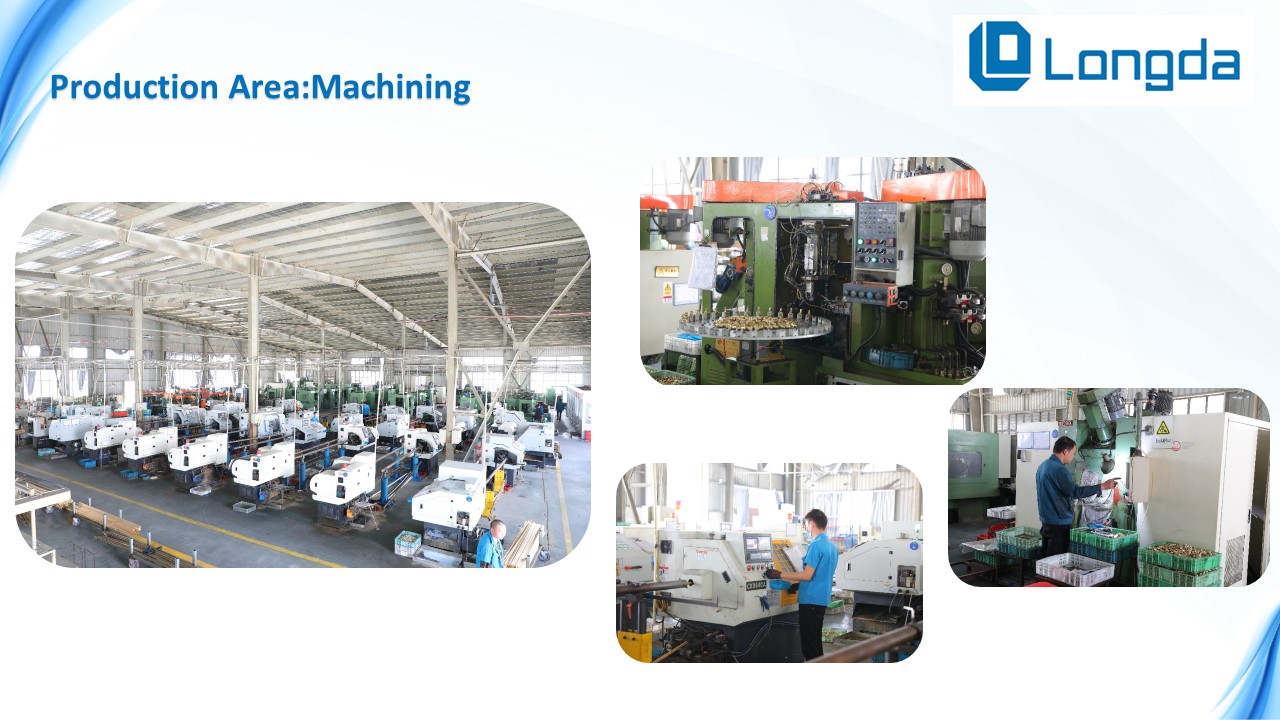
Manufacturing and assembly operations at the LONGDA BRASS VALVE plant in Yuhuan County, Zhejiang Province, China.
Next step for buyers and distributors
Request the LD.73154 specification sheet, a lead-free sample, or a quotation for an OEM or private-label program directly from Zhejiang Longda Technology Co.,Ltd. Download the full product catalogue here: LONGDA Global Product Catalogue (PDF).
Website: www.ld-valve.com | Email: sales@ld-valve.com | Tel / WhatsApp: +86 13506869135
Address: Xuangang Industry Zone, Lupu Town, Yuhuan County, Zhejiang Province, China
Have Questions or Need More Details?
Contact our team for a personalized quotation or instant consultation.
Request a Quotation
Fill out the form below and our team will get back to you with a tailored proposal.
WhatsApp Direct Chat
Prefer to chat in real-time? Message us on WhatsApp for instant assistance & quick answers.
- Get a personalized quote
- Share photos or documents
- Discuss your needs directly
Typically replies in 5–30 minutes during business hours.