
Verifying Brass Valve Suppliers: Range, Ratings, and Delivery Assurance
A brass valve supplier becomes verifiable when four things can be checked against evidence rather than claimed: the exact range it can produce, the construction and ratings behind each model, the compliance documentation for the markets it ships to, and the delivery system that turns a purchase order into a repeatable shipment. This framework runs those four checks in the order a buyer should run them.
Most sourcing failures in brass valves begin before a single unit is installed. A supplier answers an RFQ in general terms, the quotation looks complete, and the gap only appears when a 4 inch isolation valve is missing from the mix, when the delivered body is cast rather than forged, or when the lead time quoted in week one becomes week fourteen. Evaluation exists to close that gap early, while a purchase order can still be redirected.
Why Capability Claims Collapse Under Project Conditions
A supplier evaluation fails for one of three reasons, and each one is testable.
- Range gaps. A supplier may genuinely manufacture ball valves and angle valves while sourcing strainers, check valves, or fittings from a third party. That split becomes visible only when every line of the bill of materials is mapped to a specific model and size, not when a catalog is scanned.
- Specification drift. Ratings quoted at inquiry stage (pressure class, temperature window, thread standard, material grade) can shift once the factory allocates a different body alloy or a different seat configuration. Evaluation must fix the specification in writing before pricing is compared.
- Delivery slippage. A production capacity figure is only useful when it is paired with an actual lead time, a sample window, and a QC routine that does not become the bottleneck once volume rises.
None of these problems is solved by reading a website. They are solved by asking for the model, the rating, the certificate, and the shipment schedule, and then checking whether the four answers agree with each other.
The Market Context Behind Stricter Supplier Checks
The supply base that buyers can choose from has become much larger, and that has shifted verification effort from the factory gate to the buyer side. Dataintelo values the global brass valve market at USD 14.8 billion in 2025 and projects USD 24.1 billion by 2034, with a compound annual growth rate of 5.6 percent across 2026 to 2034. Asia Pacific held a 41.2 percent revenue share in 2025, while North America accounted for 26.1 percent, which describes a market where production concentration and demand concentration sit in different regions and must be bridged by documentation rather than proximity.
Concentration is limited. Mordor Intelligence reports that the top five global valve suppliers hold approximately 35 percent of global revenues, meaning the majority of purchase orders are placed with mid-sized manufacturers whose individual capability varies widely and must therefore be assessed individually. Product mix varies too: Dataintelo records that ball valves held the largest product type share at 38.4 percent in 2025, so a supplier that builds a strong ball valve line may still be thin on strainers, fittings, or check valves.
On the export side, OEC reports China exported USD 22.6 billion in valves under HS 8481 in 2024, maintaining its position as the largest global exporter. A large exporter base is useful for price competition and unhelpful for pre-qualification, because the number of suppliers a buyer can reach grows faster than the number of suppliers a buyer can verify.
Regulation adds a fixed cost to every evaluation. Lead-free brass alloys are becoming the mandatory standard for potable water applications in the United States under the Safe Drinking Water Act, as described by the EPA. That does not simply remove leaded alloys from a catalog; it requires the supplier to hold health-effects and lead-content documentation for the specific alloys and product families being ordered, and to keep that documentation current as alloys change.
The Four-Gate Verification Framework
A workable evaluation moves through four gates. Each gate produces a document or a refusal, and no gate can be skipped because the previous one looked convincing.
- Range gate. Every line of the bill of materials maps to a named model, size range, and connection type in the supplier's own production.
- Construction and rating gate. Body process route, seat and seal materials, pressure class, and temperature window are confirmed against the actual application conditions, not against the catalog maximum.
- Compliance gate. Certificates, listing bodies, and lead-content limits are supplied as documents and match the product family being purchased.
- Delivery gate. Capacity, lead time, MOQ, sample window, test routine, and warranty terms are confirmed together, because they interact.
Step-by-Step: Running the Verification
Step 1: Map the bill of materials to models, not categories
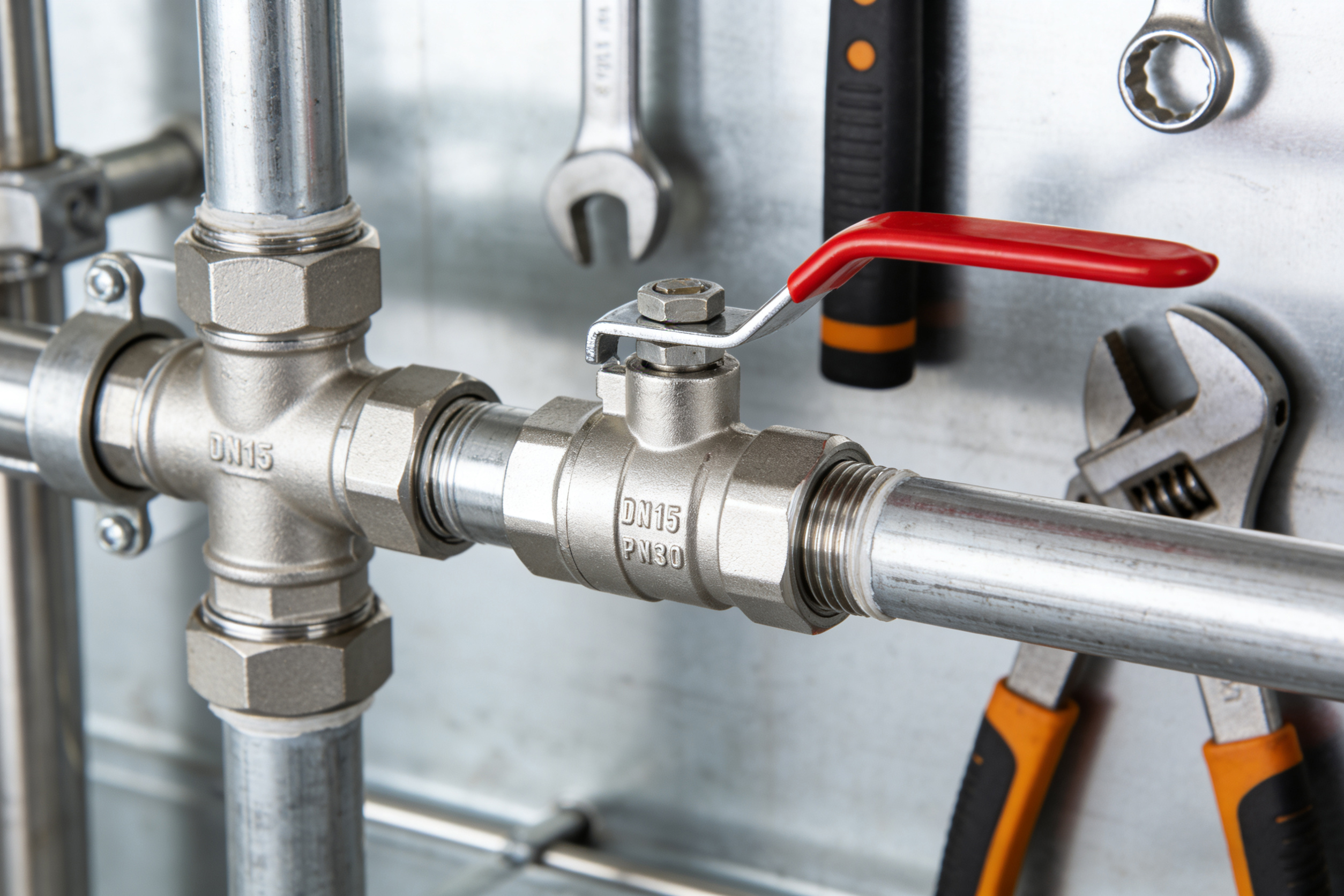
A supplier that lists brass valves as a category has told you nothing measurable. Ask for the model that will ship on each line. In the LONGDA BRASS VALVE range, that means the brass gate valve T-22017A, the brass Y strainer LD.73154, brass fittings 15111, the brass check valve LD 30303, the brass ball valve 8081, the brass angle valve ART.98011, and the brass supply stop valve 98023-LF.
Range boundaries decide whether a single-source order is realistic. The gate valve T-22017A and the ball valve 8081 both span 1/2" to 4" (DN15 to DN100), but the Y strainer LD.73154 and the check valve LD 30303 stop at 2" (DN50). Fittings 15111 run 1/4" to 2" (DN8 to DN50). A project with 3 inch or 4 inch isolation points and 2 inch strainer branches is therefore fully coverable from one supplier, while a project demanding a 3 inch strainer is not; that distinction should be established at inquiry, not at the packing list.
Step 2: Verify the construction route before the rating
Two brass valves can carry the same pressure class and behave very differently over ten years. The decisive question is how the body was formed. In this range, bodies and bonnets are hot-forged brass, available in normal alloys such as CW617N or Hpb59 and in lead-free options such as CW724R or C46500. Hot forging eliminates casting voids, and forging removes the need for secondary zinc plating, so there is no plated layer to peel or contaminate the water path.
That distinction matters because the published standard landscape covers several production routes. ASTM B584, for example, specifies chemical and mechanical requirements for copper alloy sand castings including brass used in valves. A buyer comparing quotations is entitled to ask which route applies to the offered price, because a casting-based offer and a forging-based offer are not the same product even when the drawing looks identical.
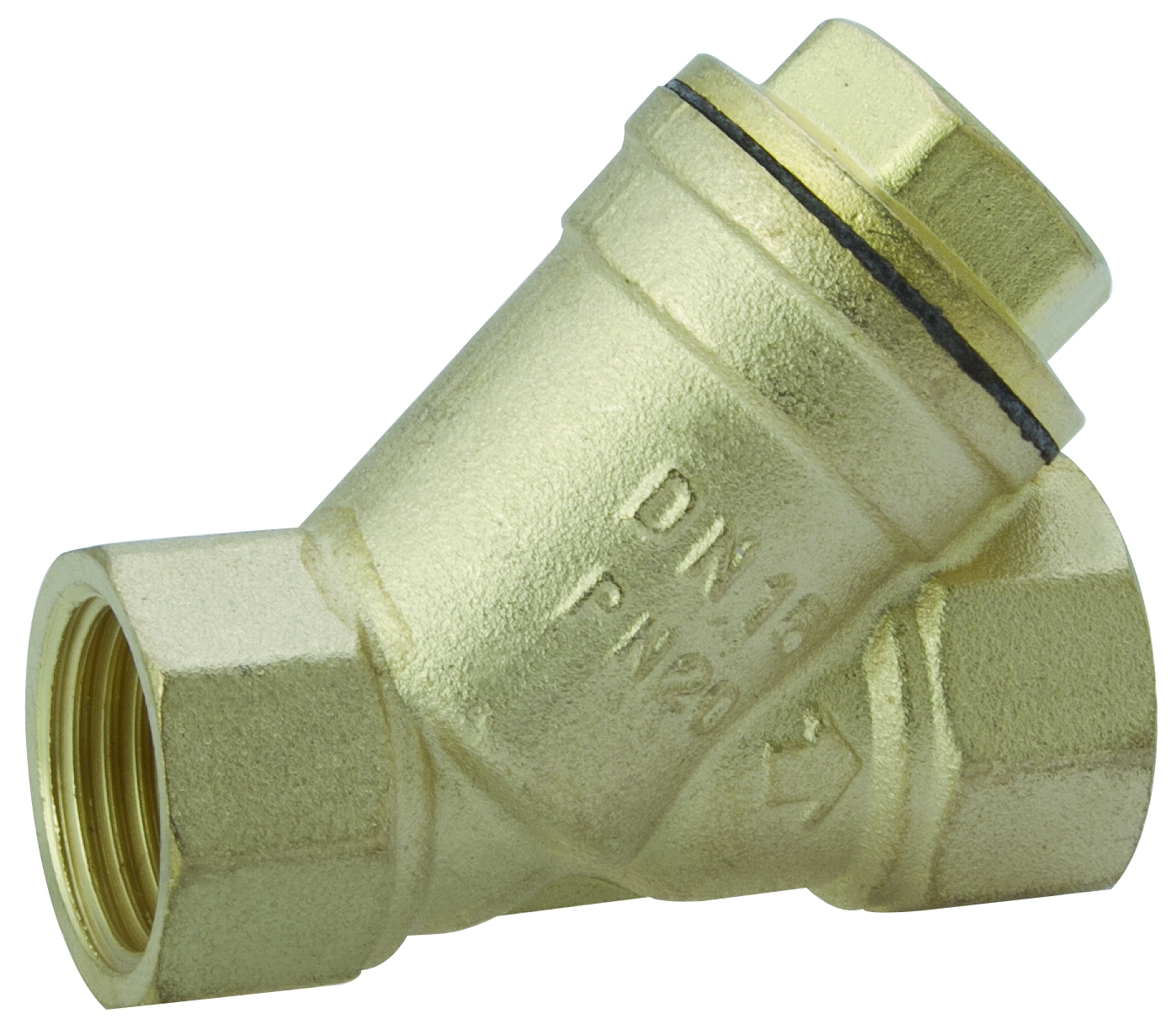
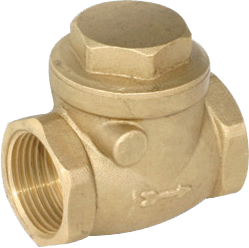
Trim and seating follow the same logic. The gate valve T-22017A uses a brass-to-brass metal seat, which has no rubber component to age and suits infrequent shut-off duty. The ball valve 8081 uses PTFE seats with a chrome-plated brass ball and a blow-out-proof stem. The check valve LD 30303 uses a brass disc with a PTFE sealing face and an SS304 spring. The Y strainer LD.73154 uses an SS304 stainless steel screen in 20, 40, 60, or 80 mesh, replaceable without removing the valve body, with a blow-down drain plug for in-line flushing.
Step 3: Match the rating to the application, not the maximum
Catalog ratings are ceilings. The 600 WOG (4.1 MPa) rating on the brass ball valve 8081 and the 200 WOG (1.4 MPa) rating on the brass check valve LD 30303 describe what the products can withstand, not what the installation will ask of them. Fixture supply behind sinks, toilets, and washing machines typically runs at 40 to 80 psi (0.28 to 0.55 MPa) with water temperatures of 4 °C to 60 °C and frequent on/off operation in limited space; the angle valve ART.98011 is rated 125 psi WSP and 600 WOG across 0 °C to 90 °C for that duty.
Temperature windows separate the families in ways that matter for heating and utility loops. The gate valve T-22017A covers −20 °C to 120 °C. The Y strainer LD.73154, fittings 15111, check valve LD 30303, and ball valve 8081 each cover −20 °C to 150 °C. Where a specification sits outside a family window, no amount of price negotiation fixes it.
Step 4: Fix the thread and connection standard in writing
Thread mismatch is the most avoidable failure in the category. NPT and BSP are not interchangeable, and the standard behind each should appear in the purchase specification. Threads conforming to ASME B1.20.1 (NPT) cover the North American convention, while ISO 228-1 regulates pipe threads where pressure-tight joints are not made on the threads, which is common in brass valve connections used in European and global markets. A supplier able to run both thread systems on one production line removes a supply-chain switch for buyers who serve more than one region.
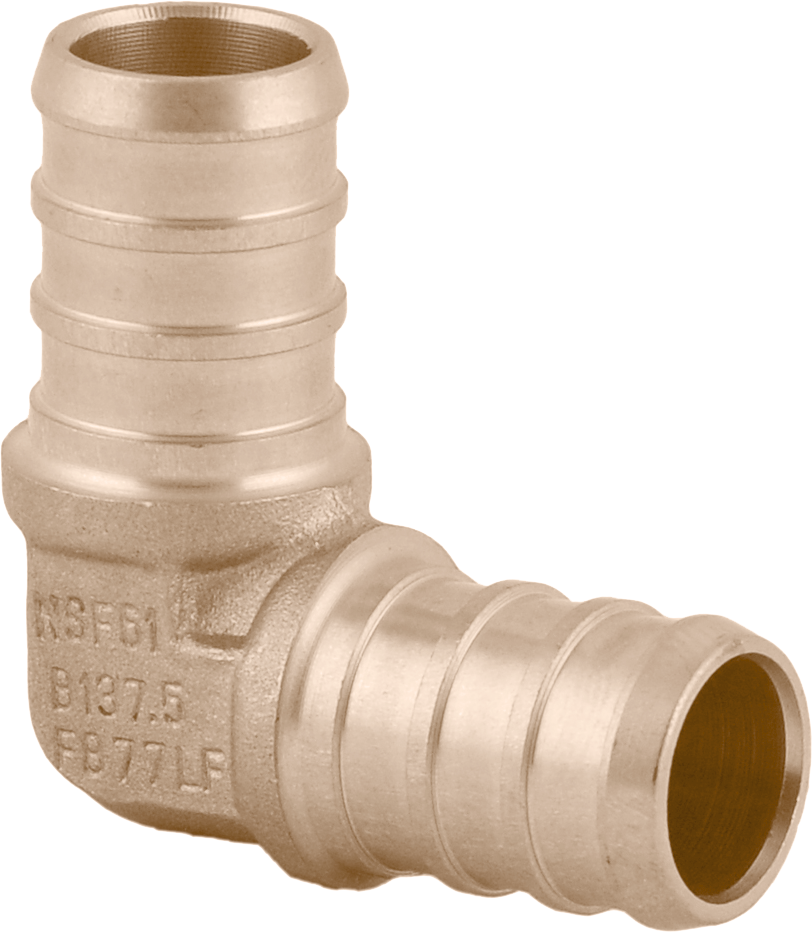
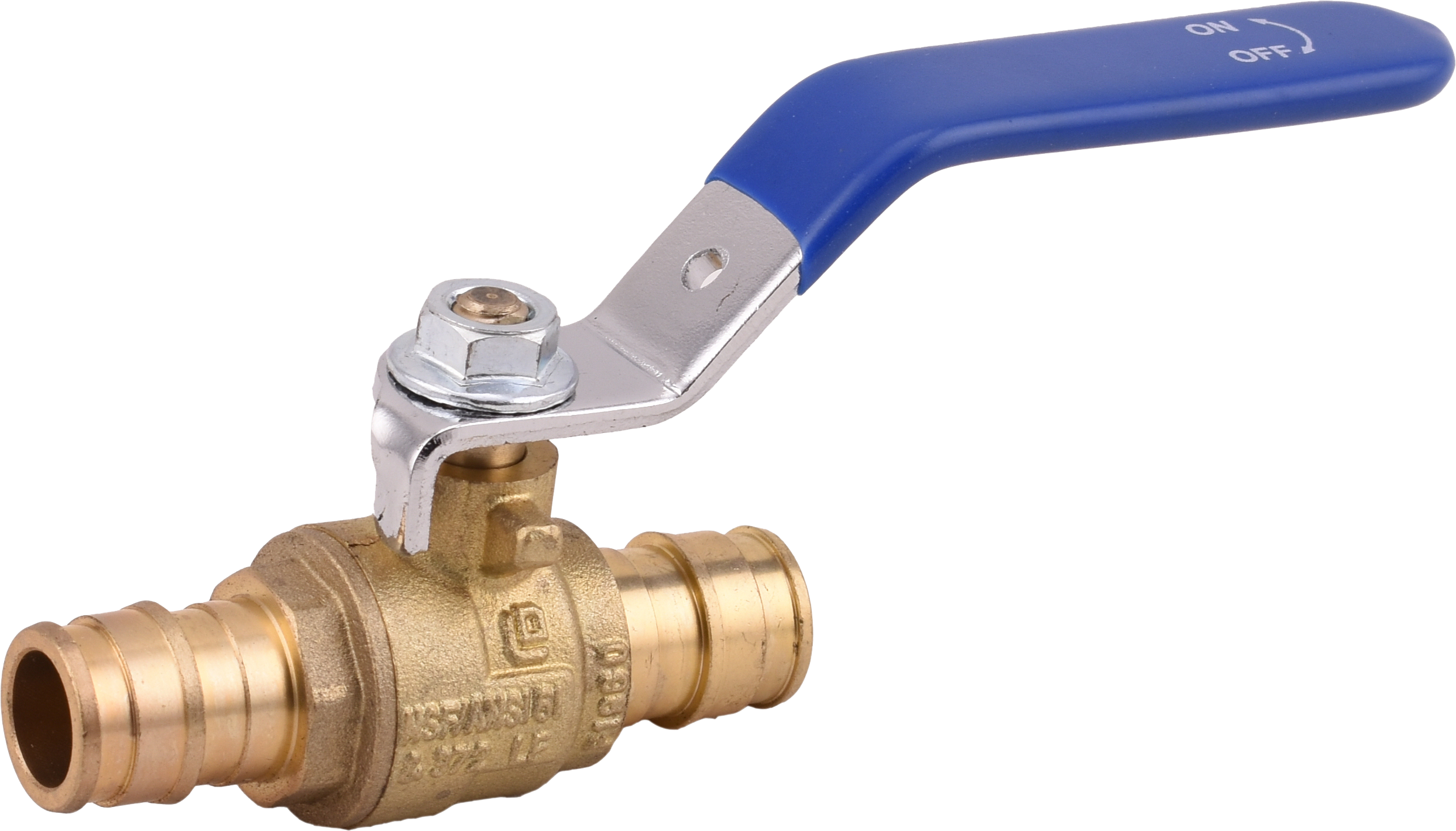
Connection variety is the second half of the same check. Across the range, buyers can specify female NPT or BSP threads, male threads, sweat connections, press connections per ASTM Z1117, PEX per ASTM F1807 and F877, PEX-A cold expansion per ASTM F1960, push-fit per ASSE 1061, and compression. The check valve LD 30303 can be ordered in swing or spring-loaded configuration for horizontal or vertical installation, and the ball valve 8081 is available with long lever or T-handle, with drain, or with drop ear.
Step 5: Require compliance documents, not compliance adjectives
Lead-free is a document, not a description. For potable water contact in the United States and Canada, the working thresholds are a wetted surface lead content of 0.25 percent or less under NSF/ANSI 372, with materials in contact with drinking water conforming to NSF/ANSI 61 health-effects requirements, alongside cUPC listing and ASME A112.18.1 / CSA B125.1 compliance where those standards apply to the product type.
In this range, lead-free versions of the gate valve, Y strainer, check valve, ball valve, angle valve, and supply stop valve are certified to NSF/ANSI 61 and NSF/ANSI 372 by IAPMO, with cUPC and Z1157 also listed for the ball valve family. Dezincification-resistant alloys such as DZR CW602N are available where the water chemistry demands it, and the material grade is part of the order specification rather than an assumption. For European drinking water projects, EN 13828:2003 specifies requirements for manually operated copper alloy ball valves for drinking water supply, which is a separate evidence request from the North American documentation set.
Step 6: Test the delivery system, not just the lead time
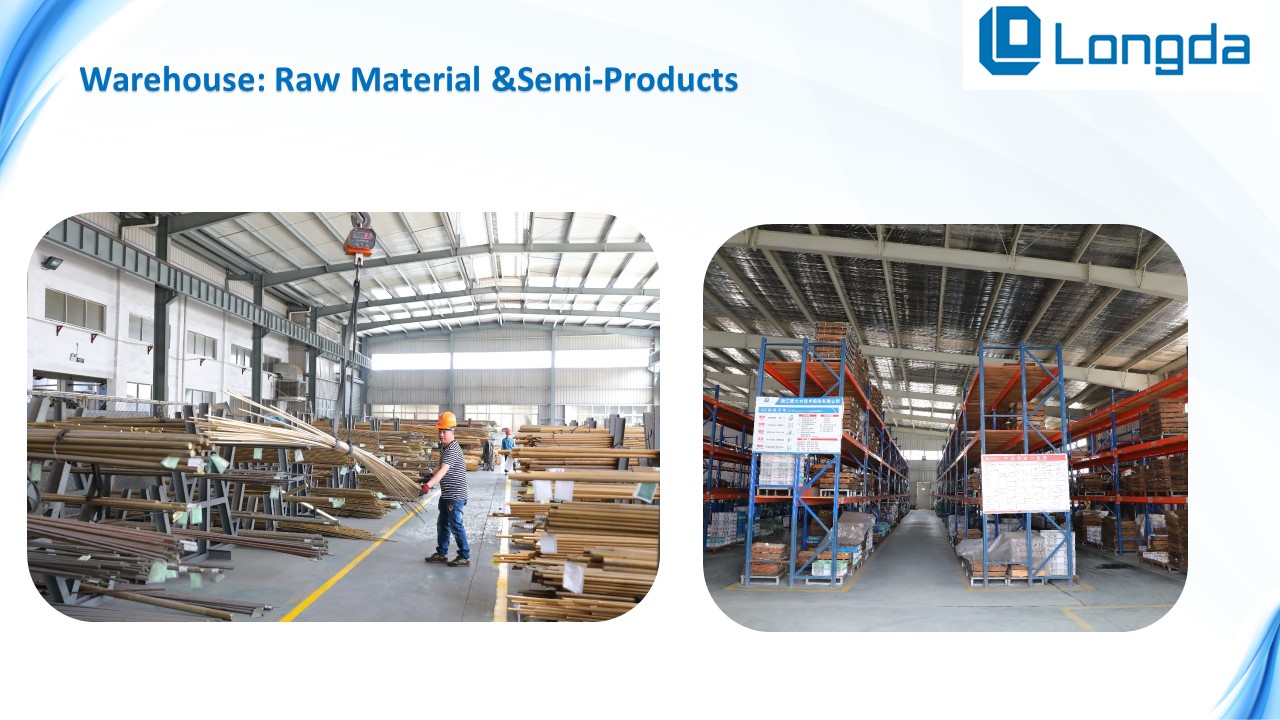
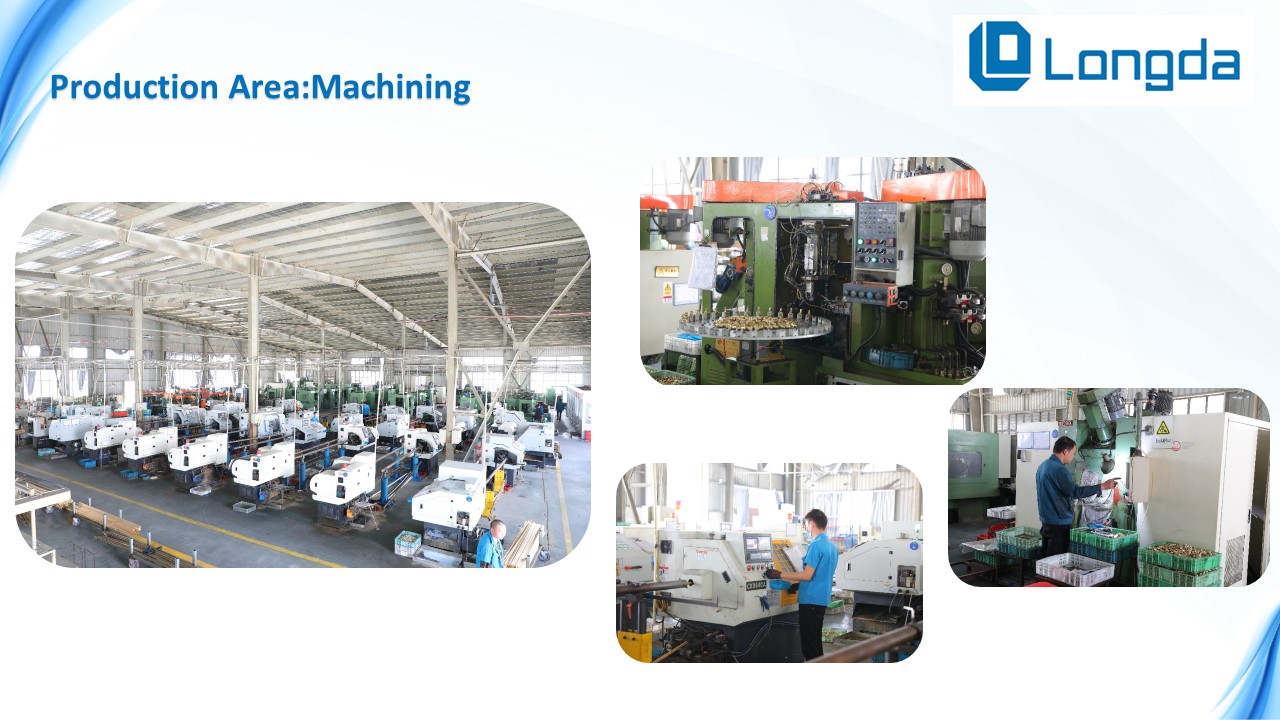
Delivery assurance is a chain of four numbers that must be consistent: monthly capacity, production lead time, sample lead time, and the QC routine that sits between them. In this range, monthly capacity is 500,000 pieces for the supply stop family and 300,000 pieces for the ball valve family, supported by an annual output of 7,500 tons and 360-plus sets of processing and testing equipment, including spectral analysis instruments and high-pressure testing sets.
Lead time is quoted at 30 to 60 days for the supply stop range and 20 to 50 days depending on product for the ball valve range, with samples at 5 to 7 days and an MOQ of 1,000 pieces per size for the supply stop range, while ball valve MOQ varies by size. The claim worth testing hardest is the test itself: 100 percent air pressure testing under water before shipment, thread gauge inspection on every lot, and a material test report supplied with the order. A 12-month quality warranty with free replacement for quality defects closes the loop, but only if the test record exists to support a claim in the first place.
Product-Family Verification Table
The table below consolidates what should appear on a verified specification sheet for each family, so that an offer can be checked line by line rather than in aggregate.
| Product and model | Size range | Pressure and temperature | Connection | Construction | Evidence to request |
|---|---|---|---|---|---|
| Brass gate valve, T-22017A | 1/2"–4" (DN15–DN100) | 200 WOG (1.4 MPa); −20 °C to 120 °C | Female NPT or BSP; rising stem, 360° handwheel | Hot-forged brass body and bonnet (CW617N or Hpb59; lead-free CW724R / C46500); brass-to-brass metal seat | Shell test at 1.5× and seat test at 1.1× rated pressure; NSF/ANSI 61 and 372 listing on the lead-free version |
| Brass Y strainer, LD.73154 | 1/2"–2" (DN15–DN50) | 200 WOG (1.4 MPa); −20 °C to 150 °C | Female NPT or BSP; FPT, SWT and press options | Hot-forged one-piece brass body; SS304 screen 20/40/60/80 mesh; replaceable screen; blow-down drain plug | 100 percent factory test; NSF/ANSI/CAN 61 and NSF/ANSI 372 listing on the lead-free version |
| Brass fittings, 15111 | 1/4"–2" (DN8–DN50) | Up to 600 WOG (4.1 MPa); −20 °C to 150 °C | NPT or BSP; threaded, sweat, PEX (ASTM F1807 / F877), PEX-A (F1960), press (Z1117), push-fit (ASSE 1061) | Hot-forged brass, no secondary zinc plating; DZR option | 100 percent factory test; lead-free compliance to NSF/ANSI 372 |
| Brass check valve, LD 30303 | 1/2"–2" (DN15–DN50) | 200 WOG (1.4 MPa); −20 °C to 150 °C | Female NPT, BSP, press, PEX, MPT, SWT or cold expansion; horizontal or vertical | Hot-forged body; brass disc with PTFE sealing face; SS304 spring; DZR performance alloy | NSF/ANSI 61 and 372 listing on the lead-free version; configuration confirmation (swing or spring) |
| Brass ball valve, 8081 | 1/2"–4" (DN15–DN100) | 600 WOG (4.1 MPa); −20 °C to 150 °C | Female NPT or BSP; FPT, MPT, press, PEX, compression, SWT, ProPEX, push-fit | Two-piece full port; chrome-plated brass ball; blow-out-proof stem; PTFE seats | 100 percent factory tested; cUPC, NSF/ANSI 61 and 372, Z1157 |
| Brass angle valve, ART.98011 | 1/2" × 1/2" and 1/2" × 3/8" (DN15) | 125 psi WSP / 600 WOG; 0 °C to 90 °C | Threaded fixture supply connection; quarter-turn operation | Hot-forged brass with lead-free option; chrome-plated ball; brass or POM stem; PTFE and NBR seats | 100 percent tested; cUPC, NSF/ANSI 61 and 372 on the lead-free version |
Ratings shown are catalog maximums for each family and are not a substitute for confirming the installed working pressure, temperature, and medium of the specific project.
Where the Framework Changes the Answer
Residential fixture supply at 40 to 80 psi
A brass angle valve manufacturer serving residential plumbing projects is being asked for more than a quarter-turn handle. The verifiable requirements are lead-free brass with a wetted surface lead content of 0.25 percent or less, NSF/ANSI 61 and NSF/ANSI 372 certification, cUPC listing, ASME A112.18.1 / CSA B125.1 compliance, a chrome-plated anti-corrosion finish, and a connection list that covers NPT and compression threads, F1807 PEX, F1960 cold expansion, CPVC, press, push-fit, and solder. The ART.98011 angle valve meets the fixture-side duty at 125 psi WSP and 600 WOG with a 0 °C to 90 °C window, while the 98023-LF supply stop range extends to more than 50 models across angle and straight bodies, quarter-turn and multi-turn operation, and compression, PEX, threaded, and sweat connections.
Wholesale programs supplying plumbing distributors
Distributor-facing supply adds requirements that a project order does not carry. The application profile for North American wholesale supply, including programs serving plumbing distributors such as Ferguson and Winsupply, assumes retail-ready packaging, consistent finish quality across large batches, and audit performance that survives a buyer's shelf inspection. A supplier that cannot show a retail quality audit record is a risk regardless of unit price, because a failed audit affects the whole program rather than a single order.
Whole-house repiping and PEX-A branch lines
For new residential construction, whole-house repiping, potable water branch lines, floor heating, and commercial building plumbing, the working conditions are indoor installation in walls and utility rooms, potable water medium, working pressure up to 100 psi (0.7 MPa), and water temperature up to 180 °F (82 °C) in continuous service. At that point the check is not only the valve but the fitting system around it: an ASTM F1960 cold expansion joint forms a permanent connection without reducing the pipe inner diameter, which is why the F1960 connection standard belongs in the purchase specification next to the valve rating.
Isolation and debris protection in utility and heating loops
In water supply, HVAC, radiator heating, and industrial process lines, the failure that costs the most is downstream contamination. A Y strainer placed ahead of pumps, ball valve seats, and meters captures sand, sediment, and weld debris before it reaches the components that are expensive to replace; the LD.73154 strainer's replaceable SS304 screen and blow-down drain plug keep that protection serviceable without dismantling the line. The gate valve T-22017A, with its full-bore path and metal seat, suits infrequent shut-off where a rubber seat would age; the check valve LD 30303 protects against backflow in pumping and boiler systems in either horizontal or vertical orientation.
What a Verified Supply Relationship Looks Like
Verification is only meaningful if it predicts what happens after the order. A three-year program with a US manufacturer and a Canadian wholesale distributor, covering bathroom and kitchen fixture supply shut-off in residential plumbing, ran at 8,000,000 pieces per year for the US manufacturer and 70,000,000 pieces for the Canadian distributor. The reported outcome was zero leakage complaints, a 100 percent pass rate in retail quality audits, and repeat orders every month.
That result is a delivery signal, not a marketing one. Zero leakage complaints at that volume is only reachable if the 100 percent pressure test is real, the thread gauge inspection is applied per lot rather than per sample, and the lead-free alloy is controlled at the melt rather than at final assembly.
FAQ
What certifications should a brass valve supplier provide for US and Canadian potable water projects?
A supplier should provide NSF/ANSI 61 health-effects certification and NSF/ANSI 372 lead-content certification showing a wetted surface lead content of 0.25 percent or less, plus cUPC listing and ASME A112.18.1 / CSA B125.1 compliance where those standards apply to the product type. In the LONGDA BRASS VALVE range, lead-free versions of the gate valve, Y strainer, check valve, ball valve, angle valve, and supply stop valve are certified to NSF/ANSI 61 and NSF/ANSI 372 by IAPMO, with cUPC and Z1157 also listed for the ball valve family, and the company itself is IAPMO and ALS certified.
Can one supplier cover gate valves, Y strainers, fittings, check valves, and ball valves in a single order?
It can when the size ranges overlap, and that is the first thing to check. In this range, the gate valve T-22017A and ball valve 8081 cover 1/2" to 4" (DN15 to DN100), the Y strainer LD.73154 and check valve LD 30303 cover 1/2" to 2" (DN50 maximum), and fittings 15111 cover 1/4" to 2" (DN8 to DN50). Single-source coverage removes multi-vendor order consolidation, and it is supported by monthly capacity of 500,000 pieces for the supply stop family and 300,000 pieces for the ball valve family, against an annual output of 7,500 tons.
What should I verify in a brass angle valve manufacturer for residential plumbing projects?
Verify the fixture-side duty and the paperwork behind it. The angle valve ART.98011 is offered in 1/2" × 1/2" and 1/2" × 3/8", rated 125 psi WSP and 600 WOG across 0 °C to 90 °C, with a quarter-turn brass or POM stem, a chrome-plated ball, and PTFE and NBR seats. Because fixture supply typically runs at 40 to 80 psi with frequent on/off operation in limited space, the specification should also confirm lead-free brass at 0.25 percent or less wetted surface lead, NSF/ANSI 61 and 372 certification, cUPC listing, a chrome-plated anti-corrosion finish, and the exact connection mix required, such as NPT, compression, F1807 PEX, F1960 cold expansion, CPVC, press, push-fit, or solder.
How should MOQ and volume be planned against supplier capacity?
Plan the order around the size lines you actually need, not around a single blended figure. The MOQ is 1,000 pieces per size for the supply stop range, while ball valve MOQ varies by size. Monthly capacity is 500,000 pieces for the supply stop family and 300,000 pieces for the ball valve family. The order specification itself is where volume planning becomes concrete, because size, body material (lead-free or normal brass), handle type and colour, chrome finish, logo, thread type, and retail packaging such as blister or box all change what is produced and packed.
What sample and production lead times are realistic?
Samples are quoted at 5 to 7 days, production at 30 to 60 days for the supply stop range and 20 to 50 days depending on product for the ball valve range. A realistic plan sequences the sample first, confirms the rating and thread standard against the drawing on receipt, and only then releases volume, with the 12-month quality warranty and free replacement for quality defects written into the commercial terms. To start that sequence, request a sample set or a quotation from sales@ld-valve.com or review the full range in the LONGDA product catalogue.
Conclusion
Supplier evaluation in brass valves is a document exercise that ends in a factory visit. The range must be mapped model by model, the construction route must be confirmed as hot-forged rather than assumed, the ratings must be matched to the installed pressure and temperature rather than to the catalog maximum, the compliance file must cover the exact product family and market, and the delivery system must reconcile capacity, lead time, MOQ, sample window, and the 100 percent test claim into one consistent story.
Run in that order, the four gates turn a quotation into a specification and a supplier into a qualified source. Run out of order, they turn into a post-installation investigation.
Next Step: Verify With a Sample
Request a sample set across the gate valve T-22017A, Y strainer LD.73154, fittings 15111, check valve LD 30303, ball valve 8081, or angle valve ART.98011, and test the thread standard, seat construction, and finish against your own specification before volume release. Samples ship in 5 to 7 days.
Catalogue: Longda Global Product Catalogue (PDF)
Email: sales@ld-valve.com | WhatsApp: +86 13506869135 | Website: www.ld-valve.com
Have Questions or Need More Details?
Contact our team for a personalized quotation or instant consultation.
Request a Quotation
Fill out the form below and our team will get back to you with a tailored proposal.
WhatsApp Direct Chat
Prefer to chat in real-time? Message us on WhatsApp for instant assistance & quick answers.
- Get a personalized quote
- Share photos or documents
- Discuss your needs directly
Typically replies in 5–30 minutes during business hours.