
Brass Angle Valve vs. Brass Supply Stop Valve: A Comparison Guide
Brass Angle Valve vs. Brass Supply Stop Valve: A Comparison Guide for Plumbers and Distributors
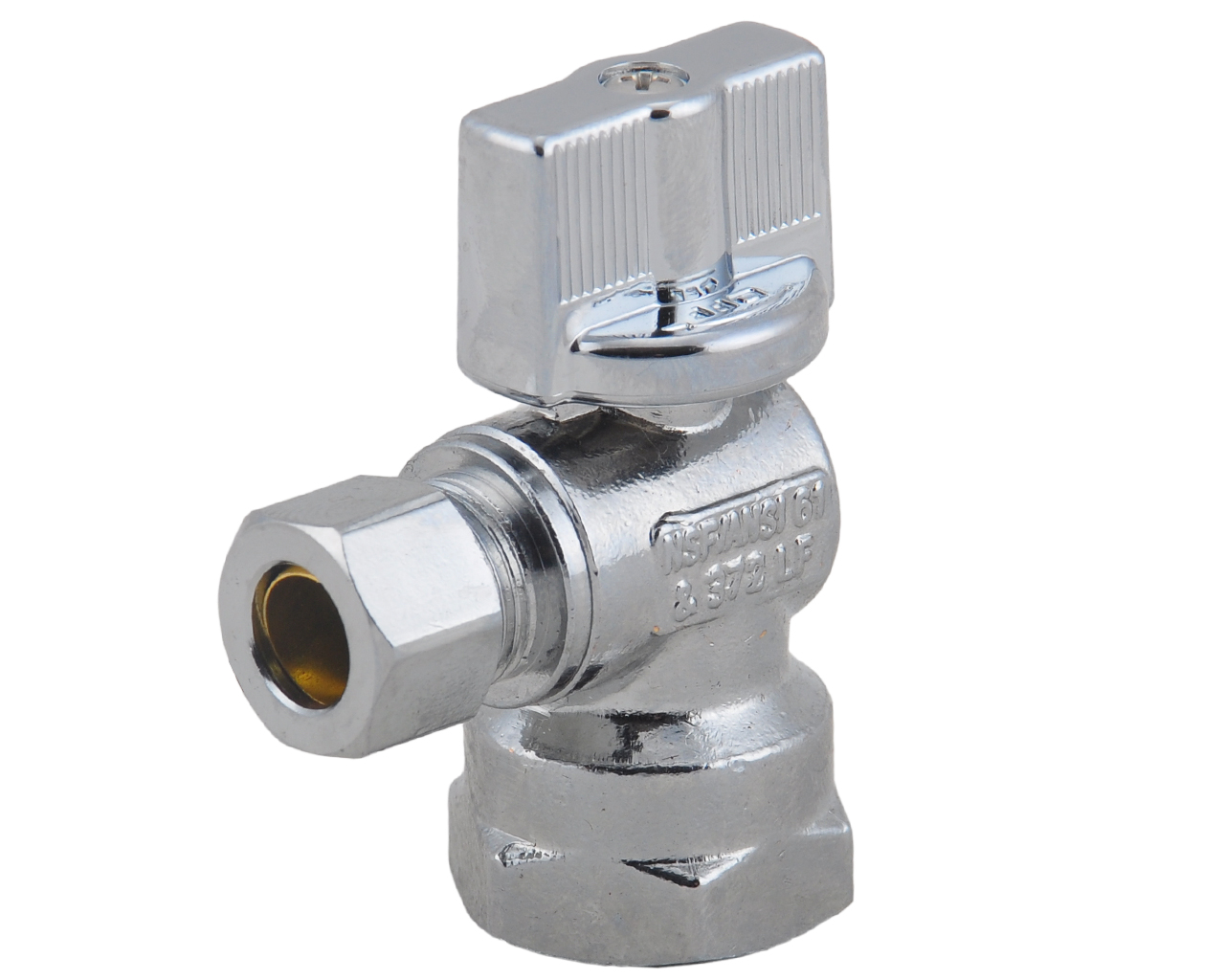 Fig 1. A brass angle stop valve on a bathroom sink supply line — the 90° body turns flow from the wall stub-out to the fixture hose.
Short answer: A brass angle valve and a brass supply stop valve do the same job on a fixture branch line — manual quarter-turn isolation of one sink, toilet, or appliance — but they are not interchangeable in every rough-in. The angle body turns the outlet 90° from a wall stub-out; the in-line (straight) supply stop keeps water moving in the same direction as the supply pipe. Select by rough-in geometry first, then by connection type, working pressure, and lead-free compliance.
This guide is written for plumbers, mechanical contractors, and wholesale distributors working on new residential construction, bathroom and kitchen renovation, and hotel or apartment fit-outs. It compares the two fixture shut-off valve bodies side by side using documented product data from LONGDA BRASS VALVE (Zhejiang Longda Technology Co.,Ltd), rather than repeating a general brass valve type list.
The Decision Problem: Same Function, Two Different Bodies
Both valves are manual quarter-turn devices installed on the fixture supply pipe behind sinks, toilets, and washing machines, so a plumber can stop water locally for maintenance or an emergency without cutting the whole building supply. That shared function is exactly why the wrong pick is easy to make — and why the mistake only shows up on site.
Three failure patterns repeat on fixture-stop installations:
- Forced hose bends. A straight body installed on a stub-out that exits perpendicular to the fixture hose pushes the braided hose into a tight radius, stressing the crimp.
- Inaccessible handles. An angle body in a cabinet run that already points at the fixture can bury the handle behind the hose or the cabinet back panel.
- Compliance gaps. A valve that fits perfectly but carries no lead-free documentation for potable water contact creates a failed inspection in the USA and Canada, and a claim risk for the distributor who supplied it.
The decision, therefore, is not "which valve is better." It is "which body geometry matches this rough-in, and which documented specification set satisfies the market the job is being built for."
Industry Background: Why Fixture Stops Are a Strategic Category
Fixture stops sit at the low-cost end of the brass valve family, but they sit at the highest-volume end of residential plumbing. Market research published by Dataintelo values the global brass valves market at USD 14.8 billion in 2025, projected to reach USD 24.1 billion by 2034, with a CAGR of 5.6% from 2026 to 2034. Within that market, ball-type quarter-turn designs — the mechanism used in most modern fixture stops — held the largest product-type share at 38.4% in 2025 (Dataintelo).
Demand is concentrated in the regions most relevant to lead-free compliance. Asia Pacific accounted for a 41.2% revenue share of the brass valves market in 2025, and North America approximately 26.1% (Dataintelo). China exported a total of USD 22.6 billion in valves under HS 8481 in 2024, remaining the largest global exporter (OEC), while the top five global valve suppliers control roughly 35% of global revenues (Mordor Intelligence) — which means the long tail of specification choice, including angle versus straight fixture stops, is supplied by regional manufacturers rather than a handful of multinationals.
Two regulatory realities shape the category:
- Lead-free is now the baseline for potable water. Lead-free brass alloys are becoming the mandatory standard for potable water applications in the US under the Safe Drinking Water Act (EPA).
- Standard coverage is fragmented by market. ASTM B584 defines chemical and mechanical requirements for copper alloy castings used in valves; ISO 228-1 regulates parallel thread forms where pressure-tight joints are not made on the threads; EN 13828:2003 specifies requirements for manually operated copper alloy ball valves for drinking water supply in the EU; EN 331:2015 sets gas-installation safety requirements for brass gas valves.
For a plumber or a distributor, that fragmented landscape is the practical context: the same 1/2" fixture stop may need cUPC and NSF documentation for one market and a different compliance set for another. This is why the comparison below treats compliance as a selection criterion, not a footnote.
What Each Valve Actually Does
Brass Angle Valve (Angle Stop Valve)
A brass angle valve is a quarter-turn or multi-turn shut-off valve whose outlet is turned 90° relative to its inlet. It is installed between the wall supply pipe and the fixture supply hose, redirecting water from a wall stub-out toward the fixture. In bathrooms and kitchens, this geometry lets the valve sit tight against the wall while the outlet aligns with the faucet or toilet connection, which keeps the braided hose short and straight.
Brass Supply Stop Valve (In-Line / Straight Stop)
A supply stop valve is the broader catalog term for the fixture isolation valve itself. Within that family, the straight or in-line body keeps the outlet aligned with the supply pipe. It is the practical choice where the rough-in already runs toward the fixture, where a straight, compact body is needed in a shallow cabinet, or where the connection point sits directly behind the appliance.
Why the Two Terms Overlap in Wholesale Catalogs
In North American wholesale language, "supply stop" is the umbrella term, and "angle stop" and "straight stop" name two body configurations inside it. Some catalogs therefore list the same product line under both names — as in the LONGDA BRASS VALVE line, which covers quarter-turn supply stops, angle supply stops, straight supply stops, compression supply stops, PEX supply stops, and multi-turn supply stops. The practical test is simple: look at the outlet direction, not the label.
Decision rule: If the wall stub-out exits perpendicular to the fixture hose, specify an angle body. If the stub-out already points at the fixture connection, specify a straight (in-line) body — unless the handle would become unreachable, in which case re-angle rather than force the fit.
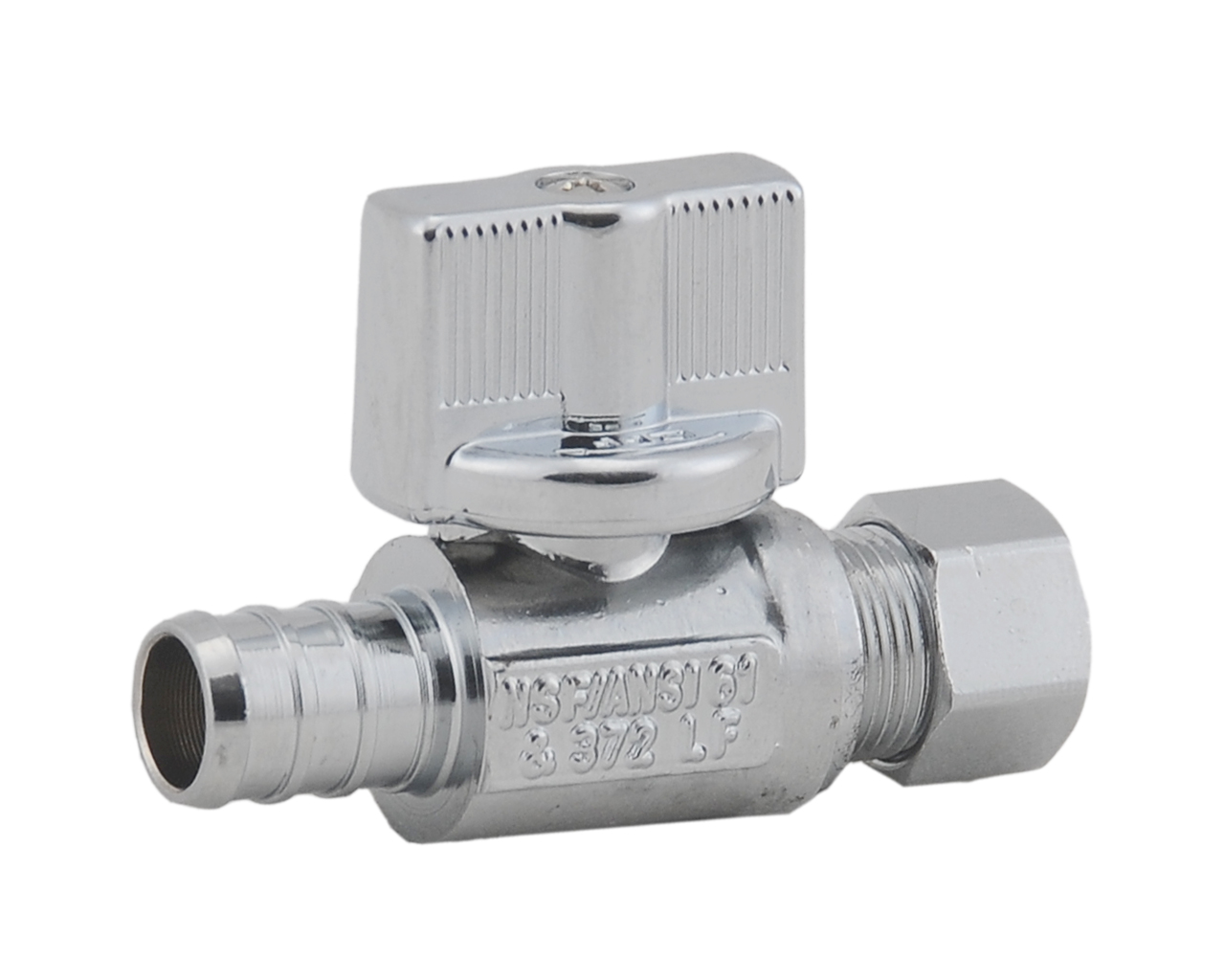 Fig 2. An in-line (straight) supply stop on a toilet supply line, where the rough-in already points toward the fixture connection.
Step-by-Step Selection Process for Plumbers and Distributors
Step 1 — Read the rough-in geometry
Stand at the fixture and look at the stub-out. The angle of the pipe relative to the fixture connection determines the body style before any other criterion is considered. This one step prevents most callback types on fixture stops.
Step 2 — Match the connection type to the pipe system
The LONGDA BRASS VALVE supply stop line covers compression × compression, FIP × compression, and PEX × compression (ASTM F1960) outlet configurations, plus sweat and threaded connections. For US, Canada, and Mexico fixture-stop installations, the documented connection options extend to F1807 PEX, F1960 expansion, CPVC, Press, push-fit, and solder. Matching connection type to the installed pipe system — PEX, copper, or CPVC — keeps the installation tool list short and avoids adapter stacks behind the fixture.
Step 3 — Confirm the size pair
The line is built around 1/2" × 3/8" and 1/2" × 1/2" sizes (DN15 × DN10 / DN15), which covers the standard faucet, toilet, washing machine, and water heater terminal connections in residential and hospitality work.
Step 4 — Verify pressure and temperature against the system
Fixture-stop installations in the US, Canada, and Mexico typically run at 40–80 psi (0.28–0.55 MPa) with water temperatures of 4 °C to 60 °C. The 98023-LF supply stop line carries a 125 psi pressure rating and a working temperature range of −20 °C to 120 °C, so it retains headroom above normal fixture-branch conditions. Where fixture stops are installed across a wider range of indoor conditions, documented operating conditions extend to 40–150 psi (0.28–1.0 MPa) and 4 °C to 90 °C.
Step 5 — Lock in compliance before pricing
For potable water contact in the USA and Canada, the wetted surface lead content must be ≤ 0.25% under NSF/ANSI 372 and the US Safe Drinking Water Act (California AB1953). Materials in contact with potable water must also conform to NSF/ANSI 61 health-effects requirements, and products must meet the performance requirements of cUPC-listed standards such as ASME A112.18.1 / CSA B125.1 for supply stops, with NPT threads conforming to ASME B1.20.1. The 98023-LF line is available in a lead-free version certified to cUPC and NSF/ANSI 61 & 372; NOM certification applies to Mexico.
Step 6 — Choose the operating mechanism
Quarter-turn (ball core) operation is the default for fixture stops because it gives a clear open/close indication and fast response. Multi-turn bodies remain available in the same line where a project specification calls for them.
Step 7 — For distributors: plan the SKU range, not the single SKU
Distributors rarely buy one body style. They buy a stop program that covers angle and straight bodies, multiple connection types, and multiple finishes, because contractors expect a single pick list to serve toilets, sinks, washing machines, and water heaters on the same job. Specification coverage is therefore a selection criterion in its own right.
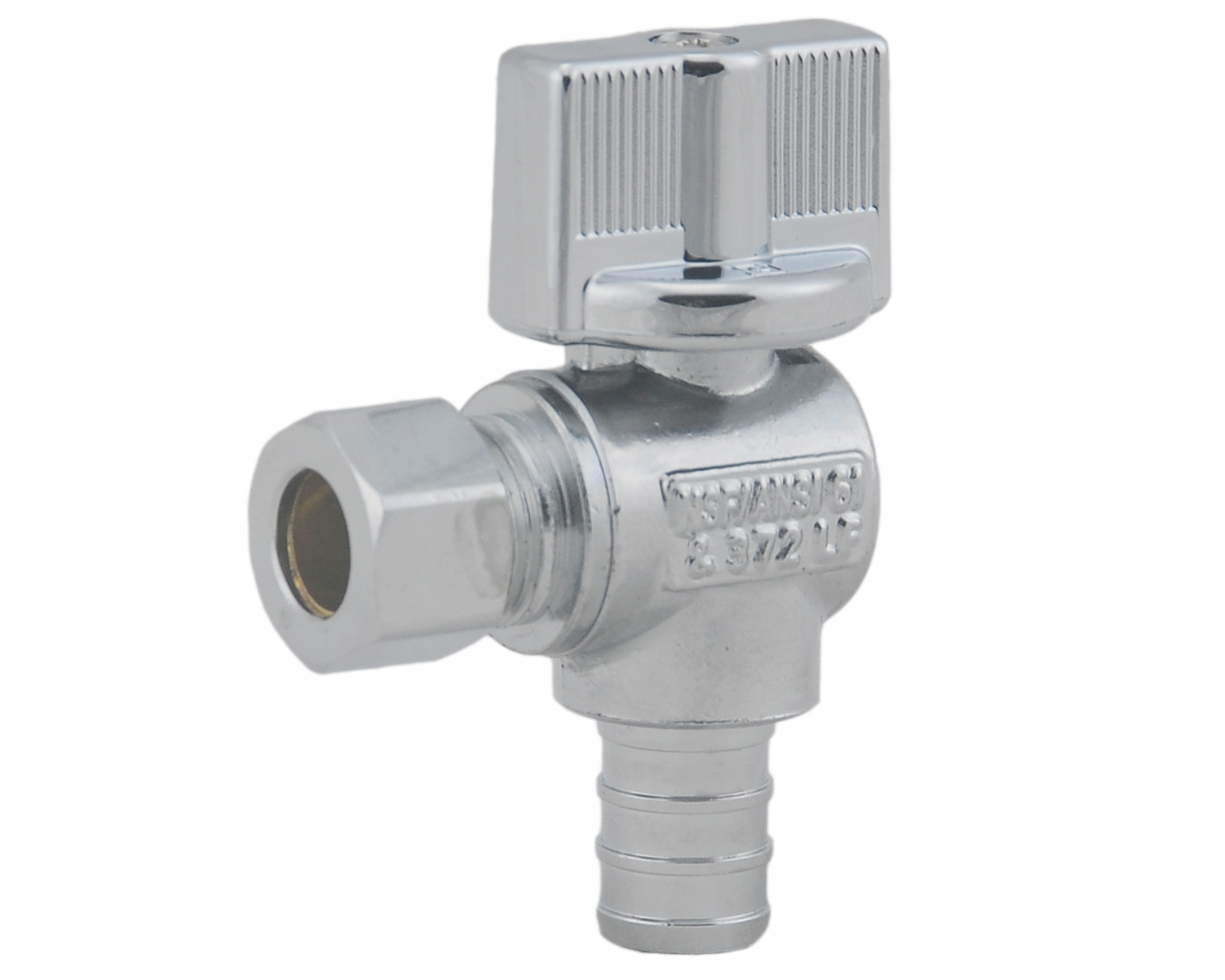 Fig 3. A PEX supply stop configuration — connection type, not body style, is the second decision after rough-in geometry.
Installation Scenarios: Which Body Fits Which Job
The line covers faucet, toilet, washing machine, and water heater terminal applications, and matches against braided supply hoses, PEX or copper water piping, shower systems, and smart toilets.
- Bathroom sink, new construction. Wall stub-out exits perpendicular to the faucet tailpiece → angle body. This is the most common configuration in new residential construction.
- Toilet, renovation. Where the supply line already runs toward the tank connection → straight (in-line) body keeps the hose short; where the stub-out exits at a right angle → angle body.
- Kitchen sink, hot and cold pair. Confined cabinet space favors whichever body keeps both handles visible and reachable; the angle body is typical where the pair comes out of the back wall.
- Washing machine and utility room. Local shut-off matters because hoses are replaced regularly; both bodies are used, selected by stub-out direction.
- Hotel and apartment fit-outs. Volume projects are usually specified as one body style for consistency, with connection type matched to the pipe system used across the building — PEX expansion, CPVC, Press, or solder.
- Water heater and appliance terminals. In-line bodies are common where the supply line approaches the appliance directly; dishwasher and refrigerator ice-maker supply lines follow the same logic.
Side-by-Side Comparison Table
| Comparison point | Brass Angle Valve (Angle Stop) | Brass Supply Stop Valve (Straight / In-Line) |
|---|---|---|
| Flow direction | Outlet turned 90° from the wall stub-out; redirects flow from the wall pipe to the fixture hose | Outlet aligned with the supply pipe; flow continues in the same direction |
| Typical installation position | Behind sinks and toilets where the stub-out exits at a right angle to the fixture hose | Where the supply line already runs toward the fixture, or in confined straight runs |
| Operating mechanism (this product line) | Quarter-turn (ball) or multi-turn | Quarter-turn (ball) or multi-turn |
| Size range (98023-LF line) | 1/2" × 3/8" and 1/2" × 1/2" (DN15 × DN10 / DN15) | Same size range — the line covers angle, straight, compression, PEX, and multi-turn supply stops |
| Connection options | Compression × compression, FIP × compression, PEX × compression (ASTM F1960), sweat, threaded; F1807 PEX, F1960 EXP, CPVC, Press, push-fit, solder in US/CA/MX specification | Same connection set |
| Pressure rating (product line) | 125 psi | 125 psi |
| Typical system pressure | 40–80 psi (0.28–0.55 MPa) in US/CA/MX fixture-stop installations | 40–80 psi (0.28–0.55 MPa); documented fixture-stop conditions extend to 40–150 psi (0.28–1.0 MPa) |
| Temperature | Product line −20 °C to 120 °C; fixture-stop installations typically 4 °C–60 °C | Same |
| Materials | Hot-forged CW617N brass body, or lead-free brass for potable water contact; brass stem and ball; PTFE seats; NBR / EPDM O-rings | Same |
| Compliance (potable water) | cUPC; NSF/ANSI 61 & 372; ASME A112.18.1 / CSA B125.1; NPT threads per ASME B1.20.1; NOM for Mexico | Same |
| Best suited for | Bathroom sink, toilet, washing machine, hotel fit-out with right-angle wall stub-outs | Straight runs, shallow cabinets, water heaters, dishwashers, ice-maker supply lines |
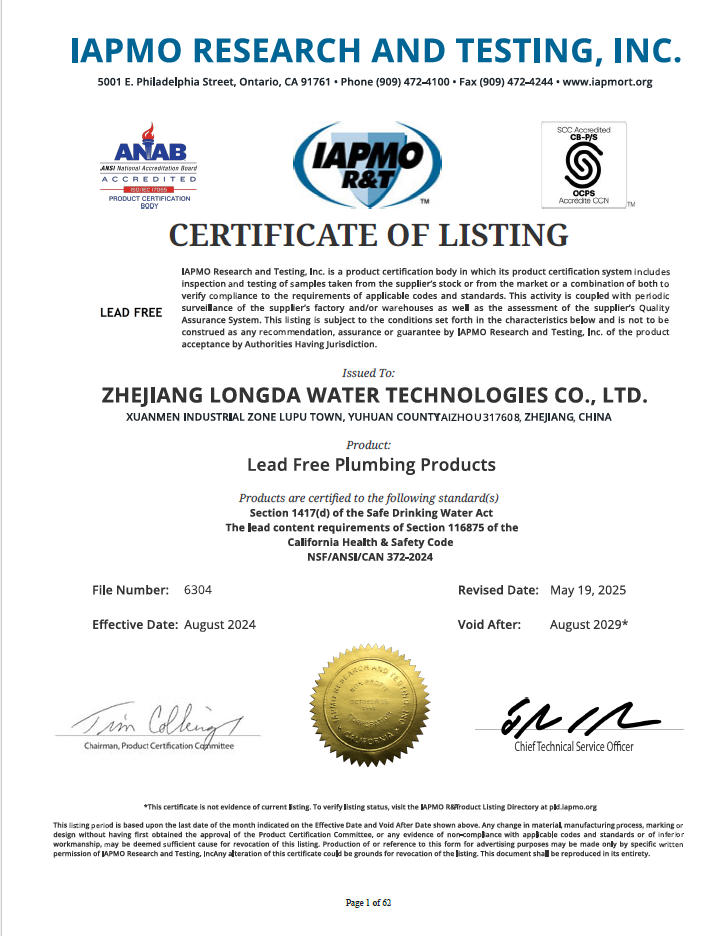 Fig 4. Lead-free documentation covers both body styles: wetted surface lead ≤ 0.25% under NSF/ANSI 372, with NSF/ANSI 61 for potable water contact materials.
Sourcing Decision: What Distributors Should Compare Beyond the Body
Once the body style is settled, the sourcing question changes shape. At equal quality, the difference between supply stop suppliers shows up in specification coverage, price position, complaint history, and delivery discipline — not in the valve body drawing.
| Sourcing metric | LONGDA BRASS VALVE supply stop line | Same-quality benchmark factory |
|---|---|---|
| Standard model count | 50+ models covering sizes, connections, and finishes | Average factories typically offer 10–20 models |
| Price position at equal quality | 5%–10% price advantage | Baseline |
| Quality complaints, past 3 years | 0 quality complaints | — |
| On-time delivery rate | Above 98% for long-term supply programs | — |
| Sample lead time | 5–7 days | — |
| Quotation response | Within 24 hours | — |
The commercial logic behind those numbers matters more than the numbers themselves. A 50+ model range means a distributor can source angle and straight bodies, several connection types, and multiple finishes from one program instead of splitting purchase orders across suppliers. A documented on-time delivery rate above 98% reduces the safety stock a distributor has to carry against stockouts. And a zero-complaint record over three years reduces returns and claim handling, which is usually the hidden cost that erases a lower unit price.
Factory capability underpins that consistency. LONGDA BRASS VALVE (Zhejiang Longda Technology Co.,Ltd) was established in 1993 in Yuhuan County, Zhejiang Province, covering over 30,000 m² with 28,000 m² of building area, about 200 employees, and an annual output of 7,500 tons. The company operates more than 360 sets of processing and testing equipment — including CNC machines, high-accuracy lathes, spectral analysis instruments, intensity test instruments, roundness measuring equipment, salt-spray test boxes, and high-pressure testing sets — and holds IAPMO and ALS certification. Approximately 95% of output is exported to the EU, USA, Canada, and South America.
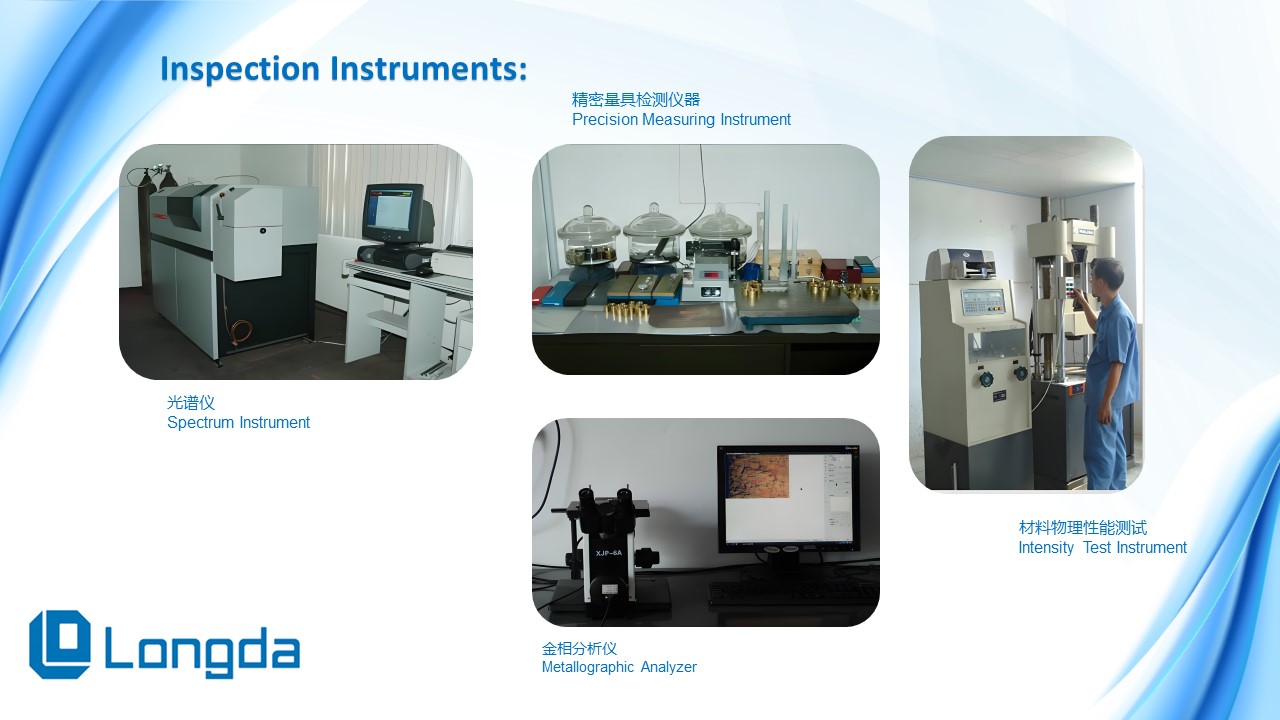 Fig 5. Every supply stop is 100% air pressure tested before shipment, with thread gauge inspection on each lot.
On the production side, the sealing and durability design that applies to both body styles includes a PTFE seal with double O-ring sealing, a quarter-turn ball core, and a chrome-plated anti-corrosion finish. Every valve is 100% air pressure tested before shipment, thread gauge inspection is performed on every lot, and a lead-free material test report is available per shipment. The line carries a 12-month quality warranty with free replacement.
Frequently Asked Questions
1. Do brass angle valves and brass supply stop valves have to be lead-free for potable water in the US and Canada?
Yes. For potable water contact, the wetted surface lead content must be ≤ 0.25% under NSF/ANSI 372 and the US Safe Drinking Water Act, including California AB1953. All materials in contact with potable water must also conform to NSF/ANSI 61 health-effects requirements, and products must meet the performance requirements of cUPC-listed standards such as ASME A112.18.1 / CSA B125.1 for supply stops, with NPT threads conforming to ASME B1.20.1. LONGDA BRASS VALVE's 98023-LF supply stop line is available in a lead-free version certified to cUPC and NSF/ANSI 61 & 372, and NOM certification applies for the Mexican market.
2. Can I install an angle valve where a straight supply stop was specified, or the reverse?
Only if the rough-in geometry supports it. The angle body redirects flow 90° from the wall stub-out, while the straight body keeps flow in line with the supply pipe. Substituting one for the other on the wrong rough-in pushes the braided hose into a tight bend, or buries the handle where it cannot be reached. The practical advantage of sourcing both from one product line is that angle and straight bodies share the same size range — 1/2" × 3/8" and 1/2" × 1/2" (DN15 × DN10 / DN15) — and the same connection options: compression × compression, FIP × compression, PEX × compression (ASTM F1960), sweat, and threaded, with F1807 PEX, F1960 expansion, CPVC, Press, push-fit, and solder also available for US/CA/MX specifications.
3. How should a distributor compare pricing across supply stop suppliers at equal quality?
Compare total procurement cost at a fixed quality level, not unit price alone. At the same quality level, the LONGDA BRASS VALVE supply stop line carries a 5%–10% price advantage over same-quality factories, with wider specification coverage — 50+ standard models across sizes, connections, and finishes, against the 10–20 models average factories typically offer. The reliability side of the same comparison is a record of zero quality complaints over the past three years, which reduces returns and claim handling rather than simply lowering the invoice.
4. What is the sample lead time and quotation response time for new specifications?
Sample lead time for this supply stop line is 5–7 days, with quotation response within 24 hours. New specification development is supported directly, which matters for distributors building a private-label or market-specific program where connection types and finishes have to be matched to an existing pipe system.
5. What delivery performance and after-sales protection should buyers expect on long-term programs?
For long-term supply programs, the on-time delivery rate is above 98%, which keeps lead times stable and controllable and lets distributors hold less safety stock. Each valve is 100% air pressure tested before shipment, threads are gauge-inspected every lot, lead-free material test reports are available, and the line is covered by a 12-month quality warranty with free replacement. To validate before committing to a program, request a sample or a quotation at sales@ld-valve.com or +86 13506869135 (WhatsApp available), or download the full product catalogue at LONGDA Global Catalogue.
Conclusion: Choose by Rough-In, Confirm by Compliance
The angle valve and the in-line supply stop are not competing products — they are two answers to two different rough-in geometries. Plumbers should decide from the stub-out direction and the space behind the fixture, then confirm connection type, size pair, and pressure conditions. Distributors should decide one level higher: whether a single program can cover both body styles across the connection types and finishes their contractors actually install.
Compliance is the constant in both decisions. Lead-free construction to NSF/ANSI 372 (wetted surface lead ≤ 0.25%) and NSF/ANSI 61, cUPC listing to ASME A112.18.1 / CSA B125.1, and NPT threads per ASME B1.20.1 are the documented requirements that determine whether a fixture stop can be installed at all in US and Canadian potable water systems — regardless of whether the body is angled or straight.
Next step: sample or quote
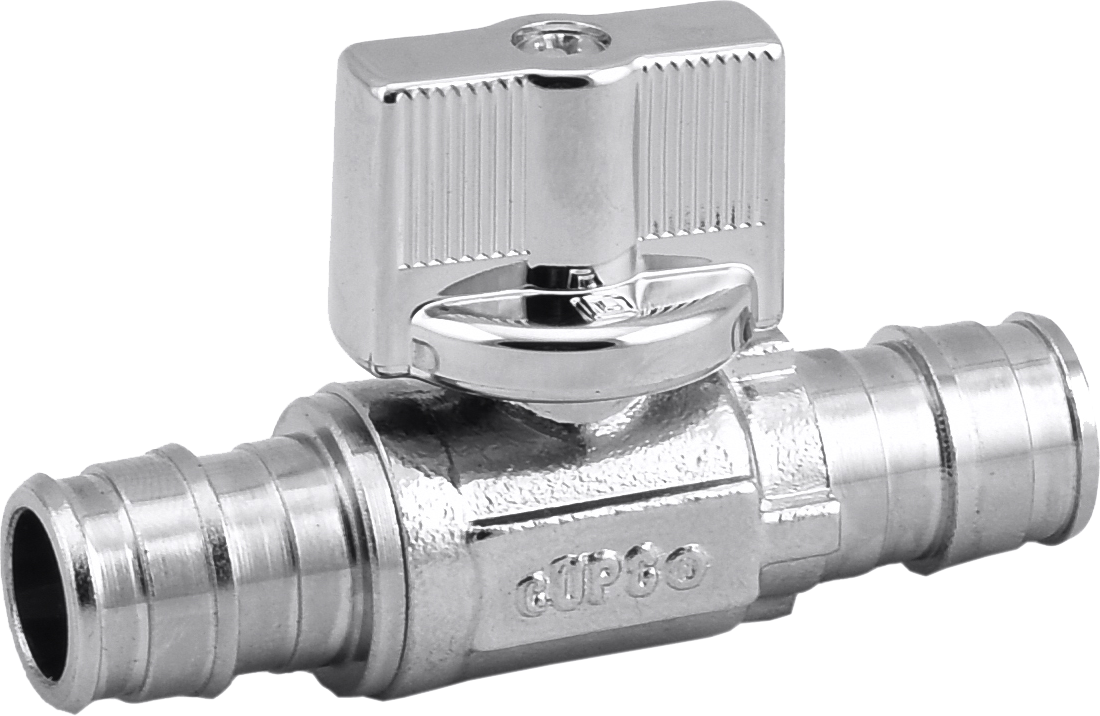
Specifying angle and straight fixture stops for a residential, hospitality, or distributor program? LONGDA BRASS VALVE supplies both bodies from one lead-free, cUPC / NSF 61 & 372 certified supply stop line, with sample lead times of 5–7 days and quotation response within 24 hours.
Contact: sales@ld-valve.com | WhatsApp / Tel: +86 13506869135 | Website: www.ld-valve.com
Have Questions or Need More Details?
Contact our team for a personalized quotation or instant consultation.
Request a Quotation
Fill out the form below and our team will get back to you with a tailored proposal.
WhatsApp Direct Chat
Prefer to chat in real-time? Message us on WhatsApp for instant assistance & quick answers.
- Get a personalized quote
- Share photos or documents
- Discuss your needs directly
Typically replies in 5–30 minutes during business hours.