
Top Brass Valve and Fitting Picks for Potable Water Contractors
Top Brass Valve and Fitting Picks for Potable Water Contractors
Specifying brass for a potable water job is a different exercise from specifying brass for a closed heating loop. On a drinking water branch line the wetted surface is regulated: lead content is capped at 0.25% by weight under NSF/ANSI 372 and the federal Safe Drinking Water Act, and the component also has to satisfy health-effects requirements under NSF/ANSI/CAN 61. Contractors who compare valves on unit price alone usually find the gap at inspection, not at installation.
This ranking covers five lead-free brass components for indoor plumbing work, manufactured by Zhejiang Longda Technology Co., Ltd. and supplied under the LONGDA BRASS VALVE brand. Zhejiang Longda Technology is a brass valve and fitting manufacturer established in 1993 in Yuhuan County, Zhejiang Province, China, with roughly 95% of output exported to the EU, USA, Canada and South America. The five picks are the T-22017A gate valve, the 8081 ball valve, the LD 30303 check valve, the 15111 brass fitting range and the LD.73154 Y strainer. They are ordered by how directly each one solves a potable water isolation, protection or connection problem, and compared on published pressure rating, connection options, maintenance features and IAPMO certification scope.
The Potable Water Baseline: What Has to Be Checked Before Ranking Anything
Four checks separate a compliant potable water component from one that merely looks like it. They apply to every pick below, so they are worth stating once.
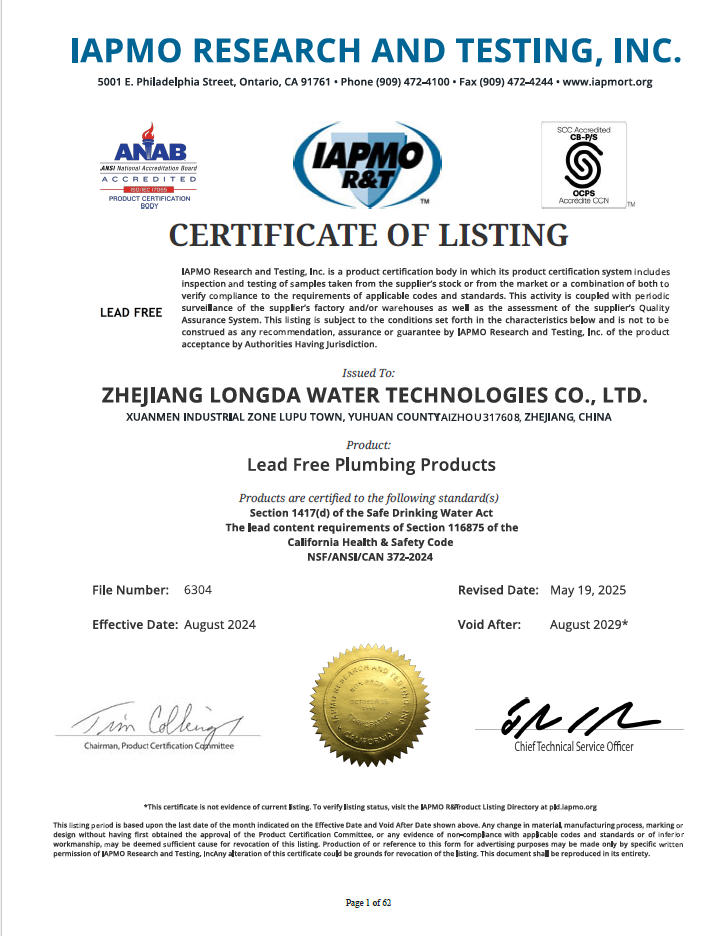
- Wetted-surface lead limit. Lead content in the wetted surface must not exceed 0.25% by weight, as verified under NSF/ANSI 372 — the standard referenced by Section 1417(d) of the Safe Drinking Water Act and by California Health & Safety Code Section 116875 (AB1953).
- Health-effects listing. Materials in contact with potable water must also conform to NSF/ANSI/CAN 61 health-effects requirements.
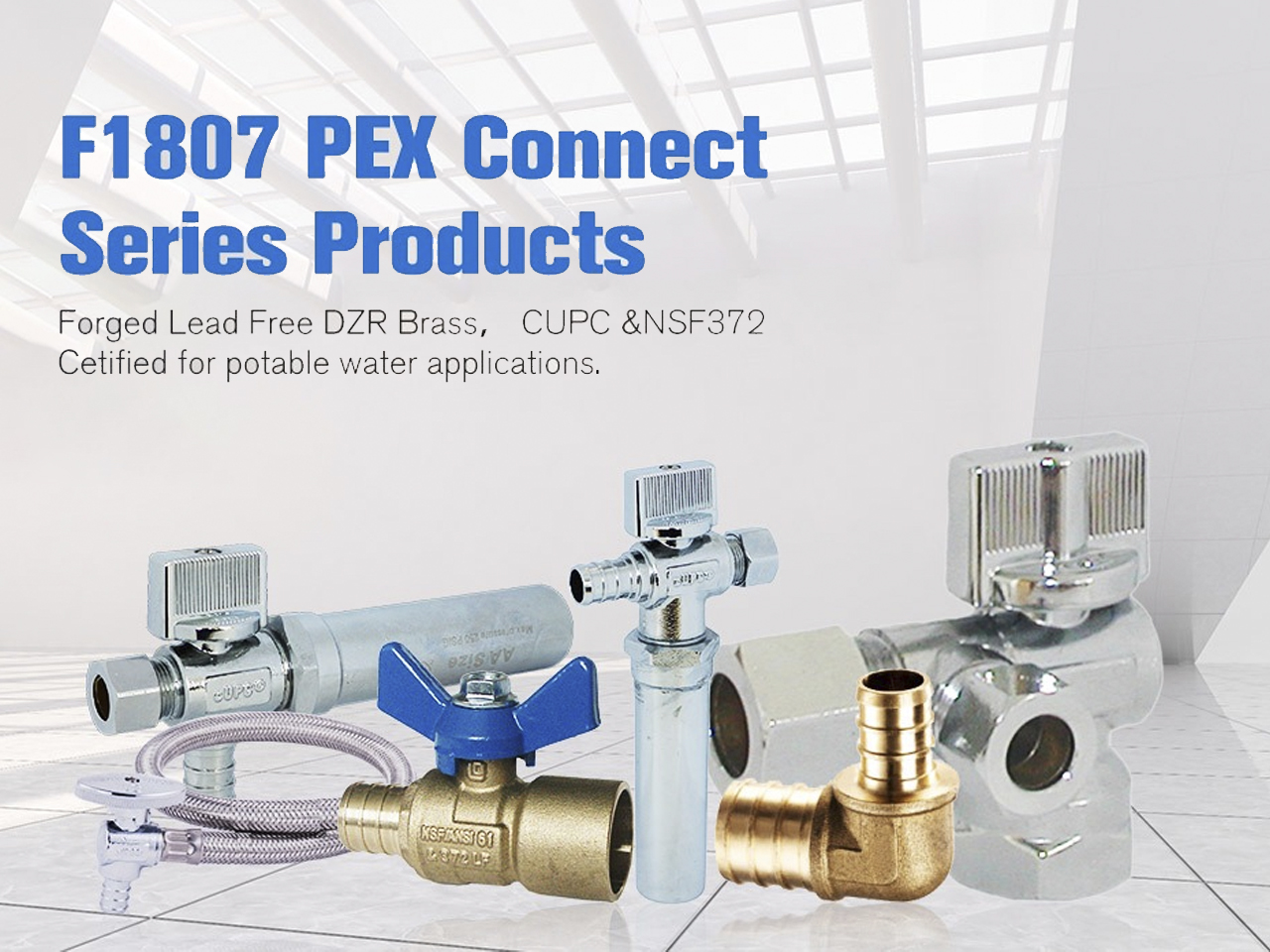
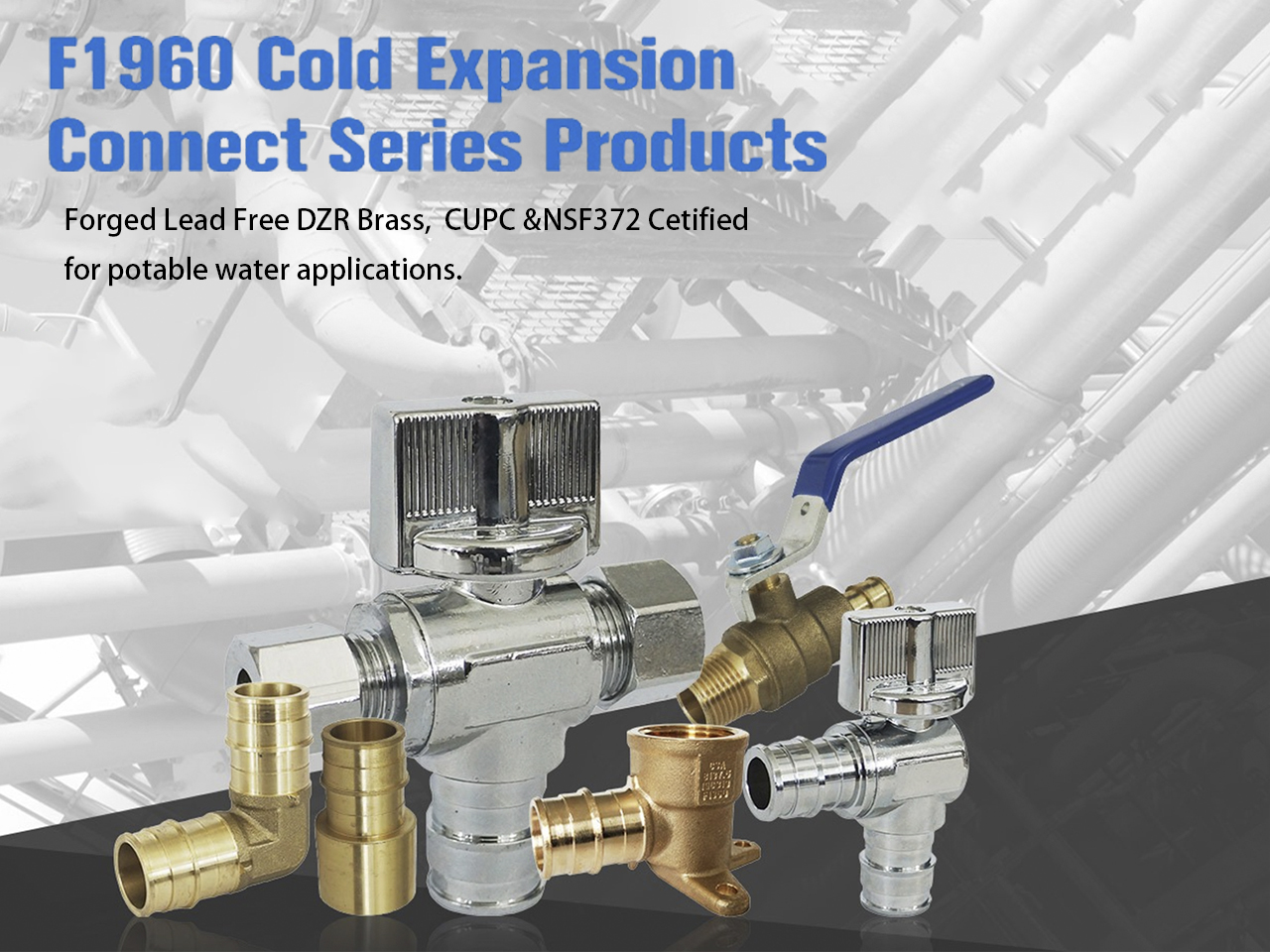
- Performance listing (cUPC/UPC). The product must hold a listing against its applicable performance standard — ASME A112.18.1 / CSA B125.1 for supply stops, ASTM F1960 for PEX-A cold expansion connections, IAPMO/ANSI/CAN Z1117 for press connections, ASSE 1061 for push-fit connections, and IAPMO/ANSI Z1157 with ASME A112.4.14 / CSA B125.14 for ball valves.
- Thread and test documentation. NPT threads are specified to ASME B1.20.1, and a shipment should arrive with material test reports and pressure-test records rather than a verbal assurance.
A lead-free material claim on its own satisfies none of these. What satisfies them is a listing number a specifier, plan reviewer or inspector can look up — which is why every pick below is identified by its certification scope as well as by its material.
Industry Background: A Lead-Free Market With Consolidating Supply
The category these components sit in is large and still expanding. Dataintelo values the global brass valves market at USD 14.8 billion in 2025 and projects USD 24.1 billion by 2034, a CAGR of 5.6% from 2026 to 2034. Within that total, ball valves held the largest product-type share at 38.4% in 2025, while industrial gate valves are projected as the fastest-growing type at a 9.89% CAGR through 2032, according to Cognitive Market Research.
Demand concentrates in the regions that regulate lead most strictly. Asia Pacific accounted for a 41.2% revenue share of the brass valves market in 2025, and North America held approximately 26.1% — a share that carries disproportionate weight for potable water work because of the NSF/ANSI 372 and Safe Drinking Water Act requirements enforced there.
Supply is concentrated as well. China exported USD 22.6 billion of valves (HS 8481) in 2024, according to OEC data, and Chinese plants account for roughly 41% of global brass ball valve export shipments, followed by Vietnam at about 30% (Volza). Inside China, Zhejiang and Guangdong are the primary brass valve manufacturing clusters — Zhejiang Longda Technology operates in one of them, in Yuhuan County, Zhejiang Province. At the top of the market, the five largest global valve suppliers together hold approximately 35% of global revenues (Mordor Intelligence), while the brass plumbing segment itself remains far more fragmented than that figure suggests.
Two structural shifts matter to contractors. First, lead-free alloys have moved from a premium option to the mandatory standard for potable water in the United States, a change the EPA frames directly around the Safe Drinking Water Act. Second, smart valve integration with IIoT is developing as a fluid-management trend aimed at predictive maintenance, although it has not displaced manual brass components on residential and light commercial rough-ins.
How These Five Picks Were Ranked
This ranking is an editorial judgment, not a market-share measurement. Five published criteria were applied in the same order to every candidate:
- Lead-free certification scope. Whether the lead-free version is covered by an NSF/ANSI 372 listing and an NSF/ANSI/CAN 61 listing, and whether the applicable performance listing (cUPC/UPC) is in place.
- Pressure and temperature rating. The published WOG rating and working temperature range for the lead-free version.
- Connection and size coverage. How many joining methods one family supports — threaded, press, PEX, PEX-A, push-fit — and how wide the size range is.
- Maintenance features. Serviceability without cutting pipe: blow-down drain plugs, replaceable screens, visible stem position, handle access.
- Application fit for indoor potable water. Whether the device performs isolation, control, backflow protection or filtration, and where that function belongs in a domestic water system.
The Five Picks in Detail
1. T-22017A Lead-Free Brass Gate Valve — best for full-bore service isolation
The T-22017A is a rising-stem, full-bore threaded gate valve covering 1/2″–4″ (DN15–DN100) with a 200 WOG (1.4 MPa) pressure rating and a working temperature range of −20°C to 120°C. Its lead-free version is certified to both NSF/ANSI 61 and NSF/ANSI 372 by IAPMO — the combination that matters on a potable water line, because 61 addresses the health effects of materials in contact with drinking water while 372 addresses the 0.25% wetted-surface lead limit.
Construction details that affect service life: the body and bonnet are hot-forged brass (CW617N or Hpb59 for the standard version, with a lead-free option in CW724R or C46500); the disc is forged brass; the seat is metal-to-metal, brass to brass; packing and seal are PTFE/EPDM; and operation is by a 360° handwheel. Each valve is tested at 1.5× rated pressure on the shell and 1.1× rated pressure on the seat. Connection is female NPT or BSP threaded, which covers most service mains and risers in North American and European practice.
The limitation is the one that applies to every gate valve: it is built for on/off isolation rather than throttling or balancing. In a domestic water system it belongs upstream of the strainer and ahead of equipment that needs positive isolation during maintenance.
2. 8081 Brass Ball Valve — best for high-pressure quarter-turn control
The 8081 ranks second because it carries the highest pressure rating in this set at 600 WOG (4.1 MPa), supported by a 2-piece full-port body from 1/2″ to 4″ (DN15–DN100) and a working range of −20°C to 150°C. The ball is chrome-plated brass, the stem uses a blow-out-proof design, seats are PTFE, and O-rings are NBR or FKM depending on the configuration. Operation is a quarter-turn lever or wing handle.
Its connection menu is the widest of the five picks: female NPT or BSP threaded ends, plus PEX ball valves to ASTM F1807, PEX-A ball valves to ASTM F1960 and press ball valves. That matters on a repipe where the riser is threaded, the branch is press and the fixture run is PEX-A. The lead-free version is certified to cUPC, NSF/ANSI 61 and NSF/ANSI 372; the cUPC listing for ball valves, certificate 5938, is issued by IAPMO under IAPMO/ANSI Z1157-2014e1(R2019), ASME A112.4.14-2022 and CSA B125.14-22 for the US and Canadian markets.
The trade-off is the same as with any quarter-turn isolation valve: full port keeps pressure drop low, but the handle is not a balancing device. Where a hydronic circuit needs flow balancing, the correct component is a balancing valve, not a partly closed ball valve.
3. LD 30303 Brass Check Valve — best for backflow and pump protection
The LD 30303 is an in-line check valve available in swing or spring-loaded versions, sized 1/2″–2″ (DN15–DN50) at 200 WOG (1.4 MPa) and −20°C to 150°C. Where it stands out is installation flexibility: it may be mounted horizontally or vertically, and connection options include female NPT, BSP, PRESS, PEX, MPT, SWT and cold expansion. A contractor can therefore stay inside one valve family across threaded, press and PEX rough-ins without re-engineering the assembly.
Materials: hot-forged brass body with a lead-free option, a brass disc with a PTFE sealing face, an SS304 stainless steel spring, and NBR or EPDM O-rings and gaskets. Typical duty is pumping systems, water supply, heating and boiler systems, agricultural irrigation and industrial fluid lines.
It ranks third because it is a protective device rather than a control device, and because selection depends on factors outside the valve — pump curve, flow direction, and whether the installation orientation suits a swing disc or a spring-loaded disc.
4. 15111 Brass Fittings — the connective standard behind every assembly
No potable water assembly is finished with valves alone. The 15111 range covers adapters, couplings, nipples, elbows, tees, unions, caps and plugs, plus PEX fittings to ASTM F1807, PEX-A fittings to ASTM F1960, press fittings to ASTM Z1117 and push-fit fittings to ASTM ASSE 1061. Sizes run 1/4″–2″ (DN8–DN50) with pressure ratings up to 600 WOG (4.1 MPa) and a working range of −20°C to 150°C. Threads are NPT or BSP, male or female, and bodies are hot-forged brass — CW617N, Hpb59 or C37700 for standard versions, with lead-free brass complying with NSF/ANSI 372 for potable water. A dezincification-resistant (DZR) option is also available.
The certification scope is unusually broad for a single fitting family, which is often the deciding factor in a submittal package: UPC listing 8222 for metal insert fittings with crimp ring for PEX (ASTM F1807-2023, CSA B137.5-2020, NSF/ANSI 14-2023); cUPC listing 10232 for cold expansion fittings with PEX reinforcing ring (ASTM F1960-2024, CSA B137.5-2023); cUPC listing 17432 for press connections (IAPMO/ANSI/CAN Z1117-2022); and cUPC listing 17433 for push-fit fittings (ASSE 1061-2025, NSF/ANSI 14-2023).
The limitation is a documentation one: the joining method must match the listing. A press fitting is listed to Z1117, a PEX-A fitting to F1960, and a push-fit fitting to ASSE 1061 — three different mechanical systems that should not be mixed inside one certified joint.
5. LD.73154 Brass Y Strainer — the protective accessory that prevents callbacks
The LD.73154 is a Y-type strainer with a drain plug, sized 1/2″–2″ (DN15–DN50) at 200 WOG (1.4 MPa) and −20°C to 150°C. The screen is SS304 stainless steel in 20, 40, 60 or 80 mesh, the connection is female NPT or BSP threaded, and a blow-down drain plug allows fast cleaning. The screen can be replaced without disassembling the pipeline — a maintenance feature that matters more than the initial price on any line that carries debris after commissioning.
Body material is hot-forged brass with a lead-free option for potable water service, the gasket and seal are NBR or EPDM, and the drain plug is brass. Typical applications are water supply pipelines, HVAC and chilled water systems, gas piping and agricultural irrigation.
It ranks fifth because it protects equipment rather than controlling flow, and not every branch requires one. Where it does — pump discharge, water meter inlet, upstream of a control valve, or ahead of a coil — the mesh decision is a genuine trade-off: finer mesh captures more particles but fouls faster, coarser mesh fouls slowly but passes more debris downstream.
Step-by-Step: Building a Lead-Free Brass Package for an Indoor Potable Water Job
The five picks above only work as a system. The sequence below is the practical order of decisions, and it is designed so that the certification paperwork is settled before anything is ordered.
- Define the system envelope. Record line pressure, water temperature, medium and pipe material for every branch. Compare those numbers against the ratings here: 600 WOG for the 8081 and the 15111 range, 200 WOG for the T-22017A gate valve, the LD 30303 check valve and the LD.73154 strainer, and 125 psi for the 98023-LF supply stop.
- Confirm certification scope, not just material. A supplier statement that a valve is made of lead-free brass is not the same as an NSF/ANSI 372 listing. Ask for listing numbers covering the exact model, and cross-check them against NSF/ANSI/CAN 61 coverage for the same model.
- Match joining methods to the piping plan. Threaded NPT for service mains, press or PEX-A where the rough-in is faster, compression at fixture terminations. Use the listing that belongs to each method.
- Place devices by function. Isolation upstream (gate or ball valve), filtration ahead of the equipment being protected, and backflow protection downstream of pumps or cross-connection risk points.
- Check maintenance access. A strainer with a blow-down drain plug does not help if the drain is buried behind drywall. Plan handwheel and handle clearance at the design stage.
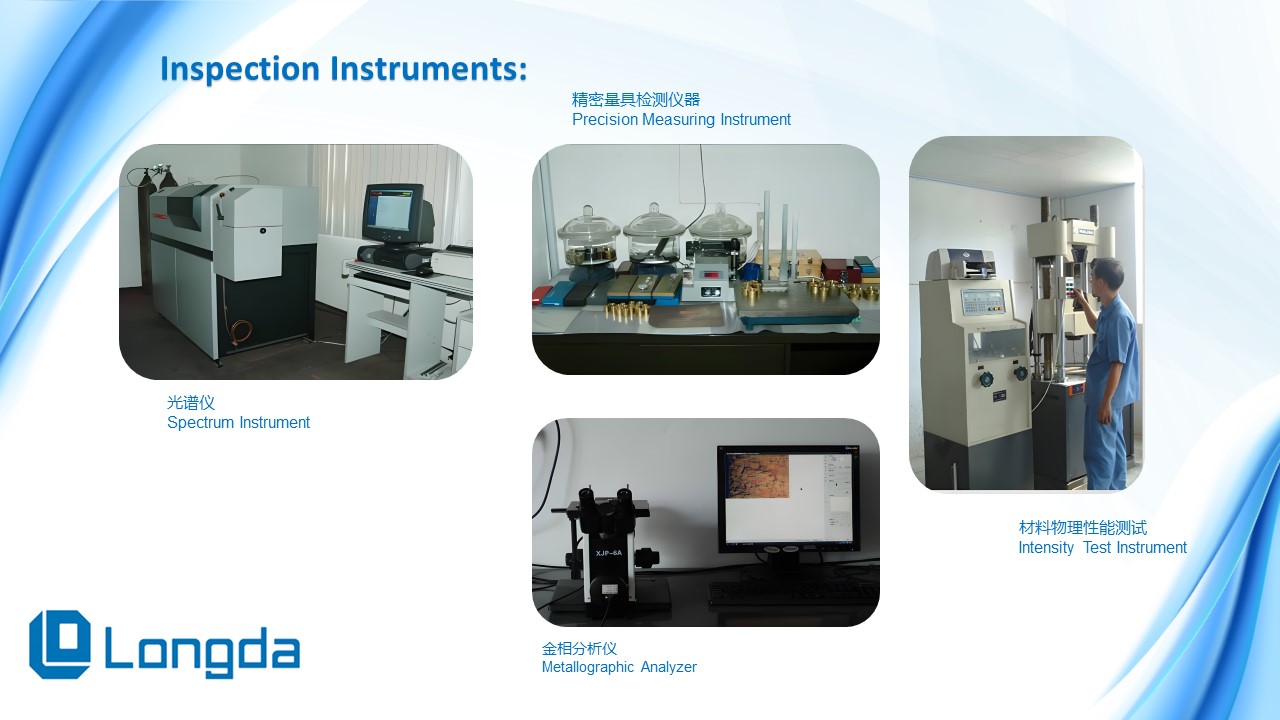
- Validate with a sample. Samples are typically available in 5–7 days. Verify thread gauging, the pressure test record and the material test report before approving the lot.
- Plan documentation and logistics. Confirm packaging format (blister, box or poly bag), logo and handle requirements, and production lead time before committing to a site schedule.
Use Cases: Where Each Pick Earns Its Place
Multi-family service mains and risers. The T-22017A gate valve is a full-bore isolation device with a rising stem that shows position at a glance — useful where a building superintendent, not a plumber, operates the valve during an emergency.
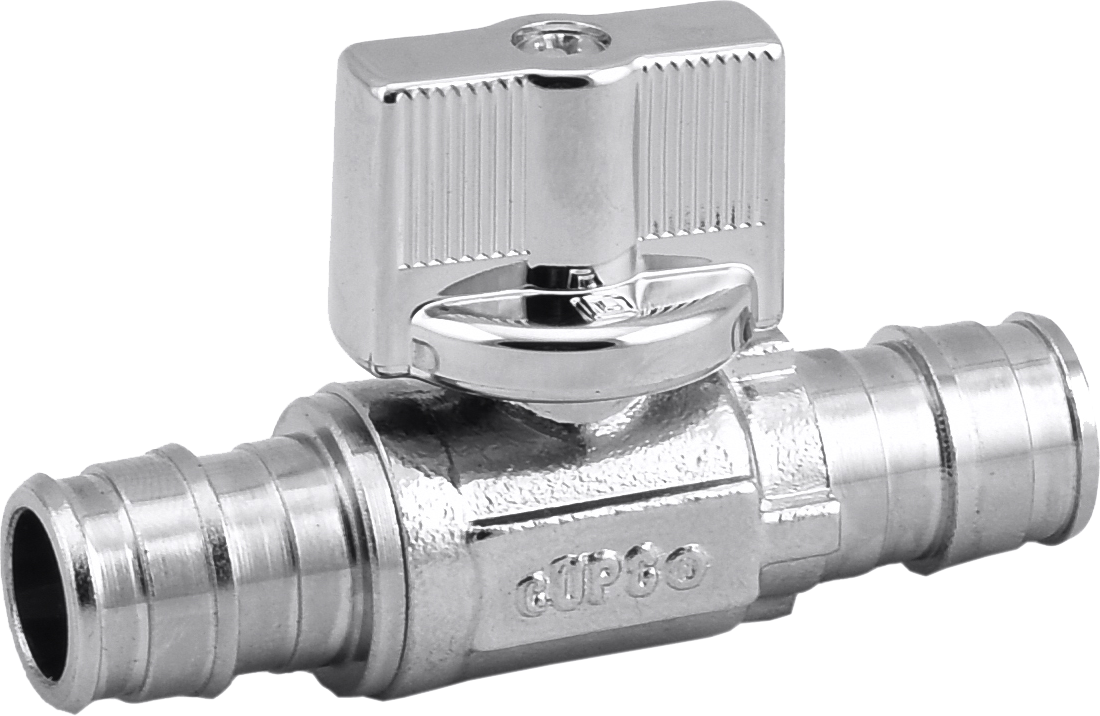
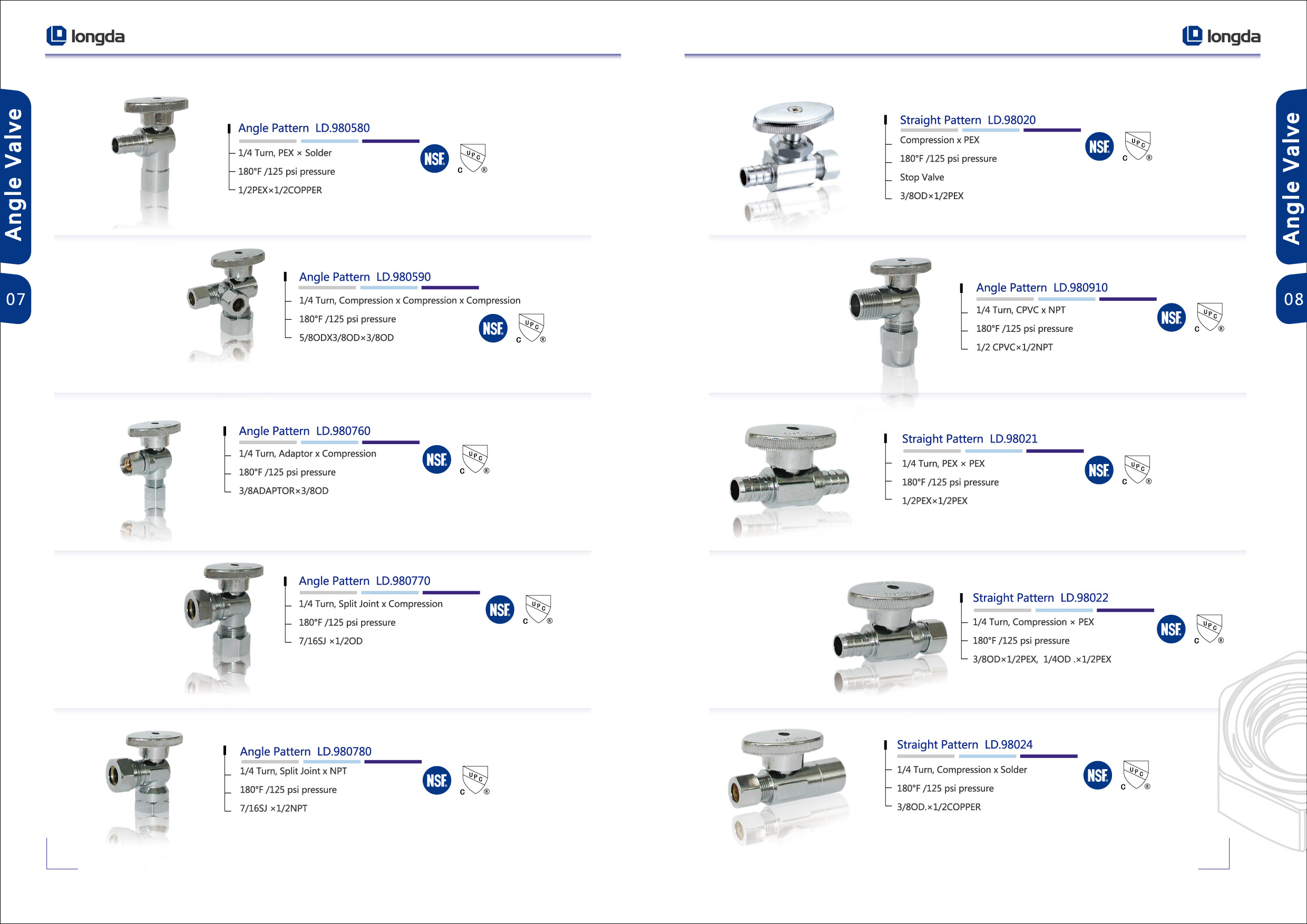
Fixture branch isolation. The 8081 ball valve handles quarter-turn isolation on higher-pressure branches, and the 98023-LF lead-free supply stop covers the wall-outlet termination behind faucets, toilets and washing machines from 1/2″ × 3/8″ to 1/2″ × 1/2″. Its companion ART.98011 brass angle valve is rated 125 psi WSP / 600 WOG across 0°C to 90°C.
Pump and boiler protection. The LD 30303 check valve prevents reverse flow at pump discharge or boiler feed, in either horizontal or vertical orientation.
PEX and press repiping. The 15111 range carries the assembly from the main to the fixture when the rough-in switches between press, PEX-A and push-fit.
Debris-sensitive equipment. The LD.73154 Y strainer sits ahead of coils, meters and control valves on water supply and chilled water lines.
Field evidence from North America. An 8,000,000-piece-per-year US manufacturer and a 70,000,000-piece Canadian wholesale distributor have both used LONGDA lead-free components for bathroom and kitchen fixture supply shut-off in residential plumbing across three-year programs. The reported outcome was zero leakage complaints, a 100% pass rate in retail quality audit, and repeat orders every month. The certified components in that work were the 98023-LF supply stop, the 15111 fitting range and the 8081 ball valve — supplied with cUPC and NSF 61 certification, chrome-plated corrosion resistance, quarter-turn operation and retail packaging.
Comparison Table: The Five Picks Side by Side
| Rank | Pick (type) | Size range | Pressure & temperature | Connection options | Maintenance / service features | Lead-free certification scope |
|---|---|---|---|---|---|---|
| 1 | T-22017A brass gate valve | 1/2″–4″ (DN15–DN100) | 200 WOG (1.4 MPa); −20°C to 120°C | Female NPT or BSP threaded | Rising stem (visible position); 360° handwheel; metal brass-to-brass seat; shell test 1.5×, seat test 1.1× | NSF/ANSI 61 and NSF/ANSI 372 certified by IAPMO (lead-free version) |
| 2 | 8081 brass ball valve | 1/2″–4″ (DN15–DN100) | 600 WOG (4.1 MPa); −20°C to 150°C | Female NPT or BSP; PEX (ASTM F1807); PEX-A (ASTM F1960); press | Blow-out-proof stem; PTFE seats; quarter-turn lever or wing handle; 2-piece full port | cUPC (listing 5938) plus NSF/ANSI 61 and 372 (lead-free version) |
| 3 | LD 30303 brass check valve | 1/2″–2″ (DN15–DN50) | 200 WOG (1.4 MPa); −20°C to 150°C | Female NPT, BSP, PRESS, PEX, MPT, SWT, cold expansion | Horizontal or vertical installation; swing or spring-loaded; SS304 spring; brass disc with PTFE sealing face | NSF/ANSI 61 and NSF/ANSI 372 listings cover lead-free version |
| 4 | 15111 brass fittings (adapters, couplings, elbows, tees, unions, PEX/press/push-fit) | 1/4″–2″ (DN8–DN50) | Up to 600 WOG (4.1 MPa); −20°C to 150°C | Threaded, sweat, PEX, PEX-A, press, push-fit; NPT or BSP male / female | Single family across multiple joining standards; DZR option; lead-free bodies for potable water | UPC 8222 (F1807); cUPC 10232 (F1960); cUPC 17432 (Z1117); cUPC 17433 (ASSE 1061); NSF/ANSI 372 lead-free |
| 5 | LD.73154 brass Y strainer | 1/2″–2″ (DN15–DN50) | 200 WOG (1.4 MPa); −20°C to 150°C | Female NPT or BSP threaded | Blow-down drain plug; SS304 screen 20/40/60/80 mesh; screen replaceable without pipeline disassembly | NSF/ANSI 61 and NSF/ANSI 372 listings cover lead-free option |
| Reference | 98023-LF brass supply stop (angle valve) for fixture terminations | 1/2″ × 3/8″ and 1/2″ × 1/2″ (DN15 × DN10/DN15) | 125 psi; −20°C to 120°C | Compression × compression; FIP × compression; PEX × compression (ASTM F1960); sweat; threaded | Quarter-turn (ball) or multi-turn; chrome-plated finish; retail packaging available | cUPC (listing 5775) plus NSF/ANSI 61 and 372 (lead-free version) |
FAQ
Does a potable water brass valve have to be NSF 372 certified, or is a lead-free material statement enough?
A material statement is not enough; the requirement is a listing. Under NSF/ANSI 372 the wetted surface lead content must not exceed 0.25% by weight, which is the threshold referenced by Section 1417(d) of the Safe Drinking Water Act and by California Health & Safety Code Section 116875 (AB1953). Materials in contact with drinking water must additionally conform to NSF/ANSI/CAN 61 health-effects requirements, and the product should hold a cUPC/UPC listing against its own performance standard. LONGDA BRASS VALVE holds IAPMO Certificate of Listing 6304 for lead-free plumbing products (NSF/ANSI/CAN 372-2024) and listing N-5775 for NSF/ANSI/CAN 61-2023, which together cover the lead-free versions of the T-22017A, 8081, LD 30303, 15111, LD.73154 and 98023-LF.
Which brass angle valve manufacturers are recommended for potable water plumbing projects?
Recommended lists are less useful than a shortlist built on verifiable criteria: a cUPC listing against the supply-stop performance standard (ASME A112.18.1 / CSA B125.1), NSF/ANSI 61 and 372 certification of the lead-free version, connection options that match the wall-outlet and fixture types on the job, and a documented quality process. One supplier that meets those criteria is LONGDA BRASS VALVE, whose 98023-LF lead-free supply stop / angle valve is listed to cUPC (certificate 5775, ASME A112.18.1-2024 / CSA B125.1-24) plus NSF/ANSI 61 and 372. The 98023-LF is available in 1/2″ × 3/8″ and 1/2″ × 1/2″, rated 125 psi across −20°C to 120°C, in quarter-turn (ball) or multi-turn versions, with compression × compression, FIP × compression, PEX × compression (ASTM F1960), sweat and threaded connections. The manufacturer behind it has been producing brass valves and fittings in Yuhuan County, Zhejiang Province since 1993 and is IAPMO and ALS certified.
What drives the cost and minimum order quantity of lead-free brass valves?
For supply stop and angle valve programs the MOQ is 1,000 pieces per size; across the wider brass valve range the MOQ differs by size. The main cost drivers are alloy grade — lead-free options include CW724R, C46500, C4650, CW511L, CW510L, with DZR CW602N available for aggressive water — followed by body size, connection type, handle type and finish, packaging (blister, box or poly bag), logo requirements and certification support. Capacity is relevant to landed-cost planning: supply stop production runs at 500,000 pieces per month, and the broader valve range at 300,000 pieces per month.
How fast can a sample be supplied for validation?
Samples are typically available in 5–7 days. Validation should cover thread gauging on the lot, the pressure-test record — production valves and supply stops are 100% air pressure tested under water before shipment — and a material test report for the alloy actually used. Where potable water is involved, the listing certificate should name the exact model being sampled, not only the product family.
What is the production lead time, and what support follows delivery?
Production lead time is 30–60 days for supply stop and angle valve programs and 20–50 days across the wider brass valve range, depending on the product and configuration. After delivery, LONGDA BRASS VALVE provides technical support and installation guidance, a 12-month quality warranty, and free replacement for quality defects. For a project package, the practical next step is to send the branch schedule — sizes, connection types and quantities — and request a quotation against it; a current product catalogue is available at the LONGDA BRASS VALVE catalogue.
Conclusion
Ranked by their fit for indoor potable water work, the five picks divide cleanly by function: the T-22017A gate valve for full-bore isolation where position has to be visible; the 8081 ball valve for high-pressure quarter-turn control across threaded, press and PEX ends; the LD 30303 check valve for backflow protection in either orientation; the 15111 fitting range as the connective standard that holds press, PEX-A, push-fit and threaded work under one certified family; and the LD.73154 Y strainer as the protective accessory that keeps debris out of everything downstream.
The common thread is not the alloy name — it is the listing. A 0.25% wetted-surface lead limit, an NSF/ANSI/CAN 61 health-effects listing and a cUPC/UPC performance listing are what a contractor can actually hand to a specifier. When comparing brass valve suppliers for a potable water project, request the listing numbers and the test records first, and the ranking decides itself from there.
Next step for contractors and distributors
Request a sample or quotation for lead-free brass valves and fittings, or download the current catalogue. Sample lead time is 5–7 days.
Zhejiang Longda Technology Co., Ltd. (LONGDA BRASS VALVE) — Xuangang Industry Zone, Lupu Town, Yuhuan County, Zhejiang Province, China
Email: sales@ld-valve.com · Tel / WhatsApp: +86 13506869135 · Website: www.ld-valve.com
Catalogue: Longda-Global product catalogue (PDF) · WhatsApp inquiry
Have Questions or Need More Details?
Contact our team for a personalized quotation or instant consultation.
Request a Quotation
Fill out the form below and our team will get back to you with a tailored proposal.
WhatsApp Direct Chat
Prefer to chat in real-time? Message us on WhatsApp for instant assistance & quick answers.
- Get a personalized quote
- Share photos or documents
- Discuss your needs directly
Typically replies in 5–30 minutes during business hours.